European Union bets on digital euro to reduce US dominance
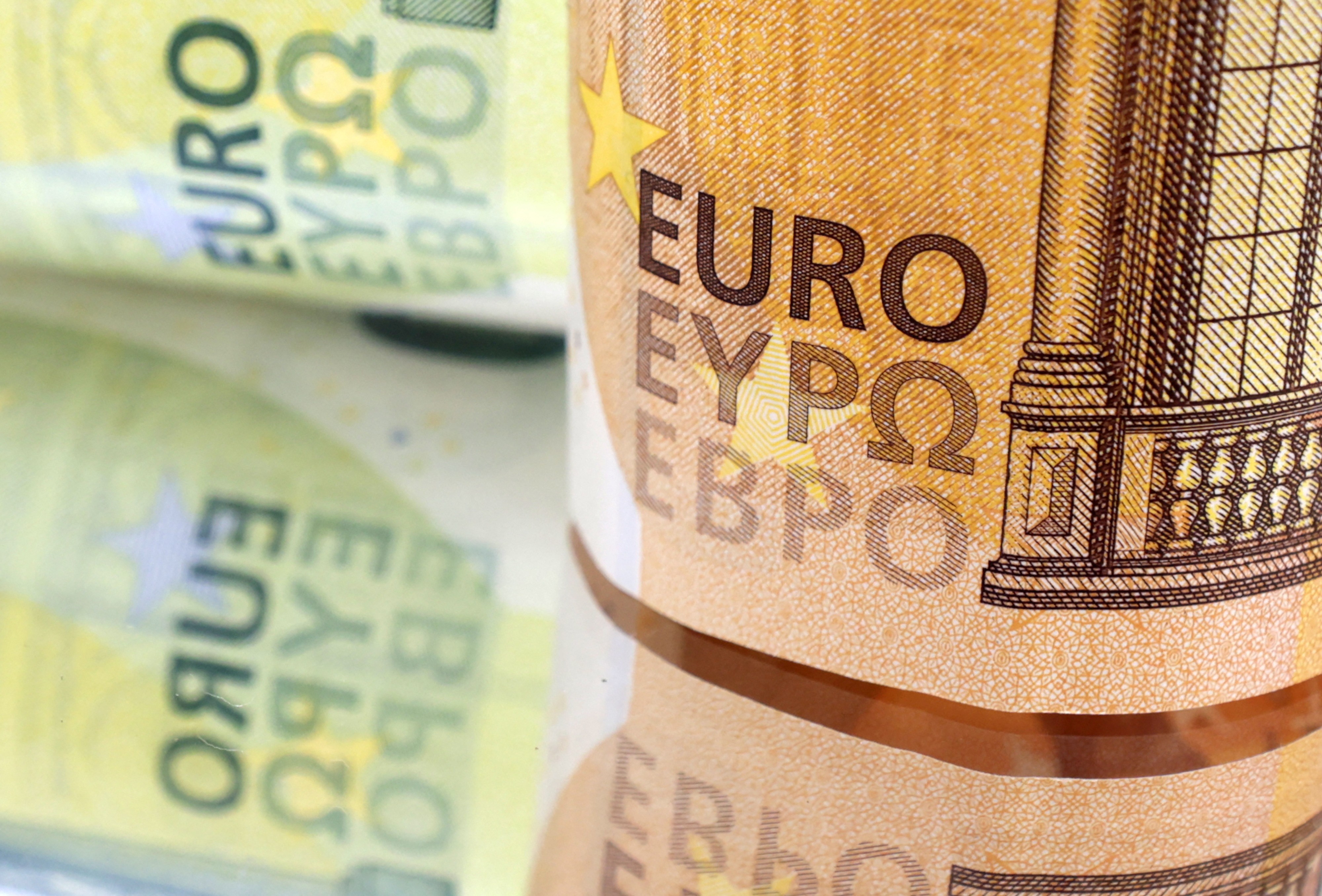
Euro banknotes.
Reuters
Digital currencies, or cryptocurrencies, were expected to revolutionize the way payments for goods and services are made. Still, in 2026, when a European walks into a store or buys something online, they turn to cash or a card.
Bitcoin's volatility and complexity have prevented it from becoming an everyday means of payment. But now the European Central Bank (ECB), responsible for managing the euro in the European Union (EU), has plans for a stable digital currency.
For consumers, the digital euro promises a simple way to make secure payments - in stores, online or person to person - with direct support from the ECB. However, the advancement of the digital euro is not just a technological upgrade. It has increasingly become a geopolitical necessity.
Now on g1
Pursuit of monetary sovereignty
Under President Donald Trump, the United States has shown it can quickly rewrite trade rules, impose tariffs or tighten export controls on artificial intelligence (AI). Therefore, EU policymakers believe that monetary sovereignty is an essential protection.
Even using the euro, the European Union relies heavily on US payment systems such as Visa and Mastercard. Digital wallets and apps, including Google Pay, Apple Pay and PayPal, add another layer of dependency.
The increasing use of financial instruments as tools of geopolitical pressure has led governments and central banks to intensify discussions on how to reduce dependence on financial infrastructures controlled by third parties. This was the case of Brazil with PIX, which placed digital sovereignty at the center of tension with the USA.
"If globally all these transactions were to be denominated in dollars without a digital euro, this would limit the effectiveness of the ECB's monetary policy on the traditional euro," says Bas van Donselaar, managing partner at consultancy PaymentGenes.
As more commerce and payments move online - and increasingly to foreign digital currencies - the prediction is that the digital euro will also help the ECB better manage the money supply, respond to economic crises and protect the currency against external shocks.
Other major economies are moving faster, including China with the digital yuan, or e-CNY. Since its first tests in 2020, more than 230 million personal wallets and around 18.8 million corporate wallets have been created.
By the end of November, the Chinese digital currency had already processed more than 3.48 billion accumulated retail transactions, totaling around 16.7 trillion yuan (R$12.81 trillion), according to the Xinhua news agency.
Beijing is now advancing even further, expanding the cross-border use and even allowing remuneration on digital yuan balances.
Protecting EU financial stability
For the digital euro, however, a key challenge is ensuring that it does not function as a full-fledged traditional bank account. If this were to occur, European banks could lose deposits - especially during crises such as bank runs - with consumers moving their savings into the digital euro.
"If there is no limit to the amount of digital euros people can have, it becomes a substitute for bank accounts," warned Emmanuelle Auriol, economics professor at the Toulouse School of Economics.
To prevent this, the ECB has incorporated safeguards. A possible limit of 3 thousand euros (R$ 17.7 thousand) for digital euro balances would automatically redirect any excess amount to a linked bank account.
The digital euro would also not pay interest, eliminating incentives to transfer savings out of banks. Companies would be prevented from maintaining large standing balances.
Surveillance concerns
Among consumers, privacy remains one of the biggest concerns.
Some fear that a central bank digital currency (CBDC) would allow state monitoring of spending, drawing parallels to China's social credit system.
In China, citizens are given scores based on their behavior, including financial trustworthiness. Low scores can restrict access to loans, jobs, public services or travel. However, Auriol rejected any association with the digital euro.
"Social credit systems (like in China) have nothing to do with it," she told DW. "Privacy protections can be balanced with anti-crime measures without creating social control tools."
The ECB also plans to allow direct person-to-person payments between mobile phones. This would preserve cash-like anonymity for small, everyday transactions, while also complying with anti-money laundering rules.
Evelien Witlox, director of the digital euro at the ECB, described the proposed currency as "a secure public option for digital payments, combining the ease and convenience of modern methods with the trust and stability of cash."
Convincing banks
One of the biggest challenges in implementing the digital euro is the potential impact on bank revenues. European banks.
Currently, merchants lose a portion of every card payment to fees - often between 0.5% and 1.5% on a €100 transaction, split between the bank and the payment processor. The digital euro aims to reduce these costs.
Many retail banks argue that they will bear the main burden of building and operating the new infrastructure, while at the same time losing significant revenue from fees. Therefore, several institutions advocate higher balance limits for users and fair compensation.
"The balance between compensation models for banks and merchants is crucial," said van Donselaar. "While lower fees for merchants are understandable, banks also need a viable business model."
Facilitated consumer adoption
To ensure public acceptance, the ECB proposes granting the digital euro legal tender status across the eurozone. Under current proposals, any merchant with a payment terminal would have to accept digital euros at full value, with no additional fees for the consumer.
"Just like physical money, its value will be guaranteed by the Eurosystem - the European Central Bank and national central banks -, therefore, 1 digital euro will always be equal to 1 regular euro. Unlike cryptocurrencies, their value is stable and does not fluctuate," said Witlox.
EU countries that are not part of the eurozone will be able to choose to offer the currency. The digital euro will also work offline, a utility during power outages or in areas with limited connection.
Last week, the European Parliament's Economic and Monetary Affairs Committee approved its position on the regulation, paving the way for final negotiations on the implementation of the digital euro.
EU policymakers are now looking to adopt the legal framework later this year, with a pilot project expected in 2027 and potential full launch in 2029.
Source: G1