European country cuts its own deputies' salaries by 40%; government wants to 'set an example'
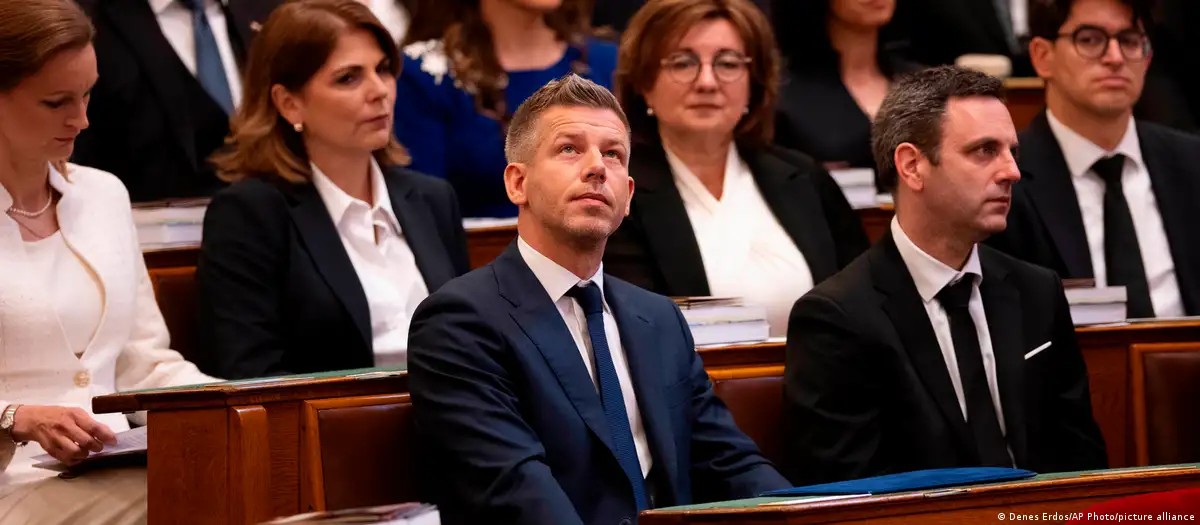
Péter Magyar, new prime minister of Hungary, bets on anti-corruption speech
Denes Erdos/AP Photo/picture alliance
Parliamentarians in Hungary voted unanimously, on Monday (8), in favor of a cut in their own salaries and benefits, in an initiative by the new prime minister, Péter Magyar, to reduce administrative costs.
The newly installed head of government accused his predecessor, Viktor Orbán, of granting inflated salaries to appease opposition deputies.
All 189 deputies present in the Parliament session, which has 199 seats, voted in favor of the bill presented by the ruling party, Tisza.
Edson Fachin creates a working group to analyze the issues
Under the new legislation, the monthly base salary of parliamentarians will be reduced by 40%, to the equivalent of around R$22,000 gross, approximately 1.3 million Hungarian guilders, starting next month.
Despite the cut, the amount will continue to be almost double the national average salary. Under the Orbán government, deputies' salaries were triple the average. The amount may also increase for parliamentarians who accumulate legislative functions, such as participation in committees.
Less hassle
The Prime Minister, the President of Parliament and members of parliamentary committees will also have their salaries reduced.
Refunds for cell phone bills will be completely eliminated, and there will be cuts in aid for renting offices, housing and hiring employees.
According to Magyar, the measures will make it possible to save, over the four-year term of the current Parliament, the equivalent to a full year of operating costs. The initiative seeks to restore public coffers, which, according to him, had been emptied by years of alleged corruption.
"In addition to humanity, it is about self-restraint and humility," said Magyar in an interview with private broadcaster RTL last month, when defending the cuts.
In the same interview, he suggested that mayors' salaries should also be reduced, which generated resistance among some local leaders.
Magyar is a former ally of Orbán
With a conservative profile and Pro-European Union, Magyar came to power promising broad reforms, including the fight against corruption.
Until 2024, he was a member of Fidesz, Orbán's ruling party. After a scandal, in which it came to light that the government had helped cover up a case of sexual abuse in a children's shelter, he broke with the party.
He then denounced the existence of systemic corruption in the government and the dominance of a small political-economic elite, in an interview that went viral and projected him nationally. In the following weeks, he intensified his criticism of the government and began the mobilization that would lead to the creation of his current party.
Since then, his focus has been on everyday issues for the population, such as inflation, low wages, precarious healthcare and corruption.
Cost of corruption
Systemic corruption would have cost Hungary at least 186 billion euros during the 16 years of Orbán's government, according to an estimate by Ferenc Bíró, head of the anti-corruption body of the country, in an interview with the investigative journalism group De Akciokozosseg.
The autonomous public body was created in 2022 as part of reforms adopted by the Orbán government to try to access part of the European Union's resources, which had been blocked due to concerns about the rule of law.
In January 2025, investigators carried out a search operation at the body's headquarters, bringing corruption charges against Bíró.
In a video interview published on Sunday, he stated that the then Minister of Justice instructed him not to carry out his duties and he is now facing criminal proceedings for refusing to obey the order.
Source: G1