End of the war? Why are there still attacks between the US and Iran?
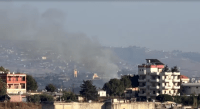
Despite the signing of the memorandum of understanding between the US and Iran, which declared the end of the war and established a deadline of 60 days to negotiate a definitive agreement, new attacks recorded in recent days show that the conflict is still far from being completely over.
The exchanges of hostilities have been concentrated mainly in the region of the Strait of Hormuz, one of the most important maritime routes in the world for the transport of oil and natural gas, whose administration has become one of the main points of tension between Washington and Tehran.
How did the new attacks start?
On Thursday (25), Iran attacked a commercial vessel near the Strait of Hormuz.
According to American officials, an Iranian drone struck the Singapore-flagged container ship Ever Lovely, in the first attack on a vessel since the signing of the agreement.
US President Donald Trump classified the action as a "senseless violation" of the agreement signed between the two countries.
In response, American forces carried out strikes against Iranian military installations near the strait.
According to CENTCOM (US Central Command), aircraft struck missile and drone depots, as well as coastal radar installations used by Iranian forces.
After the American bombings, Iran's Revolutionary Guard claimed to have launched attacks against United States military positions in the Middle East.
The Iranian Foreign Ministry accused Washington of violating the memorandum of understanding. The American military, however, did not confirm the Tehran attacks.
A US official told CNN that Iranian drones were detected but did not reach their targets.
Meanwhile, Bahrain, which is home to an important American military base, reported having been targeted by Iranian drones during the early hours of Saturday (27), classifying the action as a violation of its sovereignty.
Memorandum of Understanding
The memorandum states that Iran will use its "best efforts" to ensure the safe passage of commercial vessels through the Strait of Hormuz, a route responsible for about a fifth of the world's oil and liquefied natural gas trade.
In return, the United States agreed to gradually lift the naval blockade imposed during the conflict.
However, the text also provides for Iran and Oman to jointly negotiate the future administration of the waterway.
In practice, Tehran interprets this clause as an authorization to exercise greater control over the strait.
Before the commercial ship attack, the Iranian Revolutionary Guard had warned that vessels should only use routes authorized by Tehran.
The Iranian government created a new authority to manage navigation in the region and began requiring ships to first request authorization to obtain a "Guarantee of Safe Passage".
At the same time, three different routes emerged to cross the strait, one controlled by Iran, another passing through the waters of Omani territory and the traditional route, used before the war.
According to experts interviewed by CNN, this created great insecurity for shipping companies.
If they use the route controlled by Iran, shipping companies fear future sanctions from the United States.
On the other hand, if they ignore Iranian demands, they run the risk of further attacks.
After the attack on the Ever Lovely, the IMO (International Maritime Organization) temporarily suspended a humanitarian operation aimed at removing hundreds of commercial ships from the region.
Insurance companies also maintain high premiums for vessels transiting the strait, reflecting the perception that risk remains high.
Agreement in the implementation phase
Experts say that the exchanges of attacks demonstrate that the memorandum represents only the beginning of a diplomatic process.
The document establishes a 60-day period for the United States and Iran to negotiate a definitive agreement on issues such as the Iranian nuclear program, economic sanctions and the safety of navigation in the Persian Gulf.
While these negotiations are not concluded, analysts estimate that new episodes of tension may continue to occur, especially in the Strait of Hormuz, where there is still a significant difference between what was agreed by governments and what occurs in practice.
(With input from CNN's Mostafa Salem, Eleni Giokos, Sophie Tanno, Kevin Liptak and Zachary Cohen)
Why is the Strait of Hormuz so important to the world economy?
Source: CNN