Elections in Peru: exit poll shows Keiko Fujimori numerically ahead, with 50.7% of valid votes; scenario is a technical draw
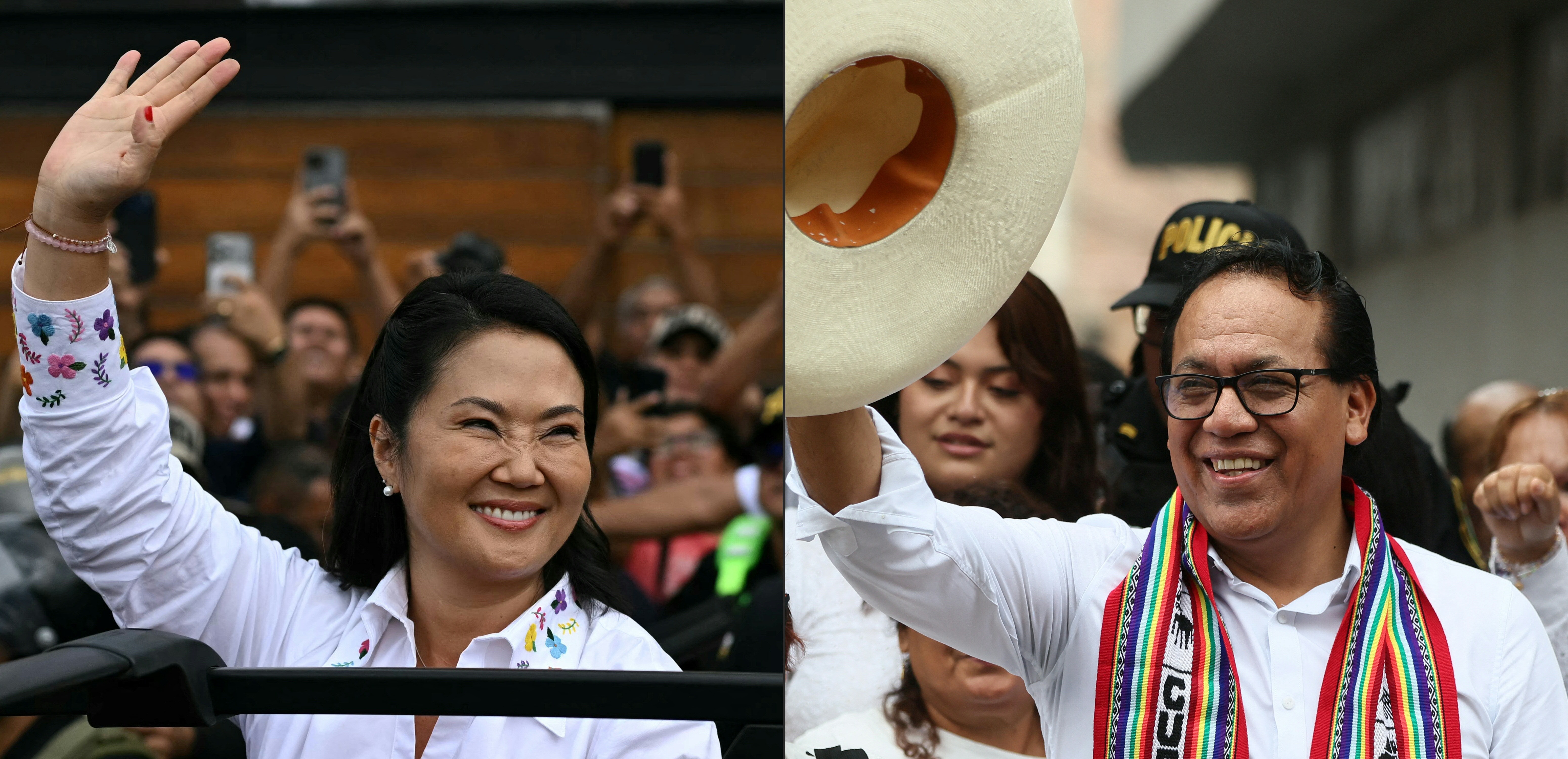
Montage shows candidates for the presidency of Peru Keiko Fujimori (right) and Roberto Sánchez on June 7, 2026, the day of voting in the second round
ERNESTO BENAVIDES / AFP
Keiko Fujimori is the favorite to become the new president of Peru, according to an exit poll published by the Ipsos institute this Sunday (7), shortly after the polls closed in the country. Due to the small difference, the research scenario is a technical tie.
✅ Follow the g1 international news channel on WhatsApp
Keiko appears with 50.7% of valid votes, according to the Ipsos survey. His competitor, Roberto Sánchez, has 49.3% of the votes. The margin of error is plus or minus 3 percentage points.
The Ipsos exit poll was carried out based on 18,000 interviews throughout Peru.
The official results could take days to come out, according to the Peruvian electoral authority.
Keiko, daughter of convicted former president Alberto Fujimori, had come first in the first round, with 17.2% of valid votes. Sánchez won 12.0% of the valid votes in the first vote.
Right-wing candidate Keiko Fujimori and left-wing candidate Roberto Sánchez before a televised debate on May 31 in Lima, on the eve of the second round of presidential elections, scheduled for June 7.
Reuters/Alessandro Cinque
Fragmented first round
The country went to the polls amid a fragmented political scenario, with a record number of presidential candidates in the country, 35 in total.
Lucas Berti, political scientist, researcher on Peru at the South American Political Observatory and executive coordinator of the International Relations and Global South Group, states that, in fact, what happened in these elections in the country does not come from a "vacuum".
"It is a symptom of a process of institutional delegitimization that has been happening in recent years in the country. And this, to the extent that elected presidents are unable to govern", he stated.
9 presidents in 10 years
Peru has had 9 presidents in 10 years. To give you an idea, presidential terms in Peru are 5 years. In other words, in democratic stability, the country would only have two presidents in the same period. However, the reality was different and some leaders did not last even 5 days in office.
"In these years, the leadership that lasted the longest was that of Dina Boluarte, who remained in power for almost three years. But, after displeasing the opposition led by Keiko's Fujimorist coalition in Congress, he also fell", says Berti
In addition, it is worth highlighting article 113 of the Peruvian Constitution, which states that a president can be overthrown due to "permanent moral or physical incapacity" - and those who evaluate this diagnosis are the parliamentarians.
So, by For example, if Congress simply doesn't like a law that the president is trying to pass, they can activate that article, vote and, in less than 24 hours, overthrow a president who was elected by the majority of the population.
For political scientist Berti, this ease of the process demonstrates the institutional fragility at play in Peru. According to him, in recent years, the Fujimorist coalition, with an absolute majority in Congress, has been articulating powers, whether in the Legislature, in the courts or in the judicial system.
Since 2008, Alberto Fujimori's daughter has led this Fujimorist current by founding the Fuerza Popular party and trying to reach the Executive Power in Peru. But that doesn't happen, explains Berti.
"Keiko lost the last three elections (2011, 2016 and 2021) in the second round, by very tight margins. And now in this election, in 2026, he goes to the second round with a larger margin of votes. Some institutes give an advantage to Keiko, others to Sánchez. Which indicates one thing: the election will be difficult and the result is still open", says Berti.
Democracy in crisis: 'distrust chronicle'
The consequence of this struggle between the Executive and Legislative branches in the country resulted not only in a profound political crisis, but also in the way the population views democracy.
"The credibility of institutions is very low if we look at the last 10 years.
And distrust in Congress exceeds 90%, especially during the process that would result in the fall of former president Dina Boluarte, in 2025", explains Berti.
The most recent data from the Latinobarómetro survey, which measures the level of democracy in Latin American countries, shows that Peru faces one of the lowest levels of trust in institutions compared to other countries in Latin America. There is what can be classified as "chronic distrust".
According to the data, 90% of Peruvians have little or no confidence in the government and Congress; and only 10% say they are satisfied with democracy. Furthermore, the survey also noted another dangerous feeling: indifference to politics or the type of government regime.
"There is a great ease in creating parties in Peru and they are parties called 'little institutionalized'. These are parties that do not have effective roots in a society, which is not a party that enters the dispute for 20, 40 years. But rather parties that appear and disappear, just as there is no loyalty between the candidates and the parties, who also change coalitions easily", explains Berti.
This whole scenario reinforces in voters the logic that candidates often arrive at an election without a solid base or without a known party. This ends up generating a reading of distrust and, often, disbelief and fear of the ease with which these elected people can fall.
*With information from Thais Fascina, from GloboNews
Source: G1