Elections in Peru: Everything you need to know about the 2nd round
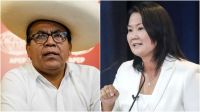
Peruvians go to the polls this Sunday (7) for the second round of the presidential elections. The population will choose between the leftist Roberto Sánchez and the conservative Keiko Fujimori,
The first round, held in April, was turbulent, with the results taking almost a month to be confirmed.
Peru, one of the world's largest copper producers and a major exporter of other critical minerals, has had eight presidents in a decade. The next president is expected to take office on July 28.
What are the voting times?
Voting for the second round of Peru's presidential election will take place from 7am local time (9am Brasília) to 5pm local time (7pm Brasília).
Who are the candidates?
Keiko Fujimori is 50 years old. She was born in Lima, on May 25, 1975, and is the eldest of four children of Alberto Fujimori, who passed away in 2024, and Susana Higuchi, who passed away in 2021.
In a video published on her YouTube channel, she says that, when she was young, she didn't think about going into politics, but rather about being a businesswoman. Therefore, he studied Business Administration and later completed a master's degree in the United States.
Roberto Sánchez, 57, studied Social Psychology at the National University of San Marcos, in Lima, and worked as an individual and group psychotherapist in the 1990s.
He has experience in public administration at the Ministry of Health and other areas of the Peruvian government, as well as private consultancy, depending on his professional profile.
Survey shows fierce dispute
An Ipsos survey published on Thursday (4) showed an extremely fierce scenario.
Sánchez has 43.8% of voting intentions, while Fujimori has 43.2%, leaving the candidates in a technical tie within the margin of error.
Around 13% of those interviewed said they would vote blank or leave the vote null.
What did the candidates say about Peru's main trading partners?
Peru is an important supplier of critical minerals to both China and the United States.
Sánchez, former Minister of Foreign Trade, stated that the country must remain open to international partners, but on more "fair" terms. He advocated environmental protection and better redistribution of wealth from mining.
Fujimori has promised to attract U.S. investment and strengthen ties with the White House, echoing the approach of other conservative governments in the region.
Daughter of the late former president Alberto Fujimori, she is running for president for the fourth time.
His party has not detailed a major shift in foreign policy, although analysts see it in line with traditional partnerships with the West.
What about the economy?
Sánchez proposed reviewing mining contracts, raising the minimum wage and rewriting the Constitution - measures that shook financial markets.
He sought to reassure investors by appointing former Economy Minister Pedro Francke, who claims that a leftist government would respect existing contracts.
Fujimori emphasized economic stability and respect for private property. She appointed Luis Carranza, former finance minister and former director of the Development Bank of Latin America and the Caribbean, to lead her economic team, reinforcing a market-friendly stance.
How is Peru's Congress doing?
Peru's April elections also reestablished the bicameral legislative system for the first time in decades, with a 130-seat Chamber of Deputies and a 60-seat Senate.
No party achieved a majority in either house, continuing a pattern that has complicated governance and led to frequent presidential impeachment proceedings.
Right-wing parties aligned with Fujimori could win a small majority in both houses.
Under the new system, the impeachment of a president will require approval in both houses, with the Senate being the final authority to determine the president's future.
What happened in the first round?
The April 12 vote was marked by interruptions, including delays in the delivery of ballots and the late setting up of polling stations, which prevented thousands of people from voting.
As a result, authorities extended voting for a second day in some areas, including parts of the capital, Lima.
The long investigation fueled allegations of fraud by some candidates, although European Union observers reported no evidence of irregularities.
What measures were taken for the second round?
Electoral authorities say that measures were taken to prevent the incident from happening again, including the hiring of a new logistics company to distribute the ballots and the creation of a new committee to identify risks.
The president of Peru's National Electoral Jury, Roberto Burneo, acknowledged that confidence in the electoral system had diminished following the delays, which led to the resignation and investigation of the head of an independent electoral body responsible for organizing the elections.
Results could take "about a month," Burneo said, due to a potentially close race and calls for recounts.
Who is Keiko Fujimori, candidate for president of Peru
Who is Keiko Fujimori, candidate for president of Peru
Source: CNN