Election in Colombia: Questioning the result harms democracy, says Loss
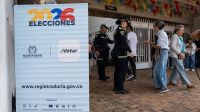
Abelardo de la Espriella, far-right candidate in the Colombian elections, surprised by coming out ahead in the first round of the election, exceeding poll expectations and advancing to the second round alongside Iván Cepeda.
The result was analyzed by Flávia Loss, professor of International Relations at the Mauá Institute of Technology, in an interview with CNN 360°. According to Flávia Loss, Espriella's performance was a surprise, since several surveys carried out in Colombia showed Iván Cepeda with a wide advantage.
"In fact, the result was a surprise, because we had seen several surveys within Colombia showing that Iván Cepeda was well ahead, very well positioned and riding on the achievements that President Gustavo Petro had in recent months", said the expert.
Another point analyzed by Flávia Loss were the statements that questioned the result of the first round. Gustavo Petro publicly contested the result, and Iván Cepeda even questioned the election before backing down.
In response, Abelardo de la Espriella even talked about activating the Army to guarantee respect for the results of the polls. The professor classified the situation as "very worrying", remembering that, before the first round, it was precisely the right-wing candidates who questioned the fairness of the elections.
"When this type of doubt is raised, it doesn't just harm that specific election, but democracy as a whole. It's very bad when that happens, especially in a scenario like Colombia, where there is political violence," he said.
For her, the behavior of both sides of the political spectrum in this sense "casts a shadow over the elections and can indeed trigger more violence".
Insecurity as a decisive factor
Flávia Loss highlighted that, although Gustavo Petro's foreign policy was well evaluated by Colombians, the domestic scenario presents significant challenges, especially in the areas of public security and health.
It was precisely in this context that Espriella found space to grow electorally. "There is a tiredness in Colombian society when it comes to insecurity. We have had a resurgence of attacks against candidates, last year we had the death of a pre-candidate for the presidency, in addition to other attacks carried out by former members of the FARC, mainly there in Valle del Cauca", explained the professor.
She added that Espriella presents a very tough speech against violence, in line with what she called "buquelismo" - in reference to the political style of Nayib Bukele, from El Salvador.
Regional trend of radicalization
The expert contextualized the Colombian result within a broader trend observed in Latin America. For her, there is growing dissatisfaction among the population with moderate speeches, both from the left and the right.
"The traditional right has also lost a lot in the case of Colombia", he pointed out, citing as an example the candidate Paloma Valencia, from the same party as former president Álvaro Uribe, who received few votes and was heavily criticized.
Flávia Loss also warned that the worsening of violence has led the electorate to seek "magic solutions" from candidates with simplistic proposals for complex problems.
"In elections, in electoral debates, you don't debate the complexity of problems, you offer quick solutions. This is a trend throughout Latin America and a worrying one too, because we end up having a very superficial public debate on extremely complex problems", he assessed.
The texts generated by artificial intelligence on CNN Brasil are made based on video cuts from the newspapers in its programming. All information is investigated and checked by journalists. The final text is also reviewed by the CNN journalism team. Click here to find out more.
Source: CNN