Election in Colombia: Everything you need to know about the presidential vote
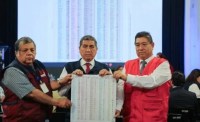
Colombia will hold the first round of the presidential election this Sunday (31). The projection is that more than 41.4 million voters will be eligible to vote, according to the National Registry.
On this day, citizens in the country vote exclusively for the presidential ticket that will govern during the 2026 to 2030 term. Each candidate appears on the ballot as a joint ticket, and a blank vote option is also included.
Unlike other electoral processes, no member of Congress, governor or mayor will be elected - Congress was renewed in the legislative elections held in March.
Colombian residents abroad had the opportunity to vote throughout the week - from Monday (25) to this Sunday -, while in Colombia voting is concentrated on a single day.
For a candidate to win the race, he must obtain the majority of valid votes. However, if no candidate exceeds 50% + 1 of the valid votes, the electoral law requires a second round with the two most voted candidates.
The second round is scheduled for June 21, 2026. In this case, whoever obtains the highest number of votes would be elected, regardless of whether or not they exceed 50% of the total.
Voting time
The polls for Colombia's presidential election open at 8am local time (10am Brasília) and close at 4pm local time (6pm Brasília).
Who are the candidates?
Since the inter-party consultations in March, it has become clear that the dispute comes down to three candidates: Iván Cepeda, from the ruling party, Abelardo de la Espriella and Paloma Valencia, from the opposition.
Polls have consistently shown Cepeda ahead, indicating a second round, with the only thing left to know is who will advance to the second phase.
From left to right: Iván Cepeda, Abelardo de la Espriella and Paloma Valencia, candidates for the Colombian presidential election - Getty Images
See the list of candidates in the order in which they will appear on the ballot:
- Iván Cepeda Castro - Aída Marina Quilcué Vivas
- Claudia Nayibe López Hernández - Leonardo Humberto Huerta Gutiérrez
- Raúl Santiago Botero Jaramillo - Carlos Fernando Cuevas Romero
- Abelardo Gabriel de la Espriella - José Manuel Restrepo Abondano
- Óscar Mauricio Lizcano Arango - Pedro Luis de la Torre Márquez
- Miguel Uribe Londoño - Luisa Fernanda Villegas Araque
- Sondra Macollins Garvin Pinto - Leonardo Karam Helo
- Roy Leonardo Barreras Montealegre - Martha Lucía Zamora Ávila
- Gustavo Matamoros Camacho - Mila María Paz Campaz
- Paloma Susana Valencia Laserna - Juan Daniel Oviedo Arango
- Sergio Fajardo Valderrama - Edna Cristina Bonilla Seba
Three candidates ended up dropping out, but will be on the ballot this Sunday.
What does the Colombian presidential election ballot look like?
The Colombian presidential election ballot is defined in a public event with the presence of political parties, international missions and control bodies.
It has 15 spaces in total (14 presidential tickets and one blank space), the order of which was defined by draw.
Each box includes a photo of the presidential candidate, one of the vice-presidential candidate, their full names and the logo of the party, movement or coalition.
The spaces for withdrawn applications are not removed because the printing of the ballots has already been made official.
Ballot from the first round of the 2026 Colombian presidential election - Disclosure/@Registraduria
The vote will be invalid if the voter marks more than one candidate, if they mark a candidate and a blank space at the same time, if there are scribbles or confusing marks outside the field, or if they write messages or sign the ballot.
If the voter makes a mistake before casting their vote, they can request a new ballot from the electoral commission, returning the previous one.
Political scenario in Colombia
The Historic Pact, the coalition that led Petro to the Presidency in 2022, and the Democratic Center, led by former president Álvaro Uribe, are the main forces in the Senate for the 2026-2030 term, after the legislative elections in March.
The legislative result reflects the polls for the presidential election and the public debate during Petro's presidency: a government seeking to remain in power with Iván Cepeda, and an opposition focused on the candidacies of Abelardo de la Espriella and Paloma Valencia.
Espriella is an independent, but has the support of some traditional political groups; Valencia is a candidate for the Democratic Center and winner of an inter-party primary that included centrist figures such as her vice-presidential candidate, Juan Daniel Oviedo.
With the candidacies of centrist leaders (Sergio Fajardo and Claudia López) at a disadvantage in the polls, the political scenario in Colombia is polarized between continuity and change, particularly between right-wing options.
Source: CNN