Elea: Brazil's World Cup debut quadruples data volume in data center
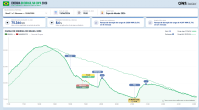
On Saturday (13), Brazil debuted in the 2026 World Cup in a clash against Morocco, a match that brought a significant number of Brazilians to televisions, computers and smartphones to follow the team in real time. This sudden increase in the number of viewers also means an increase in the volume of data traffic, which led the Elea data center, in Rio de Janeiro, to handle a volume 4.3 times greater than usual.
The company reported that, during the game, this volume reached 865 Gbps, well above the approximately 200 Gbps recorded on normal days. "To give it a dimension, it's as if 30 thousand photos were transferred in a single second", explains Thiago Pongelupe, director of Technical Sales at Elea.
Data centers, which have gained even more visibility with the advancement of artificial intelligence applications, are also an intermediate stage between the cameras in the stadiums and the viewer, housing and processing data that will be distributed to broadcast services.
According to the executive, more important than the number itself is what it demonstrates: during events like the World Cup, millions of people start accessing digital content and services.
Pongelupe also highlights that, in the past, the challenge was to distribute a television signal, but today, the same content needs to reach different devices and platforms for a significantly larger audience.
"The growth of streaming has significantly increased the importance of data centers, which have become central points for processing, storing and distributing this content", says the Director of Technical Sales.
He also highlights that the structures are not dedicated exclusively to broadcasts, but are also responsible for handling data from social networks, messaging applications, financial platforms, e-commerce and other digital services, which also register an increase in demand during major events.
Another challenge highlighted by Pongelupe is the need to offer fast and aligned transmission between platforms, despite the differences and characteristics of each streaming medium.
"The user expects a practically instantaneous experience, regardless of where they are or the device they are using. This requires an increasingly distributed, connected and resilient infrastructure", says the Director of Technical Sales.
Preparation for the World Cup
Pongelupe highlights that major events, such as the World Cup, are planned in advance.
"The entire chain carries out demand projections, reinforces monitoring teams and reviews operational procedures", he states.
He explains that, within a data center, this preparation involves redundancy strategies in power, cooling, connectivity and data load, as well as alternative routes for data traffic, so that, if one system fails, another takes over immediately.
Still, according to Pongelupe, much of the infrastructure used at these times already exists and operates daily, supporting different types of digital applications. What happens is an adaptation of the operation to absorb the temporary increase in demand.
When asked about a possible increase in costs caused by times of high demand and the necessary adjustments, the executive states that the investments to safely support traffic peaks are permanent. Still, there is specific planning for large events, which requires operational reinforcements and additional capacity to absorb exceptional volumes of traffic.
"It's similar to what happens at airports during holidays or big events: the main structure already exists, but the operation is adapted to absorb a greater volume of users", he says.
Increased challenges, but without risk of failure
Despite the challenges, the executive highlights that the structures are designed precisely to operate under conditions of high demand, so that the increase in traffic, in itself, does not represent a risk when there is adequate planning.
"What exists is the need to correctly size capacity, connectivity and computational resources to absorb these peaks", he states.
Pongelupe also remembers that, today, critical applications are developed to operate in redundant and distributed environments precisely to avoid failures.
"For this reason, data centers work with multiple energy, connectivity and processing systems, as well as automatic recovery mechanisms", he explains.
He also highlights that events like the World Cup are monitored in real time by technical teams that continuously monitor the behavior of the infrastructure and, when necessary, make operational adjustments.
Offshore wind could be Brazil's "new hydroelectric energy", says World Bank study
Source: CNN