Earthquakes in Venezuela: Teams defy time in search of survivors
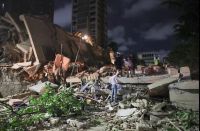
More than 30 hours have passed since Venezuela was hit by two earthquakes, one of which was the strongest in more than a century.
Historically, the first 48 to 72 hours after an earthquake are widely considered the "golden" window for rescuing people buried alive under the rubble; After this period, the chances of survival without water decrease rapidly.
Studies indicate that most rescues of people alive occur in the first five or six days. Some rescuers follow the "rule of four," which assumes that trapped people can survive four minutes without air, four days without water, and four weeks without food.
However, research suggests that "hard, universal deadlines" may be inaccurate, as survival can be prolonged in rare conditions.
After the devastating 7.8 magnitude earthquake that hit Turkey and Syria in 2023, people continued to be rescued alive from the rubble ten days after the quake, defying expectations of survival.
Emergency and disaster experts say several factors can increase the chances of survival beyond the "golden" window of time, including trapped people's access to oxygen, water and food.
The person's health status is also a crucial factor, including whether they have suffered only minor injuries or severe injuries to internal organs.
In addition, people with pre-existing medical conditions - who may be unable to access their medications or whose medications cause side effects such as dehydration - are less likely to survive, according to medical experts.
Earthquake in Venezuela is the biggest to hit the country in 100 years; understand | CNN PRIME TIME
Search continues
Search and rescue efforts have become a round-the-clock operation as teams try to reach people trapped under the rubble, a humanitarian aid director told CNN.
"There are many people whose whereabouts are unknown, including some of our volunteers as well as family and friends; search and rescue efforts are intense. It's constant work, 24 hours a day, and we simply don't have enough time or staff to reach all the people we want and need to help," said Loyce Peace, regional director of the International Federation of Red Cross and Red Crescent Societies.
Peace highlighted that disasters of this nature leave a lasting impact.
"There's the initial impact, of course, but then the headlines fade while the problems remain; we often have to stay in those countries and communities for a long period of time," Peace told CNN's Elex Michaelson.
Understand how the strength of earthquakes is measured
Source: CNN