Earthquakes in Venezuela: CNN team shows one of the most affected regions
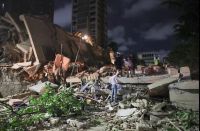
Aerial videos and satellite images reveal the scale of the destruction caused by the earthquakes that hit parts of Venezuela on Wednesday night (24). The CNN Internacional team was in La Guaira, one of the regions most severely affected by the disaster, and recorded a scene of widespread devastation.
Reporter Mary Triny Mena, who was in the Playa Grande area of La Guaira, described by authorities as one of the hardest hit areas, said that hundreds of structures had been damaged, both to their bases and to their windows.
"Many people sleeping on the street, trying to preserve some of their belongings and, above all, their lives", reported the journalist.
Residential complexes and leisure areas destroyed
Entire housing complexes were affected by the tremors, including recreation areas such as swimming pools, which suffered severe damage. Part of the population chose to remain close to their homes in an attempt to protect their belongings.
Mary Triny Mena also recalled that La Guaira is a tourist region and that it had already been devastated previously, in 1999, by the so-called Vargas tragedy. "Today, once again, the inhabitants of this area are experiencing similar circumstances of devastation," said the reporter.
Lack of preparation and flaws in the construction code
CNN's Climate and Environment analyst, Pedro Côrtes, assessed that Venezuela could be much better prepared to face earthquakes if it had followed the Construction Code approved after the 1967 earthquake.
According to him, only a third of new buildings adopted the standards set out in the code. "It's that question of the law that sticks and the law that doesn't stick," he said.
Pedro Côrtes also highlighted that the old buildings were also not adapted, which worsened the damage. "Unfortunately, it is a country that, although it is subject to strong earthquakes, has not adequately prepared itself for them," he concluded.
Two earthquakes in sequence and expected aftershocks
Côrtes explained that the situation was worsened by the fact that two strong earthquakes occurred in sequence, in different locations and at different depths. "The first was more superficial, but the second was not that deep, in other words, it was a double disaster", he explained.
The analyst warned that aftershocks could last up to a week, with a tendency for a gradual decrease in intensity. He also highlighted the importance of training the population and the existence of rescue forces equipped for post-disaster care - elements that, according to him, are currently lacking in Venezuela.
Geological explanation for the damage in La Guaira
From a geological point of view, Pedro Côrtes explained that the northern coastal region of Venezuela is especially susceptible to earthquakes as it is the contact zone between the Caribbean plate and the South American plate.
"The Caribbean plate goes underneath the South American plate and this makes this area much more susceptible to earthquakes", he detailed. The analyst added that the Caribbean plate still suffers lateral pressure from the North American and Cocos plates, which further intensifies seismic activity in the region.
Rescue teams worked intensely in the first hours after the tremors, trying to clear rubble in search of survivors. Reports indicated that part of the population itself mobilized to search the wreckage in search of family and friends. Many people slept on the streets, either because their houses or buildings collapsed, or because of fear of new tremors.
The texts generated by artificial intelligence on CNN Brasil are made based on video cuts from the newspapers in its programming. All information is investigated and checked by journalists. The final text is also reviewed by the CNN journalism team. Click here to find out more.
Source: CNN