Earthquake in Venezuela: understand the chances of survival days after the disaster
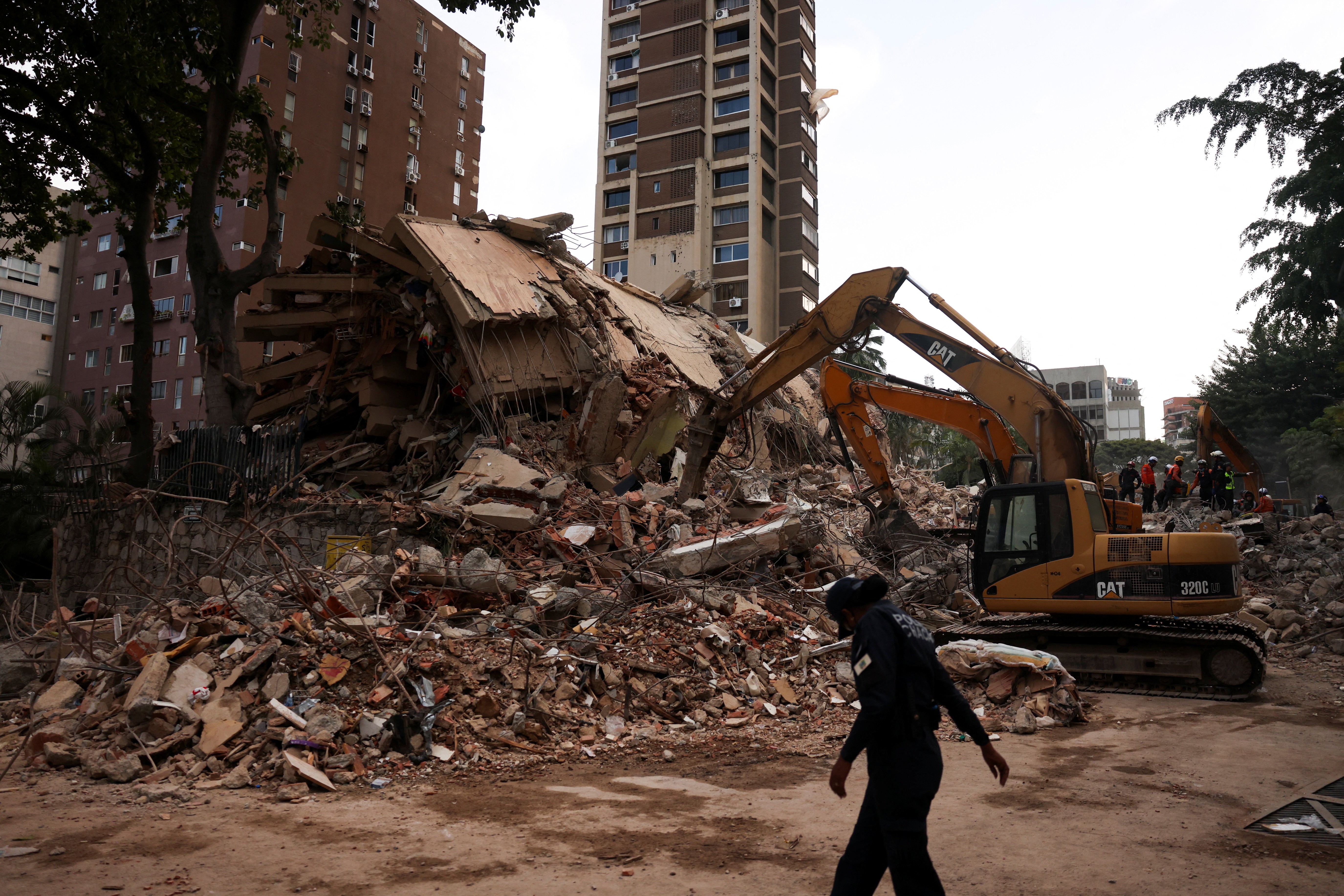
A person walks among the rubble of a building that collapsed following the earthquakes in Caracas, Venezuela.
Leonardo Fernandez Viloria / Reuters
Almost two days after the earthquakes hit Venezuela, the government estimates that more than 200 people may still be trapped in the rubble.
The most recent balance, from Friday afternoon (26), updated the number of deaths to 920 due to of the tremors. There are almost 3 thousand injured.
➡ On Wednesday night (24), two earthquakes in a row hit the northern region of the country, where Caracas is located. In addition to the deaths, the tremors collapsed buildings and left a trail of destruction in the Venezuelan capital and surrounding areas. The earthquakes were the strongest in the country in more than 100 years.
With each passing hour, the chance of finding people alive decreases. According to experts, survival time under the rubble depends on many factors, especially:
Victim's position at the time of collapse
Access to air and water
Climate
Meteorological conditions
Physical fitness of the person
Although most rescues are carried out in the first 24 hours after a disaster, there are cases of people being removed from destroyed buildings after much longer.
As contradictory as it may seem, children and Babies, for example, are the ones most likely to be found alive, due to their size.
Below, understand which factors contribute to the increase in lifespan in adverse conditions after an earthquake.
Chances of rescue
In an interview with g1, Léo Farah, a specialist in Disaster Risk Reduction, explains that the first hours during a rescue are very important, regardless of the age of the victims.
According to him, as time passes, the chances of a live rescue decrease and, up to 7 days after a disaster, the possibility of finding a survivor drops to around 5%.
But this time interval varies a lot. In the [2010 earthquake in] Haiti, for example, they found people alive 12 days later, because pockets that we call 'isolated living space' are formed, where the person can survive.
In the case of small children, Farah explains that, in addition to time, the main factor that influences the possibility of a rescue alive is the fact that children and babies are smaller than adults and, therefore, accommodate themselves in these small air spaces.
Still according to the expert, despite Furthermore, nothing prevents other people from being able to survive in these cases.
"It is logical that, if we are talking about an extremely prepared adult, who can have a greater reasoning and survival instinct, he will have a greater natural chance", says Farah.
However, he states that the possibility of an adult becoming trapped is greater.
"An adult, for example, has a greater possibility of becoming trapped in the rubble than a child. Furthermore, precisely because of their size, rescuing a child or baby is easier. This is because we can remove the child in a smaller space and more easily. The child is more malleable and, therefore, rescues in these situations are faster", he explains.
How to protect yourself when an accident occurs earthquake
People receive treatment in a field hospital after the earthquakes, in La Guaira, Venezuela, on June 24, 2026.
Reuters/Maxwell Briceno/TPX Images of the Day
Water is essential
We cannot live without oxygen, water or food. When one of these is missing or becomes scarce, survival is seriously threatened, regardless of age.
According to Carlos Eduardo Pompilio, general practitioner at Hospital das Clínicas de São Paulo, our body can even survive for a while without food, but this will only happen if we have water. He explains that the number of days we can go without water depends on factors such as weight, age, pre-existing illnesses and environmental conditions.
You need water to make your basal metabolism work. Our energy production leaves 'metabolic waste', waste that is acidic and toxic and needs to be excreted.
And how does this happen? As you dilute these residues in water. If you don't have this water to make this dilution, you end up having an accumulation and going into kidney failure.
Water is vital for the circulation and functioning of all organs. In addition, it provides nutrients, regulates temperature and also lubricates eyes and joints.
Lack of water, or dehydration, causes serious effects on the body, until it stops functioning.
Dehydration can lead to hyperthermia, which leads to enzymatic reactions and can cause complete organ shutdown. The loss of enzymes can also cause blood clotting in the blood vessels, preventing circulation.
Impact of weather conditions
In the case of hydration, heat is an aspect that has a negative influence, as it is more difficult to maintain water conservation in the body. This is because, in these situations, we lose water faster and without realizing it - whether through sweat or breathing.
Water evaporates to try to maintain body temperature at 37ºC and the sodium concentration increases greatly.
As the regions most affected by the tremor have been recording temperatures around 27ºC since Wednesday, this is yet another point of concern.
Why is water so important for health?
Food guarantees energy for the body
To function well, our body also needs nutrients. They are the ones that provide the essential energy for the functioning of cells. This energy is fundamentally converted into glucose, a brain nutrient. When there is a lack of glucose, the brain can function with another form of energy, which are ketone bodies.
The body "stores" energy basically in three places: liver, muscles and adipose tissue (fat).
In a situation of food deprivation, the first stores to run out are those of the liver, which sends all the glucose into circulation.
Then, the body begins to extract energy from fats to produce ketone bodies which, after 2 weeks, begin to supply the brain. At the same time, proteins are removed from the muscles and transformed into glucose.
As a result, the body consumes itself to guarantee the energy that the brain needs to maintain vital functions. Weight loss, loss of muscle mass, weakness, anemia, swelling, greater chance of infections, mood changes, bad breath and greater possibility of psycho-emotional disorders occur.
In the case of children and babies, the situation is even more delicate because they have a smaller energy reserve and a greater energy expenditure.
Furthermore, as explained by Lívia Aguiar, pediatrician at BP, the stomach of a newborn or baby is much smaller than that of an adult and, consequently, the The volume of food he can store is much smaller.
In the case of newborns, specifically, the expert also highlights that another complicating factor is the fact that breast milk is digested more quickly.
According to the CDC and the Centers for Disease Control and Prevention, at the beginning of life, precisely because of this, babies need to eat every 2 to 4 hours to help them get enough nutrition and grow.
"And we need to remember that, the smaller children, like babies up to one year old and newborns, have a low supply of glycogen [the main energy reserve in animal cells]. As it drops, it creates more stress in the child," says Aguiar.
"Food is very important. It gives us energy to live, reproduce our cells, and contract our muscles. this", adds Pompilio.
Earthquake in Venezuela: why the city is considered a 'disaster zone'
Source: G1