Durigan says that the government is considering vetoing the renegotiation of rural debts if the project passes the Chamber; Senate approved proposal
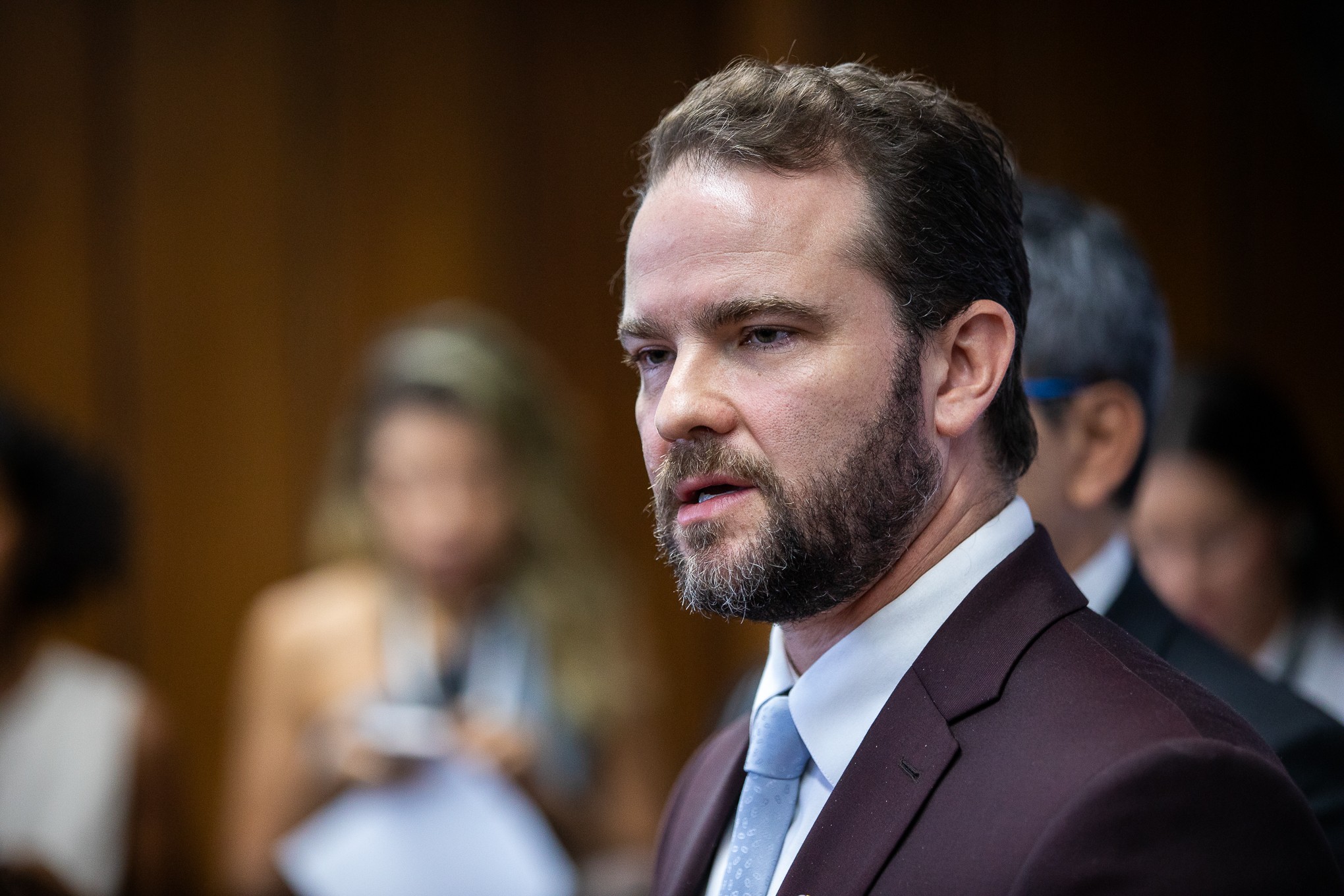
The Minister of Finance, Dario Durigan, said this Wednesday (10) that the federal government is considering vetoing or suing the Federal Supreme Court (STF) if the project that creates a special line of rural credit for the renegotiation of producers' debts is approved in the Chamber of Deputies. (understand)
The Federal Senate approved the text this Wednesday. The president of the Senate, Davi Alcolumbre (União-AP), included the item on the plenary voting agenda even without the support of the government.
The benefits will be for producers affected by extreme weather events or economic impacts resulting from international geopolitical conflicts.
As the proposal underwent changes in the Senate, the text will have to undergo new deliberation in the Chamber of Deputies before being sanctioned by President Luiz Inácio Lula da Silva (PT).
According to the Minister of Finance, the impact that the proposal would have cannot be absorbed by public accounts.
"Parts of the project have to be reviewed in the Chamber or, eventually, [through] the president's veto. And if necessary, we will question any action by Congress that does not comply with the Fiscal Responsibility Law in the STF. This must all be evaluated rigorously, with serenity, with broad communication, broad dialogue with Congress. Our objective is, rather, to help those farmers who need it most, who can prove losses, who have problems with debts. Not to create some kind of new line that serves those who do not need it", said Durigan after approval in the Senate.
Now on g1
The project is treated as a bombshell due to the billion-dollar impact it will have on the government's accounts if it is approved by the National Congress.
According to the Ministry of Finance, if all eligible people join the refinancing, the financial cost for the national Treasury could reach R$140 billion in the coming years. This financial expense ends up increasing the country's public debt even further.
Renan Calheiros (MDB-AL), rapporteur of the project in the Senate, however, states that the impact will be smaller, R$120 billion over the next ten years. The senator explains that the text is limited to the sector's overdue debts, and not to the entire stock.
A bomb agenda is a term used in the National Congress to designate bills or proposals that create billion-dollar expenses or reduce revenue. These measures have a strong negative impact on public accounts.
The Minister of Finance, Dario Durigan, met with Alcolumbre on Tuesday (9) to try to avoid voting on projects that could have negative effects on the government's accounts, the renegotiation of producers' debt is one of these proposals.
Minister of Finance, Dario Durigan
Cadu Gomes/VPR
Government does not support
On the afternoon of this Wednesday, the text's rapporteur, Renan Calheiros (MDB-AL), and Senator Tereza Cristina (PP-MS), former Minister of Agriculture in the government of Jair Bolsonaro (PL), met with the Minister of Finance.
Both the senators and Alcolumbre reported that the government did not support the measure in the format of Calheiros' opinion. Even so, the president of the Senate decided to vote on the text.
"The minister informed that the text that will be reported has no agreement, the support of the government. I respect the minister's position, but I reached an agreement with senators, with deputies.
I will publicly inform that there is no agreement with the government, but I will deliberate the report today", said Alcolumbre.
Debt renegotiation
The text envisages the use of resources from the Social Fund - a federal fund created from revenues from pre-salt oil - to finance the subsidy.
Interest rates vary depending on the size of the rural producer:
3.5% per year for Pronaf (federal program to support family farming) and small farmers producers;
5.5% per year for ruralists who adhere to the National Support Program for Medium Rural Producers (Pronamp) and other medium-sized producers; and
7.5% per year for other rural producers.
Financing will be provided by the National Bank for Economic and Social Development (BNDES) and will have a limit of:
R$ 10 million per beneficiary; is for 10 years, with a 3-year grace period.
The line includes funding, investment, commercialization and industrialization operations, in addition to Rural Product Certificates (CPR) and debts with cereal producers, cooperatives and suppliers and inputs.
Sources of financing
According to the proposal, the government will be able to use resources from the Social Fund originating from:
current revenues from 2026 and 2027 and
the financial surplus; calculated on December 31, 2025 and 2026.
In addition, resources from regional funds may still be used, such as the Constitutional Financing Fund of the North (FNO), the Northeast (FNE) and the Central-West (FCO) and the Coffee Economy Defense Fund (Funcafé) to implement the measures foreseen in the proposal.
Social Fund
The resources will come from the financial surplus of the Social Fund calculated at the end of 2025, from current revenues from 2026 and 2027 and from other sources supervised by the Ministry of Finance. The overall limit of the operation will be defined by the Executive Branch.
The project also suspends judicial and administrative charges for debts covered during the financing contracting period and guarantees the producer the right to request a review of the calculation of charges without suffering restrictions in credit records.
After approval, the Executive Branch will have up to 180. days after the contracting deadline to present to Congress a report with the amounts and operations actually contracted.
Source: G1