Due to the objectives set at the beginning of the war, Iran emerges as the winner in the initial peace agreement signed with the USA, says professor
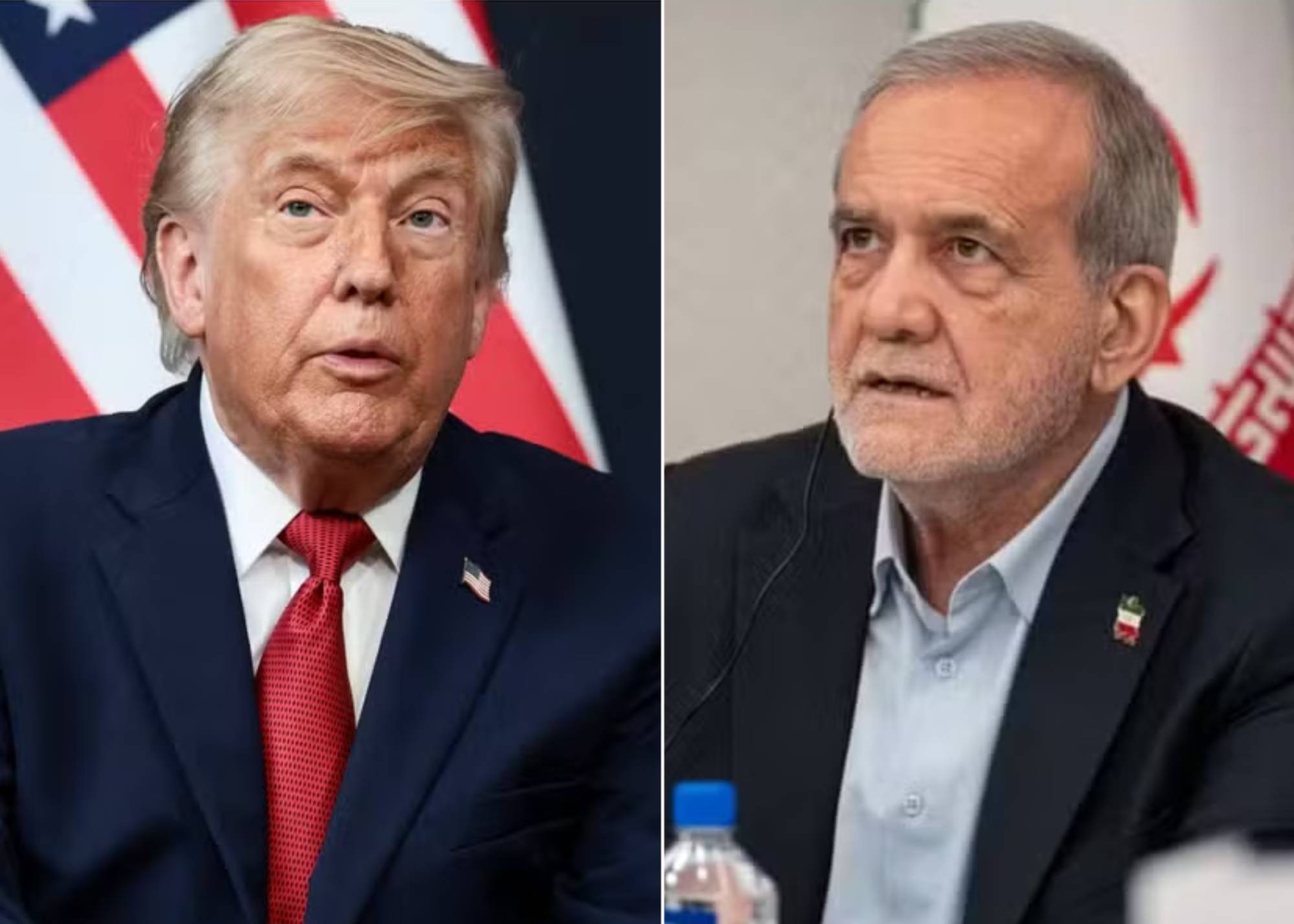
Trump signs initial agreement with Iran in Versailles
In the war waged against the USA and Israel, Iran suffered the deaths of thousands of civilians, lost a large part of its Air Force, its Navy and even saw its Supreme Leader, Ayatollah Ali Khamenei, die a victim of foreign attacks. Despite this, the signing of the initial peace agreement with the USA, signed by the presidents of the two countries on Wednesday (17), is a partial victory for Tehran.
✅ Follow the g1 international news channel on WhatsApp
The analysis is by Vitelio Brustolin, professor of International Relations at Universidade Federal Fluminense (UFF) and researcher at Harvard.
Brustolin highlights that, despite losses on the battlefield, Iran managed to maintain control of the Strait of Hormuz and, using this to his advantage, was able to take his demands to the negotiation table - and, as a bonus, curb Israel's growing projection in the Middle East.
"This is a change in the architecture of power in the region", summarizes the professor and researcher, highlighting that a winner of the conflict should only emerge clearly when and if a definitive peace agreement is signed.
The Strait of Hormuz is a strategic point for the flow of much of the world's oil and gas. It was open until February, when Tehran closed the passage in response to the US and Israeli military offensive, raising the price of products on the international market and producing a ripple effect on all world trade.
US President Donald Trump and Iranian President Masoud Pezeshkian
Evelyn Hockstein/Reuters and Angelina Katsanis/AP Photo
"The war was not about the Strait of Hormuz, it was about stopping Iran's power projection in the region", says Brustolin. "That was Pete Hegseth's stated objective at the beginning of the conflict."
"Iran continues to have about two-thirds of its ballistic missiles, its drone program, with 11 tons of uranium enriched to unknown percentages.
It maintains the status quo", says the professor, pointing out that the nuclear program will be discussed before a definitive agreement is signed.
In other words, the Iranians continue to have the power to impose themselves militarily against countries in the region, including regional adversaries and allies of the Americans, such as Saudi Arabia, Kuwait and Bahrain, for example, which were constant targets of attacks throughout the conflict.
In addition, highlights Brustolin, Iran is negotiating the end of sanctions and access to a US$ fund 300 billion - and it has the chance of being able to do so without dismantling a network of influence considered terrorist by the international community, which includes Hezbollah, in Lebanon, and the Houthis, in Yemen.
In addition, "Iran also interrupts a moment in which Israel was on a growing trajectory of geopolitical power", says the professor.
Since the terrorist attacks by Hamas, in October 2023, Israel has begun an offensive against several enemies regional, "sometimes fighting on six fronts at the same time", and manages to weaken them all.
In addition to Hamas itself, in Gaza, Israel weakens an axis of power of Iranian "proxies" that extended to its borders: Hezbollah, a Shiite extremist group (like Iran) is the target of several attacks, which even end up killing its leader, Hasan Nasrallah; replaced by a Sunni leader.
This time, however, the Israeli government finds itself frustrated in its objective of dismantling Iran's drone and ballistic missile program, both capable of reaching its territory.
Ships are seen in the Strait of Hormuz, in Musandam, Oman, on June 16, 2026
Reuters
Obama Agreement x Trump Agreement
Brustolin makes a point of highlighting that the The initial agreement signed this week leaves many points open and is more similar to a ceasefire, in which the parties agree to an end to the fighting and turn to a diplomatic resolution.
Officially, it is called a "memorandum of understanding" by the US and Iran.
The main issue postponed by the document is the Iranian nuclear program, which must be discussed by negotiators in the next 60 days - and, if they do not reach an agreement, the talks will extend for another 60 days. days.
The professor draws attention to the nuclear agreement signed in 2015 between Tehran and the Barack Obama government, which placed a series of brakes on Iran's program in exchange for the end of trade sanctions on the country.
"This agreement was harshly criticized by Trump and Republican senators for a long time", points out Brustolin, upon becoming president for the first time, unilaterally withdraws from the agreement, calling it bad for the USA.
But what does this say. agreement?
"He said that Iran could not enrich uranium to more than 3.67%, and that the country could only keep 300 kg of the material, drastically reduce the number of centrifuges and concentrate all its production in Natanz", summarizes the professor.
The current Iranian program, estimated at 11 tons of uranium enriched to a much higher level (purity of 90% is required for it to be used as a nuclear weapon; it is estimated that Iran enriched the material to 60%).
Understand how uranium enrichment works
Brustolin considers, therefore, that the chances of Trump getting a worse deal are high, or at least equivalent to the one signed by his successor.
"Obama's deal was valid for 15 years. Trump wants the deadline to be extended by 20 years, but Iran has already proposed a 10-year validity period.
In other words, it is quite possible that they will meet halfway, and close an agreement for the same 15 years", says the professor.
See below the 14 points of the initial agreement:
USA and Iran declare the immediate and permanent end of the war on all fronts, including in Lebanon, and commit not to initiate any conflict against each other and to guarantee Lebanese territorial integrity and sovereignty;
USA and Iran commit to respecting each other's sovereignty and territorial integrity. other and not to interfere in each other's internal affairs;
US and Iran commit to conduct negotiations to reach a final agreement within 60 days, with a deadline extendable upon mutual consent;
US will lift its naval blockade of Iran and withdraw its military forces from the region around Iran within 30 days of signing the memorandum;
Iran will reopen the Strait of Hormuz within 30 days and commits to ensuring safe and cost-free passage for commercial ships for 60 days. Iran will also dialogue with Oman and other Persian Gulf countries on the future administration of the strait;
US commits, together with its regional partners, to create a program for the reconstruction and economic development of Iran, with minimum funding of US$300 billion;
US commits to end all types of sanctions against Iran, including UN Security Council resolutions, International Atomic Energy Agency (IAEA) Board of Governors resolutions and all sanctions US unilateral actions;
Iran reaffirms that it will not produce or acquire nuclear weapons, and both parties agree to address the dilution of enriched uranium through an agreed mechanism and with IAEA oversight. The US and Iran also agree to discuss the topic of enrichment and other nuclear issues in the future;
US and Iran agree to maintain the current status quo until they reach a final agreement: Iran will maintain its current nuclear policy; Middle East;
US commits to allow Iran to trade its oil and petrochemicals;
US commits to fully release all Iranian assets and funds that were frozen or restricted by sanctions;
Both parties agree to establish an implementation mechanism to oversee the execution of this memorandum and future adherence to the final agreement;
Upon signature and commencement of implementation of clauses 1, 4, 5, 10 and 11, the Negotiations on the final agreement will focus exclusively on the remaining clauses;
The final agreement will be ratified through a binding UN Security Council resolution within 60 days.
Source: G1