Drought threatens sugar production in France with no rain forecast
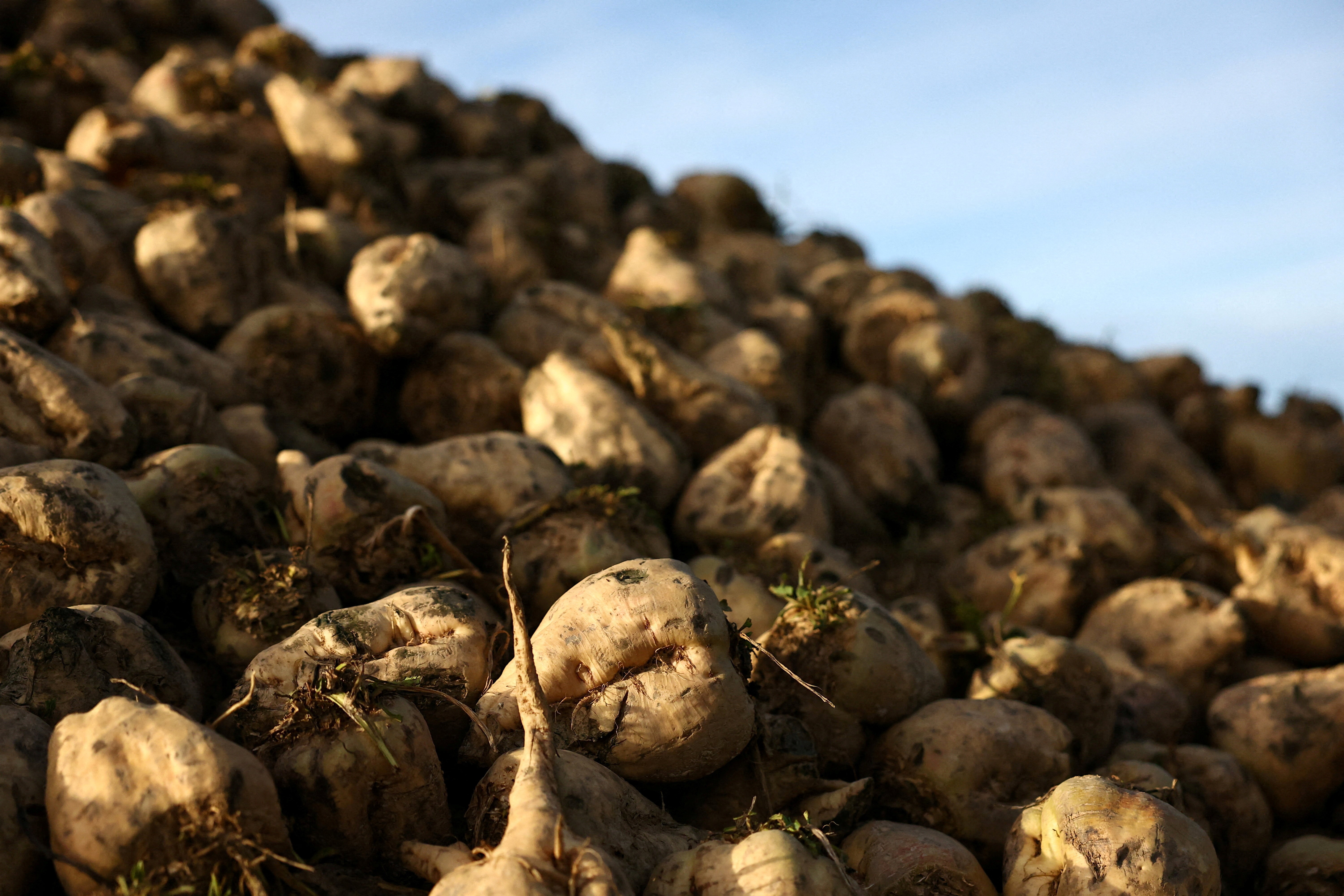
Harvested sugar beets are seen in a field on the outskirts of Voinsles, France
REUTERS/Abdul Saboor/File photo
A prolonged drought is threatening sugar production in France, the European Union's biggest producer, with no rain expected in the main beet-producing regions for the next two weeks, according to growers, while concerns about European harvests are driving a rise in sugar prices.
Have a story suggestion? Send to g1
The price of white sugar rose almost 10% in the last week, reaching the highest high in 9 and a half months on Wednesday, also driven by the El Niño weather phenomenon in Asia. Prices had fallen to their lowest level in more than five years earlier this year due to abundant supply, hurting sugar mills' profits.
Europe has been facing a record heat wave that has caused hundreds of excess deaths and disrupted daily life for more than a week, with the heat expected to intensify again next week in countries such as France and Germany.
Now on g1
"Water is essential for sugar beet. If it doesn't rain in the next two weeks, it will be catastrophic," said Franck Sander, president of CGB, the French beet growers' association.
Météo France forecasts no rain in the sugar beet plains around Paris and northern France until at least July 14.
EU sugar production expected to fall by 15%
So far, the situation in France is uneven, with beets showing dry leaves in some fields, while others are faring better, said Sander.
In its latest forecast released on June 26, the European Commission estimated EU sugar production in the 2026/27 harvest at 14.13 million metric tons, a 15% drop compared to the 2025/26 harvest. This was due to a 9% reduction in planted area and a 6.5% drop in productivity.
The biggest drop in expected productivity was recorded in France, but the Commission also predicted a drop in the other two main producers, Germany and Poland.
"The drought in France is still quite severe. Low rainfall will continue to affect the far west of Europe for at least the next ten days and possibly two weeks," said independent sugar broker and consultant Michael McDougall.
French farmers are also concerned about the spread of yellowing disease following heavy aphid infestations at the start of the harvest, Sander said.
The virus devastated crops in 2020 after the European Union banned some neonicotinoid pesticides used to protect crops, citing evidence that they harmed bees.
France granted temporary exemptions in 2021 and 2022 after farmers and growers sugar producers stated that the ban threatened the viability of the sector. The exemptions were later revoked by France's Council of State following a ruling by the EU's top court.
Parliament is debating a new exemption this week as an amendment to a broader agricultural bill. The Agriculture Minister said she does not oppose the measure, but would prefer it to be debated separately to reduce the risk of the broader bill being rejected.
A final decision is expected later this month. However, it would arrive too late to affect this year's crop, as aphids usually infect plants in the spring and symptoms appear in the summer.
Source: G1