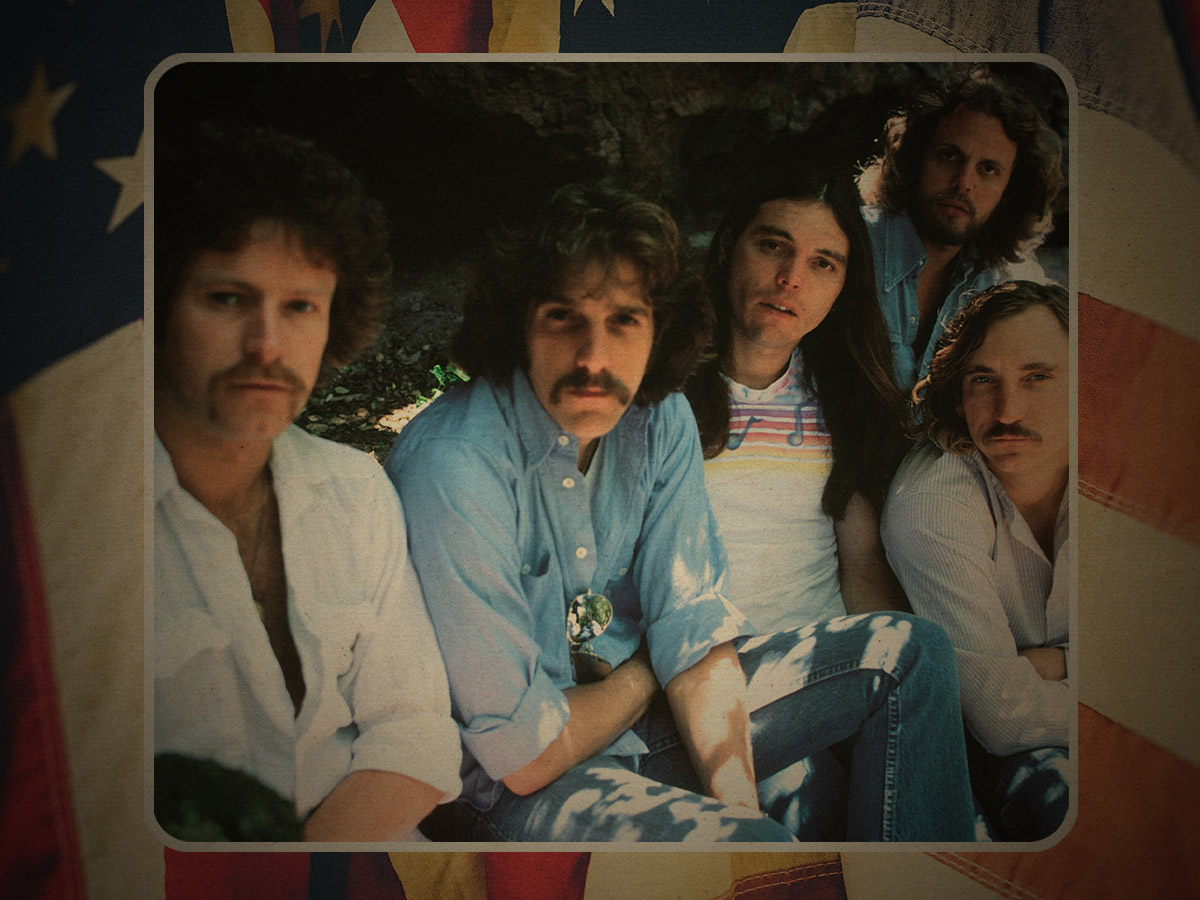
Don Henley and the Eagles: The 1989 Song That Marked a Political Stance in Music
Por Equipe Editorial CifraNET · 26/06/2026
Publicidade
In a current scenario marked by disenchantment with political and social directions, where bureaucratic power seems to accelerate a global crisis, music emerges as an instrument of resistance and reflection. Don Henley, lead singer of the Eagles, and his iconic 1989 solo song, "The End of the Innocence," are clear examples of how art can make a powerful political statement, even in times where many artists prefer to shy away from such involvement.
The feeling of frustration that permeates contemporary society is not only the result of the actions of politicians and businesspeople who exploit the world for personal and financial gains, but also the absence of musicians who, in the 1960s and 1970s, were pillars of liberal resistance. These artists, who were once active voices against the system, seem to have fallen silent when their financial interests were threatened, leaving a vacuum in the cultural and political struggle that is felt today.
While figures like Gene Simmons preach the separation of art and politics, and Rod Stewart tries to soften the image of controversial politicians, many of the biggest names in historical music seem to recoil from political commitment. This is especially frustrating because, for these artists who have already reached the heights of fame, the effort to positively influence society could be minimal, with just a song or a statement to reignite the debate and inspire change.
Don Henley and the Eagles, although never the most explicitly political band, keep that flame alive in their current phase. In their recent performances at Sphere, in Las Vegas, they incorporated "The End of the Innocence" into their repertoire, accompanied by a video that represents the band's only political demonstration to date. Henley explained that this is the way they found to protest, even if modest, highlighting the importance of continuing to use music as a tool of social criticism.
Henley also acknowledged that despite his band making this gesture, other contemporary musicians are much more engaged. He cites Bruce Springsteen and Tom Morello as examples of artists who remain steadfast at the intersection of art and politics, maintaining the legacy of past greats like Bob Dylan, Joan Baez, Pete Seeger, Stevie Wonder, Peter, Paul and Mary, Country Joe and the Fish, and Crosby, Stills, Nash & Young. These artists were protagonists of the counterculture and political movements that marked the end of the 60s and beginning of the 70s, using their music to denounce injustices and mobilize the public.
Henley's reflection highlights a significant change: it is not the public that has abandoned the fight, but rather many musicians who, at crucial moments, chose to walk away. He himself positions himself as a moderate participant in this resistance, recognizing that the engagement of Springsteen, Morello and Neil Young is much more intense and consistent, reinforcing the idea that art and politics are inseparable and that music can, indeed, be a powerful agent of social transformation.
Thus, "The End of the Innocence" is not just a song from the past, but a current symbol of the need for artists to take a stand in the face of political and social challenges. Don Henley and the Eagles, by keeping this music alive in their performances, offer an important reminder: even in difficult times, music can and should continue to be a voice of protest and hope.