Dollar operates on the rise and hits R$5.12, after stronger employment data in the USA; Ibovespa falls
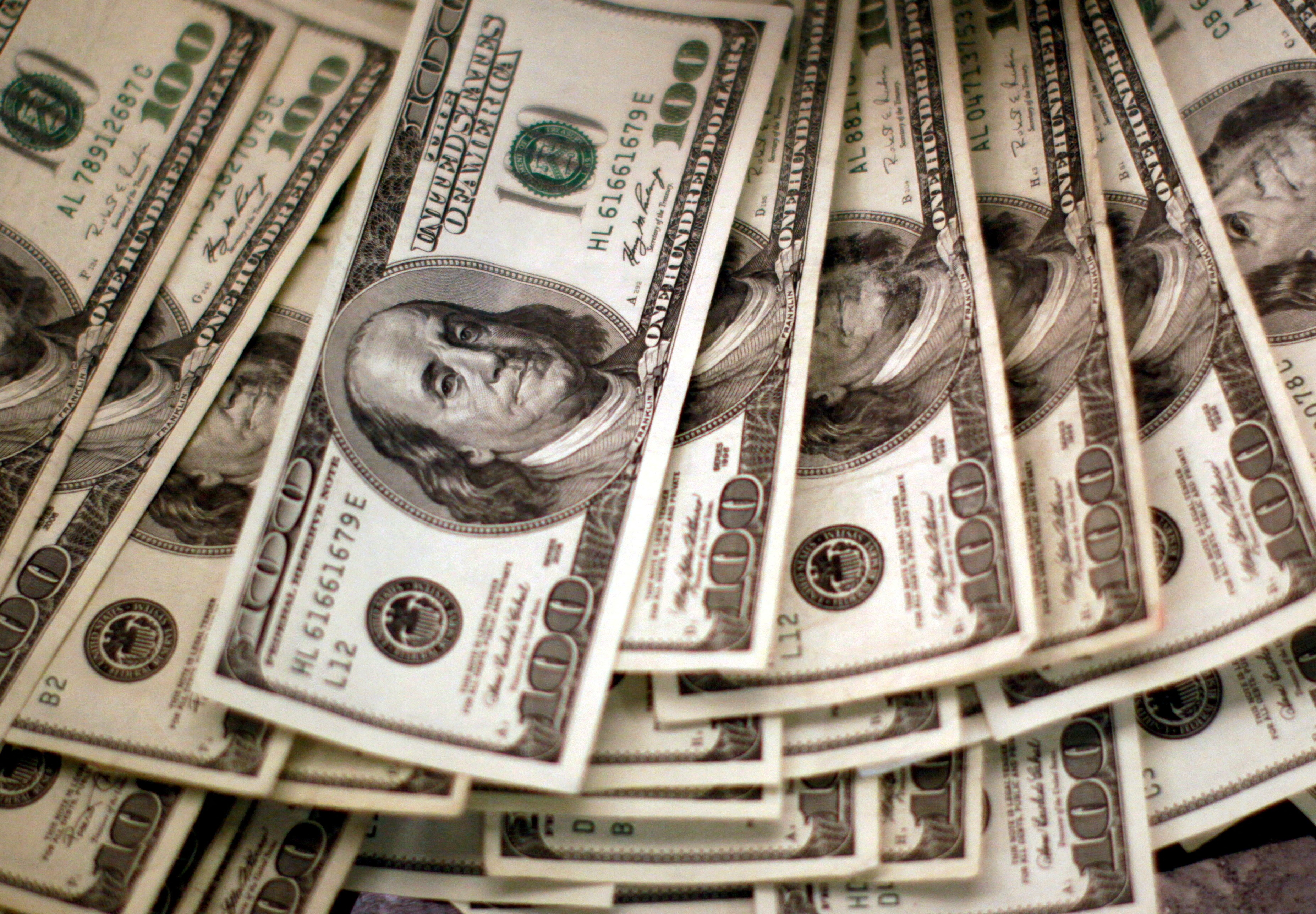
Understand what makes the price of the dollar rise or fall
The dollar operates on the rise this Friday (5), back from the Corpus Christi holiday. The currency was up 1.01% at around 10:50 am, quoted at R$5.1179. At the day's high, it reached R$5.1209. Ibovespa, the main index on the Brazilian stock exchange, fell 0.22% at the same time, to 169,956 points.
Do you have any suggestions for a report? Send it to g1
▶ The main highlight of the session is the new employment data from the United States. According to information from the American Department of Labor, the country recorded strong job creation in May, with 172 thousand new vacancies in the month. Despite representing a slowdown compared to April (179 thousand new jobs, revised data), the figure was still well above what the market expected, of 85 thousand new jobs.
The data is important because it reinforces the perspective that the Federal Reserve (American central bank) may need to raise interest rates in the USA again to control inflation.
➡ Interest rate policy in the USA also has repercussions in Brazil. With rates at a high level, pressure is growing for Selic, the Brazilian basic interest rate, to remain at a high level for longer, in addition to generating effects on the exchange rate and the level of foreign investment in the country.
▶ Tensions in the Middle East also continue to influence financial markets. This Friday, Lebanon accused Iran of using the country as a "bargaining chip" in negotiations with the US. The country once again suffered air strikes from Israel and, four days ago, Tehran's diplomatic spokesman conditioned any type of agreement with the American government on the interruption of Israeli bombings on Lebanese territory.
Even so, oil is experiencing a bearish session this Friday. Around 10:50 am, a barrel of Brent, an international reference, had fallen 0.97%, quoted at US$ 94.11. West Texas Intermediate (WTI), from the USA, fell 1.50%, to US$ 91.64 per barrel.
See below more details of the day in the market.
Dollar
a
Accumulated for the week: +0.48%;
Accumulated for the month: +0.48%;
Accumulated for the year: -7.69%.
Ibovespa
Accumulated for the week: -1.99%;
Accumulated for the month: -1.99%;
Accumulated for the year: +5.71%.
Trade retaliation
In yet another trade retaliation by the Trump administration, the United States reported on Tuesday night (2) that it carried out another investigation based on Section 301 of the American Trade Law and concluded that Brazil and 58 other countries failed to prohibit and monitor the import of goods produced with forced labor.
In response, the American government proposed the application of additional tariffs of 12.5% on all products from these countries. This is because, according to the report, the practice of these countries is "irrational" and restricts US trade by creating unfair competition for American companies and workers.
The US government has established two levels of surcharge:
10% additional tariff for countries that already have a partial ban or that have formally committed to applying rules through reciprocal trade agreements. They are: European Union, Mexico, Canada, Indonesia, Pakistan and Ecuador.
12.5% additional tariff for all other economies investigated that do not have effective control regimes. They are: Brazil, China, India, Japan, South Korea, United Kingdom, Argentina, Saudi Arabia, among others.
The 12.5% rate comes just one day after the American government decided to impose a 25% tariff on Brazilian products.
According to Itamaraty, the expectation is that the two rates, if adopted, will be cumulative.
READ ALSO
Brazilian government says it already expected a surcharge and reinforces that it is a US political decision
25% US tariff could affect steel, juice and machinery; see products
USA says the BC favors PIX; why is the system in Trump's sights?
Section 301: understand the mechanism used by the USA against Brazil
Next steps: is the decision final? What happens now?
Middle East impasse continues
More than three months after the US and Israel launched attacks on Iran, the conflict is at a stalemate. (follow the main developments)
The military advisor to Iran's supreme leader also warned of the possibility of more missile and drone attacks if the United States renews its attacks against Iran.
"Every shot fired and every attack will be responded to with a barrage of missiles and drones," Mohsen Rezaei published in Qeshm, which launched retaliatory attacks against Kuwait and Bahrain. The attack caused damage to Kuwait's airport, leaving 1 dead and more than 60 injured.
President Trump, in turn, was optimistic about the negotiations - even in the midst of ceasefire violations. According to the American president, Iran has agreed not to have nuclear weapons.
Trump also highlighted that the Iranian supreme leader, Motjaba Khamenei, is involved in the negotiations and said he wants to meet him at some point.
Faced with mixed signals and uncertainty about the continuation of negotiations, oil prices rose again on the international market this Wednesday.
Global markets
The escalation of the conflict in the Middle East was also on the radar in global markets. In the USA, Wall Street indices closed lower.
The Dow Jones index fell 1.21%, to 50,688.43 points, while the S&P 500 fell 0.71%, to 7,555.82 points, and the Nasdaq Composite fell 0.89%, to 26,853.98 points.
In Europe, most indices closed lower. The pan-European index STOXX 600 fell 0.7%, to 621.19 points.
Among the main indices in the region, the German DAX fell 1.31%, while the French CAC-40 lost 0.71% and the FTSE/Mib had a devaluation of 1.07%. In contrast, the British FTSE 100 index gained 0.40%.
In Asia, Chinese stock markets closed higher, driven by shares in the optical and semiconductor sectors. The Shanghai Composite index rose 0.2%, while the CSI 300 rose 0.5%.
In Hong Kong, the Hang Seng fell 1.6%. Japan's Nikkei rose 2.5%.
Dollar notes.
Rick Wilking/Reuters
Source: G1