Dollar operates higher, with an eye on new Trump tariffs and conflict between the US and Iran; Ibovespa falls
Understand what makes the price of the dollar rise or fall
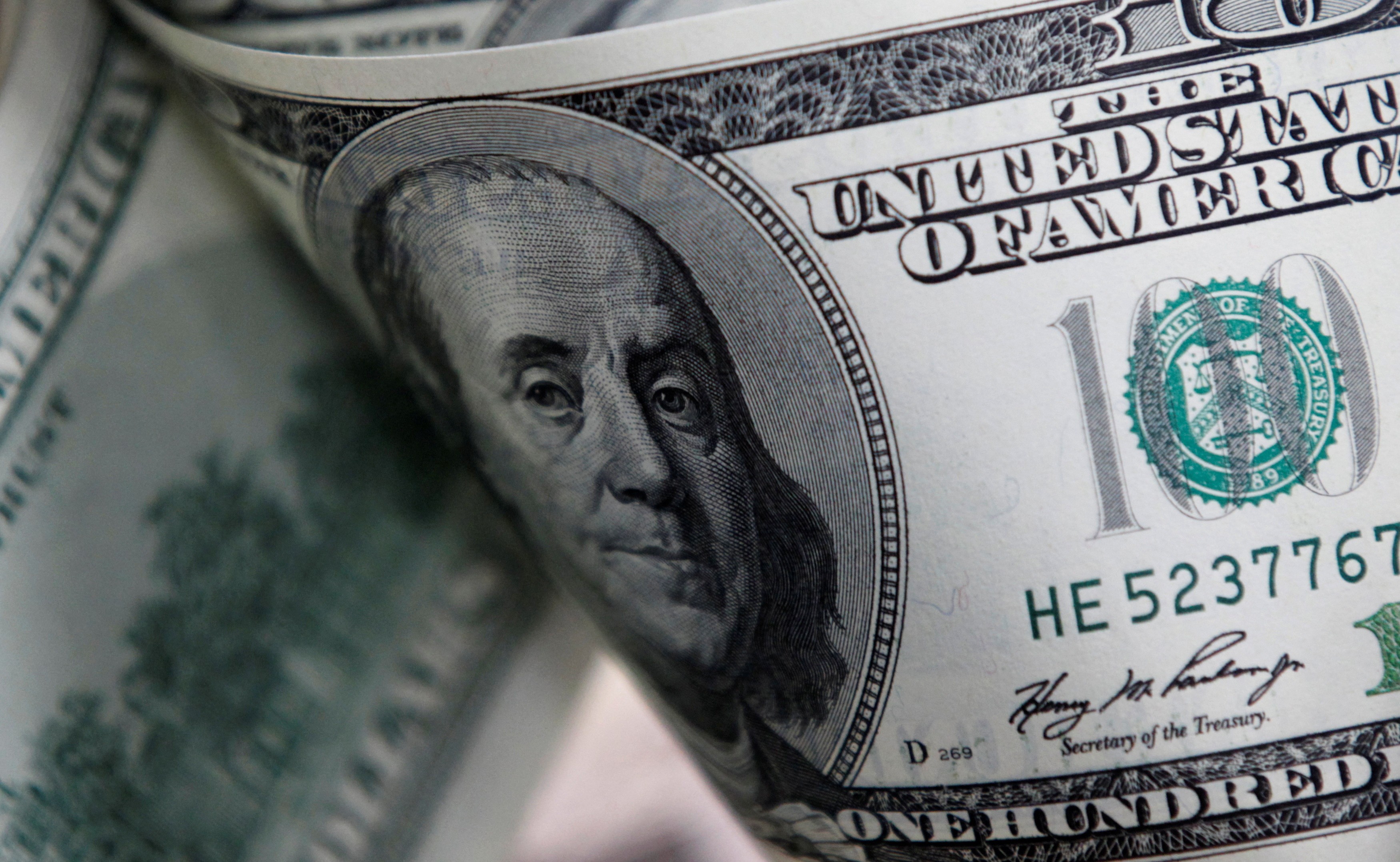
The dollar operates up 0.56% this Wednesday (3), quoted at R$ 5.0366 around 10:10 am. Ibovespa, the main index on the Brazilian stock exchange, fell 1.27%, to 171,989 points.
Do you have any suggestions for a report? Send to g1
▶ The United States proposed yet another surcharge for Brazilian products on Tuesday night (2). The decision to apply a 12.5% rate is based on Section 301 of the American Trade Law - the same one used to justify the 25% tariff imposed on Brazil the day before.
The new investigation carried out by the American government concluded that Brazil and 53 other countries failed to ban the import of goods produced with forced labor and that this creates a dynamic of "unequal competition" for American companies and workers.
It is not yet clear, however, whether the fees add up - which could total a surcharge of 37.5% on Brazilian products. (understand more below)
▶ For the financial market, however, uncertainties surrounding the conflict in the Middle East weigh even more heavily, amid mixed messages coming from the United States and Iran. Yesterday, President Donald Trump denied that the negotiations had been interrupted, contradicting what Tehran authorities had stated at the beginning of the week.
This Wednesday, the American president stated that Iran "agreed not to have nuclear weapons" and announced that he would like to meet the country's supreme leader, Ayatollah Motjaba Khamenei at some point. Faced with uncertainty about the continuity of negotiations, oil was facing another day of growth.
Around 9 am, a barrel of Brent, an international reference, rose 2.10%, quoted at US$ 98.02. West Texas Intermediate (WTI), from the USA, rose 2.15% at the same time, to US$ 95.78 per barrel.
See below more details of the day in the market.
Dollar
a
Accumulated for the week: -0.67%;
Accumulated for the month: -0.67%;
Accumulated for the year: -8.74%.
Ibovespa
Accumulated for the week: +0.24%;
Accumulated for the month: +0.24%;
Accumulated for the year: +8.11%.
Trade retaliation
In yet another trade retaliation by the Trump administration, the United States reported on Tuesday night (2) that it carried out another investigation based on Section 301 of the American Trade Law and concluded that Brazil and 52 other countries failed to prohibit and monitor the import of goods produced with forced labor.
In response, the American government proposed the application of additional tariffs of 12.5% on all products from these countries. This is because, according to the report, the practice of these countries is "irrational" and restricts US trade by creating unfair competition for American companies and workers.
The US government has established two levels of surcharge:
10% additional tariff for countries that already have a partial ban or that have formally committed to applying rules through reciprocal trade agreements. They are: European Union, Mexico, Canada, Indonesia, Pakistan and Ecuador.
12.5% additional tariff for all other economies investigated that do not have effective control regimes. They are: Brazil, China, India, Japan, South Korea, United Kingdom, Argentina, Saudi Arabia, among others.
The 12.5% rate comes just one day after the American government decided to impose a 25% tariff on Brazilian products. According to Itamaraty, the expectation is that the two rates, if adopted, will be cumulative.
READ ALSO
Brazilian government says it already expected a surcharge and reinforces that it is a US political decision
25% US tariff could affect steel, juice and machinery; see products
USA says the BC favors PIX; why is the system in Trump's sights?
Section 301: understand the mechanism used by the USA against Brazil
Next steps: is the decision final? What happens now?
Middle East impasse continues
In recent days, the conflict involving the USA, Iran and Israel has intensified again, putting the already fragile truce in force at risk.
(follow the main events of the war in the Middle East live)
On Monday (1st), the two countries exchanged new attacks, while the Iranian government suspended peace negotiations with Washington after Israeli bombings in Lebanon.
Talks for an agreement also lost momentum after the US presented new demands to Tehran over the weekend.
At the same time, Israel expanded its offensive in southern Lebanon, reaching areas close to a hospital in the city of Tire, in an attack that left people dead and more than a hundred injured, in addition to issuing evacuation warnings for residents of the region.
Iranian news agencies even reported that negotiations between the US and Iran were at a standstill. This Tuesday, however, American President Donald Trump stated that talks have been ongoing and that reports that negotiations had been interrupted would be "false and erroneous".
American Secretary of State Marco Rubio stated that the US will grant sanctions relief to Iran if the country agrees to give up its nuclear activities.
"Iran is being sanctioned because it has highly enriched uranium. Iran is being sanctioned because of its nuclear activities. If Iran agrees to give up those things, there will be sanctions relief associated with its commitment and compliance with these agreements," Rubio said, in the first public testimony given in the US Congress since the start of the war.
Global markets
The escalation of the conflict in the Middle East once again weighed on financial markets this Wednesday. In the United States, Wall Street futures indexes operated without a single direction.
While the Dow Jones futures index fell 0.35%, the S&P 500 futures fell 0.11% and the Nasdaq futures advanced 0.14%.
In Europe, the indices also had mixed signals. Among the main indices in the region, the German DAX fell 0.85% at close to 9:20 am, while the British FTSE 100 fell 0.28% and the French CAC-40 lost 0.25%.
In Asia, China's stock markets closed higher, driven by shares in the optical and semiconductor sectors. The Shanghai Composite index rose 0.2%, while the CSI 300 rose 0.5%.
In Hong Kong, the Hang Seng fell 1.6%. Japan's Nikkei advanced 2.5%.
Dollar
Reuters/Lee Jae-Won/File photo
Source: G1