Dollar opens this Wednesday session on a high, with an eye on new Trump tariffs and conflict between the US and Iran
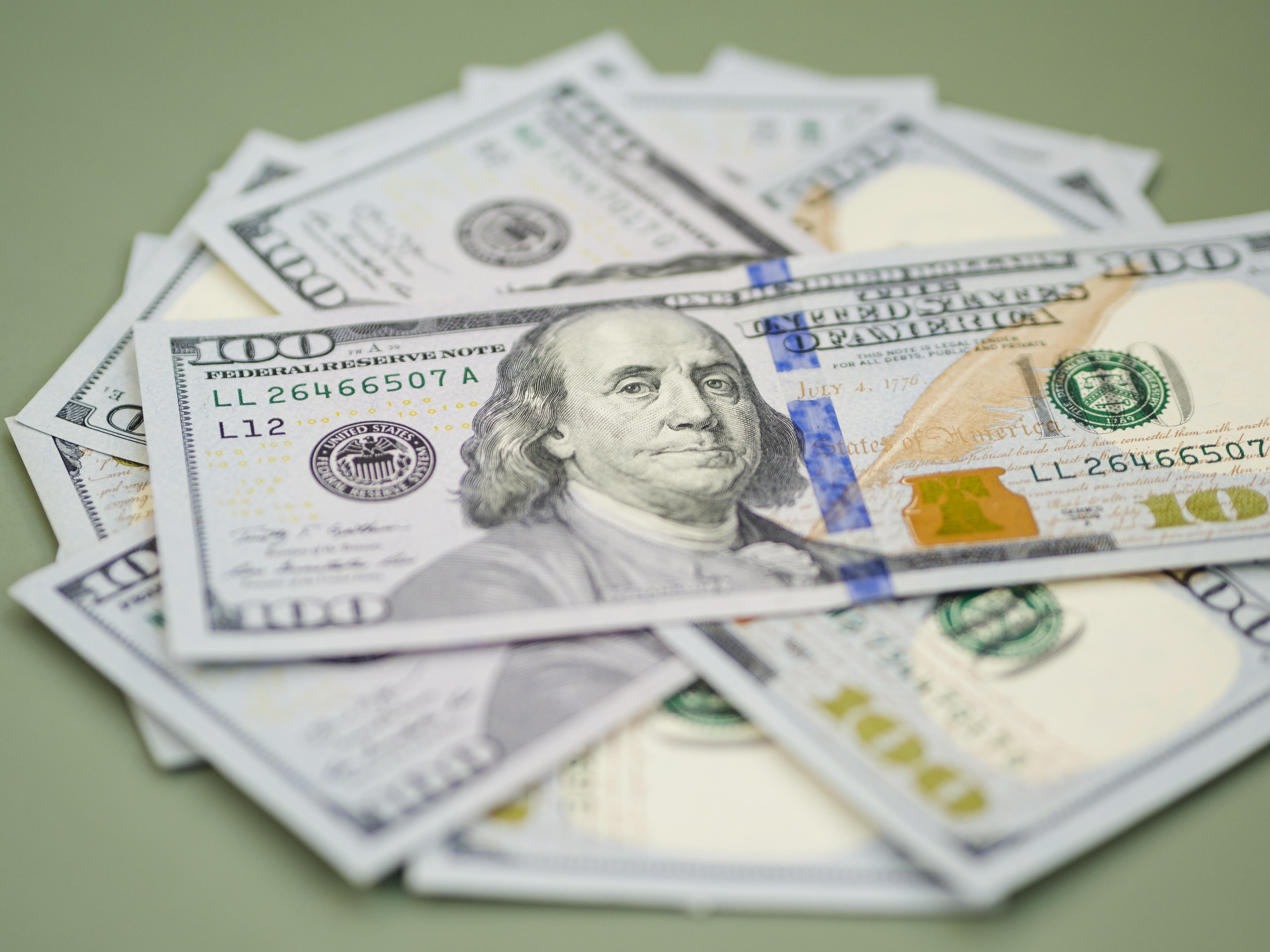
Understand what makes the price of the dollar rise or fall
The dollar opened this Wednesday's session on a high and rose 0.14% close to 9 am, quoted at R$5.0162. Negotiations on the Ibovespa, the main index on the Brazilian stock exchange, only start at 10am.
Do you have any suggestions for a report? Send to g1
▶ The United States proposed yet another surcharge for Brazilian products on Tuesday night (2). The decision to apply a 12.5% rate is based on Section 301 of the American Trade Law - the same one used to justify the 25% tariff imposed on Brazil the day before.
The new investigation carried out by the American government concluded that Brazil and 53 other countries failed to ban the import of goods produced with forced labor and that this creates a dynamic of "unequal competition" for American companies and workers.
It is not yet clear, however, whether the fees add up - which could total a surcharge of 37.5% on Brazilian products. (understand more below)
▶ For the financial market, however, uncertainties surrounding the conflict in the Middle East weigh even more heavily, amid mixed messages coming from the United States and Iran. Yesterday, President Donald Trump denied that the negotiations had been interrupted, contradicting what Tehran authorities had stated at the beginning of the week.
This Wednesday, the American president stated that Iran "agreed not to have nuclear weapons" and announced that he would like to meet the country's supreme leader, Ayatollah Motjaba Khamenei at some point. Faced with uncertainty about the continuity of negotiations, oil was facing another day of growth.
Around 9 am, a barrel of Brent, an international reference, rose 2.10%, quoted at US$ 98.02. West Texas Intermediate (WTI), from the USA, rose 2.15% at the same time, to US$ 95.78 per barrel.
See below more details of the day in the market.
Dollar
a
Accumulated for the week: -0.67%;
Accumulated for the month: -0.67%;
Accumulated for the year: -8.74%.
Ibovespa
Accumulated for the week: +0.24%;
Accumulated for the month: +0.24%;
Accumulated for the year: +8.11%.
Trade retaliation
In yet another trade retaliation by the Trump administration, the United States reported on Tuesday night (2) that it carried out another investigation based on Section 301 of the American Trade Law and concluded that Brazil and 52 other countries failed to prohibit and monitor the import of goods produced with forced labor.
In response, the American government proposed the application of additional tariffs of 12.5% on all products from these countries.
The United States concluded an open trade investigation against Brazil in July 2025 and concluded that some Brazilian policies harm American companies and exporters.
Based on this conclusion, the US government proposed a 25% tariff on Brazilian products, although several strategic items were excluded from the measure.
The main points raised by the Americans were:
PIX and digital platforms: the US claims that the Central Bank favors Pix in relation to American electronic payment companies and criticizes Brazilian court decisions that forced US social networks to remove content and suspend accounts.
Trade agreements: the US government says that Brazil grants higher tariffs lows for products from Mexico and India, which would put US companies at a disadvantage.
Ethanol: the US claims that Brazil does not offer tariff treatment equivalent to that granted to Brazilian producers.
Intellectual property: the report points out slowness in granting patents, especially in the pharmaceutical sector, in addition to failures in combating piracy and counterfeiting.
Fighting corruption: Americans claim that Brazil does not adopt sufficient measures against bribery and corruption.
Deforestation illegal: according to the USTR, the country has environmental laws, but would not enforce them effectively.
Despite the tariff proposal, products such as coffee, some meats, fruits, fertilizers, medicines, aircraft and aircraft parts are among the items that could be exempt.
(see more here)
The decision is not final. The American government has opened a phase of public consultations and hearings, with a deadline of July 15, 2026, to decide whether or not to apply the measures against Brazil.
READ ALSO
ANA FLOR: new tariff is more serious and has electoral potential
MIRIAM LEITÃO: why the current tariff is 'more dangerous'
USA says that the BC favors PIX; why is the system in Trump's sights?
Section 301: understand the mechanism used by the USA against Brazil
Next steps: is the decision final? What happens now?
Middle East impasse continues
In recent days, the conflict involving the USA, Iran and Israel has intensified again, putting the already fragile truce in force at risk. (follow the main events of the war in the Middle East live)
On Monday (1st), the two countries exchanged new attacks, while the Iranian government suspended peace negotiations with Washington after Israeli bombings in Lebanon.
Talks for an agreement also lost momentum after the US presented new demands to Tehran over the weekend.
At the same time, Israel expanded its offensive in southern Lebanon, reaching areas close to a hospital in the city of Tire, in an attack that left people dead and more than a hundred injured, in addition to issuing evacuation warnings for residents of the region.
Iranian news agencies even reported that negotiations between the US and Iran were at a standstill. This Tuesday, however, American President Donald Trump stated that talks have been ongoing and that reports that negotiations had been interrupted would be "false and erroneous".
American Secretary of State Marco Rubio stated that the US will grant sanctions relief to Iran if the country agrees to give up its nuclear activities.
"Iran is being sanctioned because it has highly enriched uranium. Iran is being sanctioned because of its nuclear activities. If Iran agrees to give up those things, there will be sanctions relief associated with its commitment and compliance with these agreements," Rubio said, in the first public testimony given in the US Congress since the start of the war.
Global markets
On Wall Street, the main indices closed the day with little change. Investor optimism with advances in artificial intelligence helped support the market, but gains were limited by uncertainties surrounding negotiations between the US and Iran.
The Dow Jones rose 0.46%, to 51,316.01 points, and the S&P 500 advanced 0.13%, to 7,610.03 points. The Nasdaq Composite, in turn, fell 0.03%, to 27,095.59 points.
In Europe, most indices closed higher, driven by the technology sector and as investors evaluated new inflation data from the euro zone.
Among the main indices in the region, the German DAX rose 0.48%, while the London Financial Times advanced 0.33% and the French CAC-40 gained 0.77%.
In Asia, China's stock markets closed higher this Tuesday (2), driven by technology and artificial intelligence shares. The Shanghai index rose 0.4%, while the CSI 300 rose 1.5%.
In Hong Kong, the Hang Seng jumped 2.5%, led by Tencent, which soared 10.5% following news about the development of a new AI tool for WeChat users.
Investors also followed tensions in the Middle East with caution, amid exchanges of attacks between the US and Iran.
Dollar
freepik
Source: G1