Dollar opens lower with new US tariff threat to Brazil and impasse with Iran
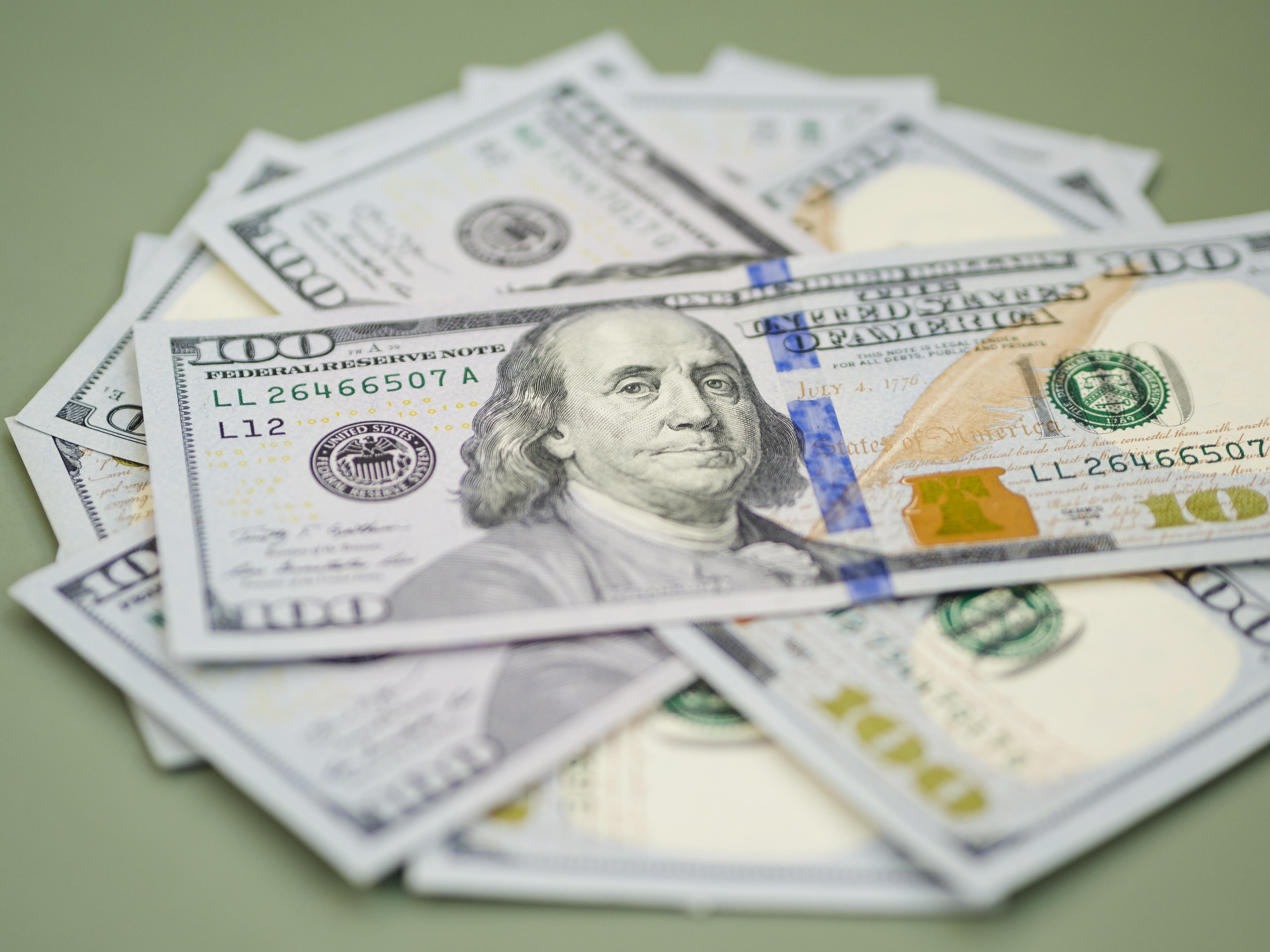
Understand what makes the price of the dollar rise or fall
The dollar opened down 0.26% this Tuesday (2), quoted at US$5.0094 at around 9:05 am. Ibovespa, the main index on the Brazilian stock exchange, starts trading at 10 am.
Investors are responding to the United States government's proposal to impose an additional tariff of 25% on a series of Brazilian products, based on Section 301 of the American trade law.
🗒️ Do you have any suggestions for a report? Send it to g1
▶️ On Monday, the US announced the conclusion of a trade investigation against Brazil and stated that the country adopts practices considered "unreasonable" and harmful to American trade. In response, the American government proposed the application of the new tariff on most Brazilian goods.
The measure, however, has not yet come into force. Before a final decision, the US government will hold public consultations and a hearing scheduled for July. The expectation is that the definition of the adoption of sanctions will occur by the middle of next month.
🔎 Some important products for Brazilian exports, such as coffee, fruit, meat, aircraft, fertilizers, pharmaceutical products and rare earths, would be exempt from the tariff.
▶️ The market is also keeping an eye on the progress of negotiations between the US and Iran. The two countries exchanged a series of attacks this Monday, in yet another setback for ceasefire efforts and amid the impasse in negotiations for a diplomatic solution to the conflict.
See below for more details on the day on the market.
💲Dollar
a
Accumulated for the week: -0.39%;
Accumulated for the month: -0.39%;
Accumulated for the year: -8.49%.
📈Ibovespa
Accumulated for the week: -0.91%;
Accumulated for the month: --0.91%;
Accumulated for the year: +6.88%.
Comes and goes in the Middle East
Tensions in the Middle East were once again in the spotlight this Monday, after Iran interrupted negotiations with the United States, amid new attacks by Israel in Lebanon.
On Saturday, Israel had captured the historic castle of Beaufort, in Lebanon, built at the time of the Crusades, in the deepest incursion of troops into the country in 26 years.
According to information from the Iranian news agency Tasnim, the country's negotiators also placed a ceasefire in Lebanon as a condition for an agreement with the US.
Faced with the impasse, American President Donald Trump said he spoke with the Prime Minister of Israel, Benjamin Netanyahu, and with representatives of Hezbollah, which is supported by Iran.
The republican guaranteed that a ceasefire is in force between the parties in Lebanon and that Netanyahu has agreed not to move Israeli troops towards Beirut.
With tensions apparently under control, the rise in oil prices cooled down during the afternoon, as did the rise in the dollar.
The barrel of Brent, an international reference, was up 4.61% around 4pm, quoted at US$95.32. West Texas Intermediate (WTI), from the USA, rose 5.98%, to US$ 92.58.
Market raises inflation estimate
The financial market once again increased its forecast for inflation in Brazil in 2026. According to the Focus Bulletin, released by the Central Bank this Monday, expectations rose from 5.04% to 5.09%, marking the 12th consecutive week of increase.
The main reason for this worsening is the rise in oil prices caused by the war in the Middle East.
As oil influences the price of fuels, there is a risk that gasoline, diesel and other products will become more expensive, putting pressure on inflation.
Despite this, economists maintained the expectation of a fall in interest rates in the coming years and slightly increased the economy's growth projection in 2026.
Other market forecasts:
Gross Domestic Product (GDP) in 2026: went from 1.89% to 1.90%.
Dollar at the end of 2026: fell from R$5.17 to R$5.16.
Global markets
In the United States, the three main Wall Street indices were up, even amid uncertainty about the American government's negotiations with Iran.
Around 3:30 p.m., the Dow Jones registered an increase of 0.02%, while the S&P 500 it rose 0.46% and the Nasdaq had gains of 0.69%.
European stock markets reached their lowest levels in a week, also with an eye on tensions in the Middle East. The pan-European STOXX 600 index lost 0.8%, at 621.24.
Among the region's main indices, Germany's DAX fell 0.40%, while France's CAC-40 fell 0.45% and the United Kingdom's Financial Times closed with losses of 0.68%.
In Asia, stock exchanges closed without a single direction this Monday. Weak data from Chinese industry increased concerns about the growth rate of the world's second largest economy.
The Shanghai index fell 0.27%, to 4,057 points, and the CSI300 fell 0.98%, to 4,844 points.
In other markets, the performance was positive. Hong Kong's Hang Seng rose 0.86% to 25,398 points; Japan's Nikkei advanced 1.4% to 67,231 points; and Kospi, from South Korea, jumped 3.68%, to 8,788 points.
Dollar
freepik
Source: G1