Dollar opens lower with focus on negotiations between the US and Iran to end the war
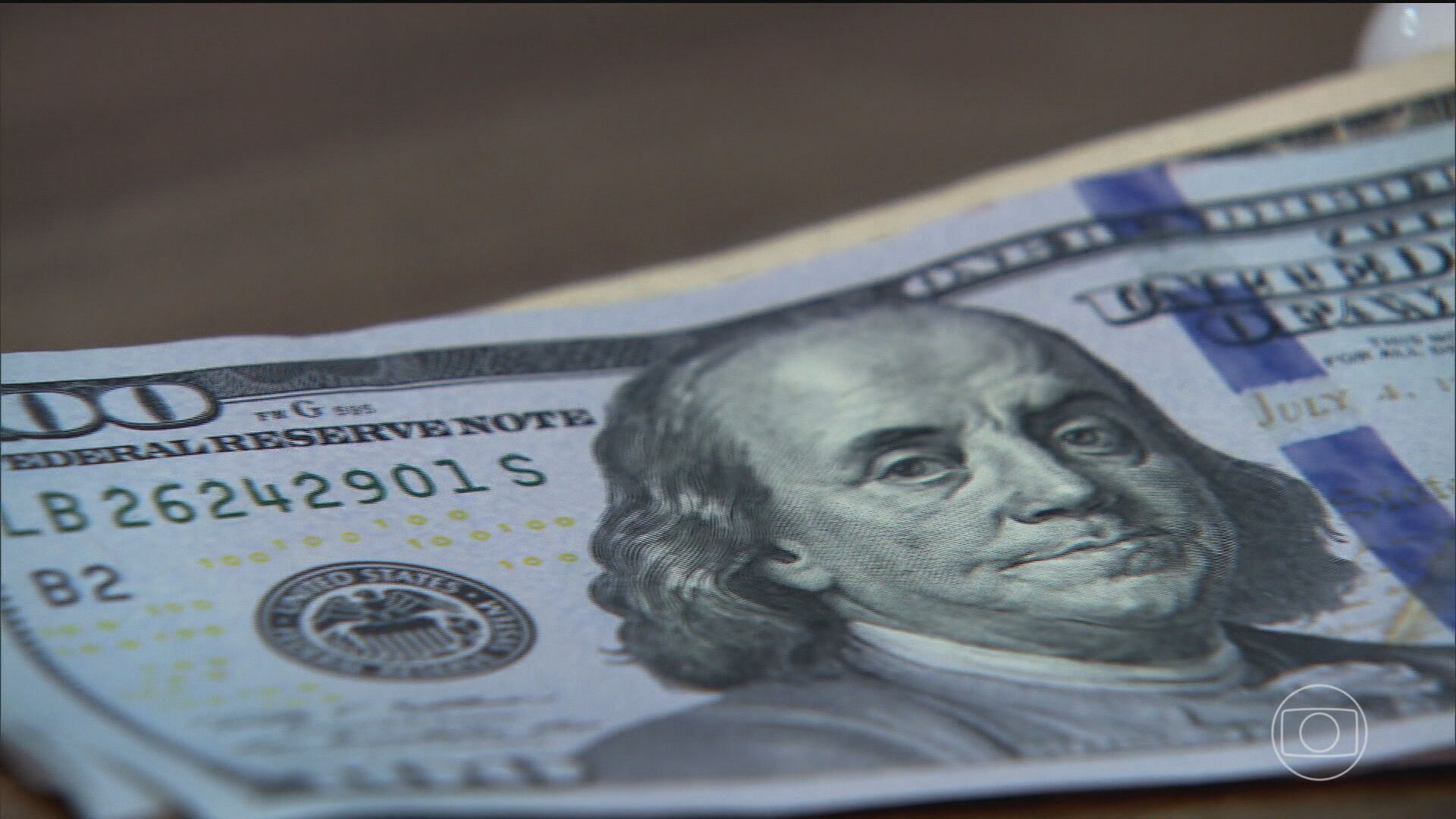
Understand what makes the price of the dollar rise or fall
The dollar opened this Friday (19) down 0.25%, quoted at R$ 5.1610. Ibovespa, the main index on the Brazilian stock exchange, starts trading at 10am.
Do you have any suggestions for a report? Send to g1
▶ Oil prices rose again after the planned negotiations between the United States and Iran, which were to take place in Switzerland, were cancelled. The interruption of talks increased investors' caution regarding the peace agreement signed this week between the two countries.
In the early hours of this Friday, oil futures contracts rose, with Brent rising 0.3%, to US$ 80.09 per barrel, and WTI, 0.45%, to US$ 76.19. At around 8:34 am (Brasília time), however, both started to fall 0.2%, quoted at US$79.69 and US$75.85, respectively. Despite the day's rise, oil is on track to end the week at a low.
▶With the cancellation of the meeting, discussions on the future of the Iranian nuclear program, the situation in Lebanon and the rules for the use of the Strait of Hormuz remain pending. The initial agreement provides for a period of 60 days for the parties to negotiate a definitive understanding.
▶The peace agreement ends almost four months of conflict in the Middle East. With the end of the war, economists are monitoring when markets and economic activity should return to normal. g1 listed the main effects of the war on the economy. (see below)
▶In the USA, the Juneteenth holiday, which marks the end of slavery in the country, keeps financial markets closed this Friday and reduces the schedule of economic releases.
See below for more details on the day in the market.
Dollar
a
Accumulated for the week: +2.22%;
Accumulated for the month: +2.61%;
Accumulated for the year: -5.73%.
Ibovespa
Accumulated for the week: -1.67%;
Accumulated for the month: -3.17%;
Accumulated for the year: +4.44%.
Peace agreement between the USA and Iran
Last Wednesday (17), the USA and Iran signed a 14-point memorandum of understanding, which provides guarantees that Tehran will not develop nuclear weapons, the suspension of American sanctions and financial compensation to the government Iranian.
The document opens an initial period of 60 days for the parties to negotiate a definitive agreement on the Iranian nuclear program, which can be extended for another 60 days.
Until then, the US and Iran have agreed to maintain the status quo: Tehran preserves its nuclear program, while Washington commits not to impose new sanctions or expand its military presence in the region.
Negotiations on the implementation of the agreement were due to begin this Friday (19), in a meeting in Switzerland involving the US, Iran, Pakistan and Qatar.
However, the Swiss government informed that the meeting was cancelled, postponing discussions on issues still pending, such as the Iranian nuclear program, the situation in Lebanon and the rules for using the Strait of Hormuz.
Understand the next steps
The ravages of war
The war in the Middle East caused significant impacts on the global economy.
The interruption of the flow of oil through the Strait of Hormuz raised the price of the commodity, put pressure on fuel costs and increased concerns about inflation in several countries.
As a consequence, consumers faced higher prices, while financial markets recorded losses and the dollar gained strength in the face of greater risk aversion.
With the end of the conflict, economists are now monitoring when economic activity and markets will begin to show signs of normalization.
G1 brought together the main effects of the war and the prospects for recovery.
See the report below:
Global markets
As the New York stock exchanges are closed this Friday because of a holiday, investors are only following the negotiations of American stock futures contracts, which are registering a slight drop.
This morning, Dow Jones Futures fell 0.28%, S&P 500 lost 0.36% and Nasdaq fell 0.45%.
The movement comes after a strong rise in the markets, driven by optimism with the peace agreement between the USA and Iran.
However, new concerns about the situation have once again generated uncertainty among investors.
In Asia, markets closed lower this Friday, in a profit-taking movement after strong recent rises.
In Japan, the Nikkei index fell 0.6%, after reaching a new intraday record for the fifth consecutive session. In South Korea, the stock market fell 1.8%, although it still rose 9.5% in the week.
Stock markets in mainland China and Hong Kong remained closed due to the Dragon Boat Festival holiday. In Taiwan, the markets also did not operate.
*With information from the Reuters news agency.
Dollar reaches the second highest exchange rate in history: R$ 5.86
Reproduction/TV Globo
Source: G1