Dollar opens higher, after interest rate decisions and agreement between the US and Iran
Understand what makes the price of the dollar rise or fall
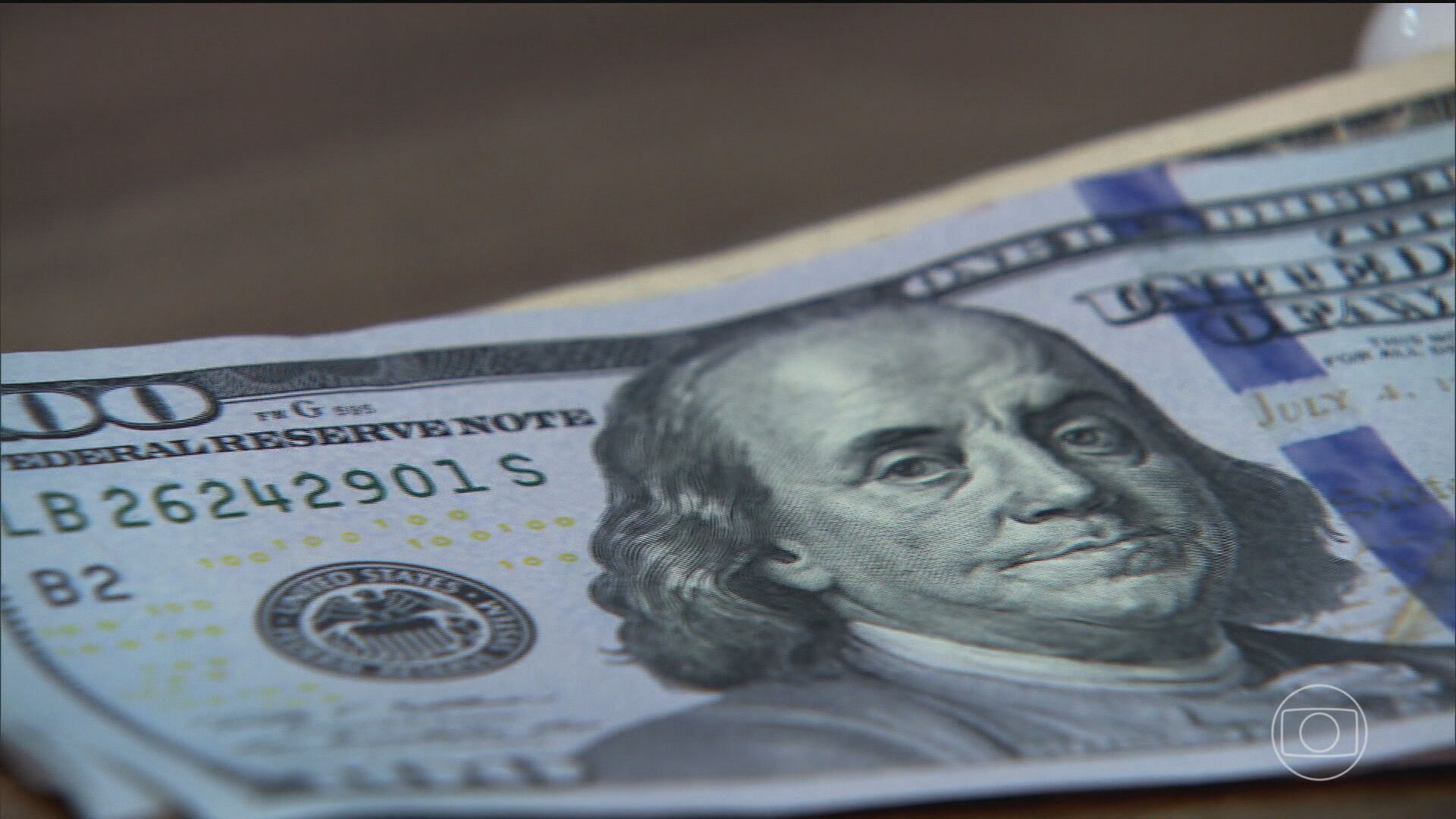
The dollar opened this Thursday's session (18) on a high, with an increase of 0.65% close to 9 am, quoted at R$ 5.1406. Negotiations on Ibovespa, the main index on the Brazilian stock exchange, begin at 10 am.
Do you have any suggestions for a report? Send to g1
▶ The Monetary Policy Committee (Copom) cut the basic interest rate (Selic) by 0.25 percentage points (p.p.), in line with market expectations. The Federal Reserve (Fed, the American BC) decided to keep rates unchanged, amid signs of still high prices in the country.
The interest rate policy in the USA also has repercussions in Brazil. With rates at a high level, pressure is growing for Selic, the Brazilian basic interest rate, to remain at a high level for longer, in addition to generating effects on the exchange rate and the level of foreign investment in the country (understand below).
▶ The new peace agreement between the United States and Iran is also on the radar. The treaty, signed on Wednesday (17) by Presidents Donald Trump and Masoud Pezeshkian, is now in force. The text includes guarantees that Tehran will never have nuclear weapons, the suspension of US sanctions against Iran and financial compensation to the Iranian government, among other points.
Amid expectations of normalization in the oil market with the reopening of the Strait of Hormuz, the commodity was falling. Close to 9 am, a barrel of Brent fell 1.51%, to US$ 78.35 a barrel. West Texas Intermediate (WTI), from the USA, fell 2.14%, to US$ 75.15.
See below more details of the day in the market.
Dollar
a
Accumulated for the week: +0.90%;
Accumulated for the month: +1.29%;
Accumulated for the year: -6.94%.
Ibovespa
Accumulated for the week: -1.73%;
Accumulated for the month: -3.23%;
Accumulated for the year: +4.38%.
Interest in the crosshairs
Brazil
The Copom of the Central Bank (BC) reduced the Selic by 0.25 percentage points, from 14.50% to 14.25% per year. The decision was taken unanimously by the committee and came in line with what was expected by the market.
In the decision, the panel stated that the "external environment remains uncertain", amid the uncertainties that still surround the peace agreement in the Middle East and the effects of the conflict.
"Such a scenario requires caution on the part of emerging countries in an environment marked by increased volatility in asset and commodity prices", says the BC note.
In relation to the Brazilian economic scenario, the BC stated that the indicators point to for an acceleration of economic activity and a still heated job market, which is already beginning to be reflected in prices.
"In the most recent releases, headline inflation and underlying measures accelerated, further distancing themselves from the inflation target, surpassing its upper limit in the last reading", stated the Copom.
According to analysts at XP Investimentos, the BC's decision indicated that there may be no more room for interest cuts this year.
"Still, the Copom kept the possibility of further adjustments open. Our base scenario anticipates a final adjustment in August of 0.25 p.p., which would leave the Selic rate at 14.00% until (at least) the 1st quarter of 2027. But, considering the recent deterioration of the inflation scenario, a break from the current 14.25% also seems quite likely", they stated in a report.
USA
In the United States, The Federal Open Market Committee (Fomc) kept American interest rates unchanged in the range of 3.50% to 3.75%. This was the first meeting of the management of Kevin Warsh, appointed by President Donald Trump to assume the presidency of the Fed.
➡ The high interest rate scenario in the USA has different consequences in the world - including in Brazil.
This is because, with higher interest rates, foreign investors tend to reallocate resources to the largest economy in the world, in search of higher yields and greater security.
➡ As a result, the dollar tends to appreciate in relation to the currencies of other economies in the world - including the real - and the Brazilian stock market tends to fall.
➡ When the dollar is higher, imported products become more expensive in Brazil, which can put pressure on domestic inflation, especially in items such as fuel and electronics. With higher prices here, the tendency is for this scenario to also result in higher interest rates in Brazil, making credit more expensive and limiting the growth of the economy.
In the assessment of Vinicius Flores, investment analyst and partner at the American management firm Stratton Capital, he points out that one of the most relevant points was Warsh's decision not to disclose his estimate for interest rates in the so-called "dot plot" - a move that he considers consistent with the criticisms that the leader had already made about this. mechanism.
"The gesture reinforces that we are facing a Fed in transformation, with potential structural changes ahead. The statement made clear the committee's focus on delivering price stability, and this should guide the next decisions", says Flores.
According to him, the text released by the American central bank was more inclined towards a cautious stance towards inflation than towards a possible easing, which keeps open the possibility of new interest rate hikes in the next meetings.
In the expert's view, this reading helps to explain the reaction markets, with the strengthening of the dollar, pressure on American public bonds and a fall in stock markets. "The United States economy remains solid and expanding, which reinforces a more favorable view of higher interest rates than of maintaining or decreasing rates", he says.
Peace agreement between the USA and Iran
Another highlight is the peace agreement between the USA and Iran. The two countries signed a memorandum of understanding last Wednesday (17). (follow the main events)
The text has 14 points and includes guarantees that Tehran will never have nuclear weapons, the suspension of US sanctions against Iran and financial compensation to the Iranian government. In addition, it opens a period of 60 days for the two countries to negotiate the nuclear issue.
With the signing of the memorandum, the United States and Iran commit to conduct negotiations to reach a definitive agreement within 60 days, with a deadline that can be extended upon mutual consent.
The Swiss government announced on Thursday (18) that the USA, Iran, Pakistan and Qatar will meet on Friday (19) in Bürgenstock, Switzerland, to begin negotiations on the implementation of the nuclear agreement. peace. The meeting, which was previously intended to sign the memorandum, became uncertain after the signing was brought forward.
This, however, is not yet the final agreement, which will only be reached after new negotiations between the US and Iran to address the nuclear issue. It must be ratified through a binding UN Security Council resolution.
Pending the definitive agreement, the US and Iran agree to maintain the status quo: Iran will maintain its nuclear program, and the US will not impose new sanctions or mobilize additional military forces in the Middle East.
Understand what the next steps are the agreement to end the conflict in the Middle East.
In Europe, most stock markets fell. Among the main indices, the German DAX rose 0.02% at close to 9:20 am, while the French CAC 40 fell 0.11% and the British FTSE 100 fell 1%.
In Asia, the indices closed mixed this Thursday, after China's securities market regulatory agency indicated that it supports innovation. The CSI300, which brings together the largest companies in Shanghai and Shenzen, advanced 0.21%, while the Shanghai index, the SSEC, lost 0.43%.
The Hang Seng fell 1.59%.
In Japan, the Nikkei rose 1.65%, while the Kospi, from South Korea, rose 2.25%.
*With information from the Reuters news agency.
Dollar reaches the second highest exchange rate in history: R$ 5.86
Reproduction/TV Globo
Source: G1