Doctors predict long public health crisis in Venezuela after earthquake
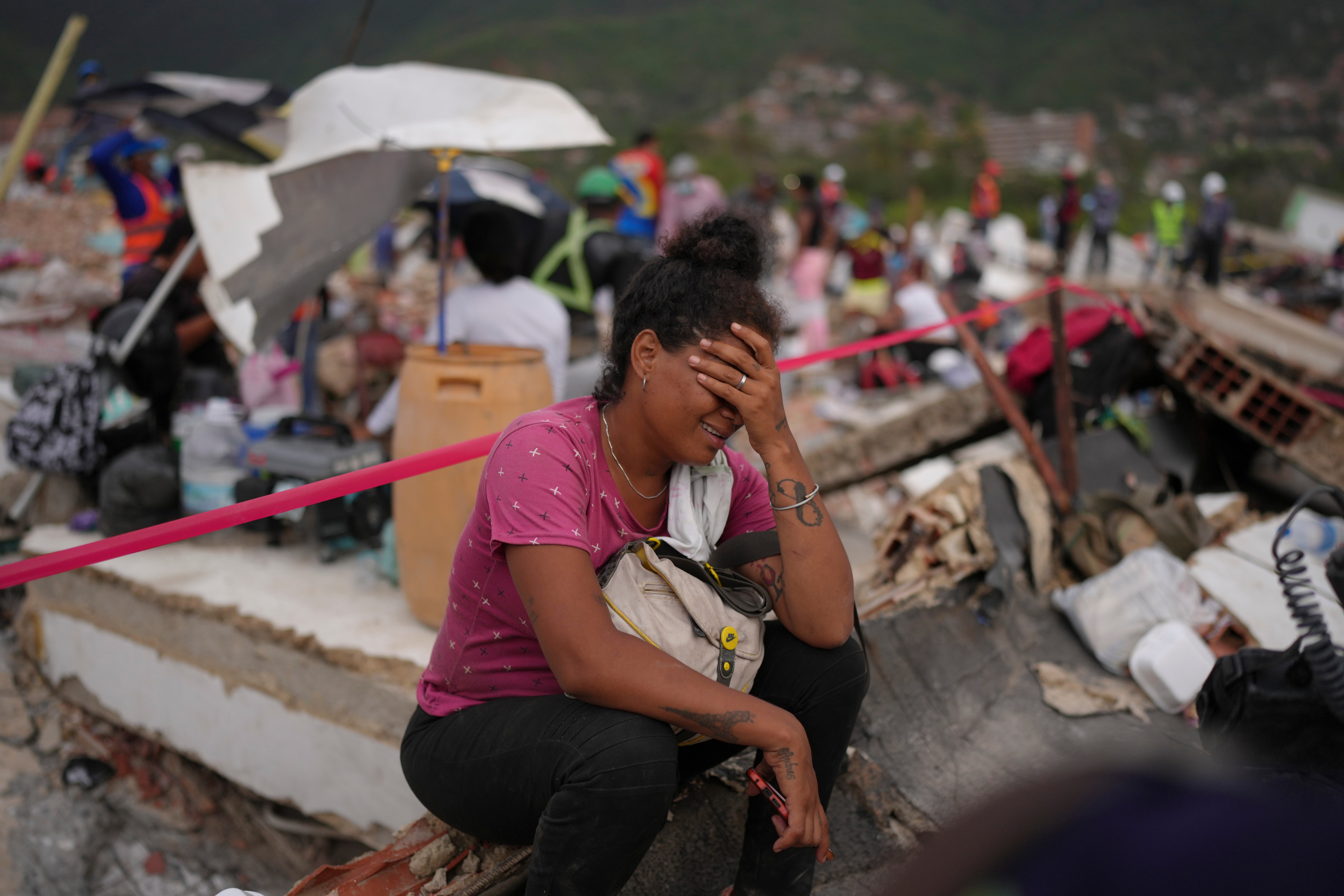
Khaterine Roa cries as members of the Los Angeles County Fire Department search for survivors in a building that collapsed during the earthquakes that struck La Guaira, Venezuela.
Matias Delacroix/AP Photo
Doctors said Wednesday they fear the fallout from Venezuela's devastating twin earthquakes could trigger a growing medical crisis, marked by untreated injuries, infectious diseases and a health care system already on the brink of collapse.
✅ Follow g1's international news channel on WhatsApp
Thousands of homeless Venezuelans sleep in overcrowded shelters or in the open, without access to drinking water, amid precarious sanitary conditions, following the June 24 earthquakes, which authorities say killed at least 2,295 people and injured more than 11,000.
Members of humanitarian aid teams said the aftermath of the earthquakes has become a major medical crisis. which, if not controlled quickly, will claim more victims in the coming days and weeks. The emergency exposed the chronic shortage of doctors in Venezuela, the result of years of economic crisis, lack of funds and emigration.
"The problem we foresee soon is the infections that patients exposed to the disaster for a longer time can bring," said Eugenio Cova, head of the trauma unit at Hospital del Oeste Dr. José Gregorio Hernández, in Caracas, the capital. "We have already been through a period of complex trauma - which will continue to happen - but now the situation is worsened by infections."
Now on g1
Aid workers are also warning that the extensive damage to infrastructure could fuel disease outbreaks in the most affected communities.
"It is very hot and there is a lot of concern about possible vector-borne diseases," said Veronique Durroux, spokeswoman for the UN humanitarian agency for Latin America and the Caribbean. "Waste management is an issue. Rubble management, when you see the scale of the devastation, is very concerning."
U.S. Army deployed
The United States had 900 military personnel on Venezuelan soil to support relief and rescue operations on Wednesday, Steven McLoud, a spokesman for U.S. Southern Command, told the Associated Press.
The military repaired the earthquake-damaged runway at the country's main international airport, which serves Caracas, to allow the arrival of humanitarian aid and positioned warships off the coast to receive survivors rescued by air. An additional 100 people from the U.S. State Department have been sent to assist in these efforts, McLoud said.
American firefighters work to rescue La Guaira, Venezuela, after earthquake
Matias Delacroix/AP Photo
To date, the Trump administration has offered Venezuela $300 million in assistance, channeled through humanitarian organizations and the United Nations.
But that represents just a fraction of the post-earthquake aid the country needs: material damage caused by the tremors is estimated at more than $6.7 billion, according to satellite analysis from the United Nations Development Program (UNDP). small number of survivors, including, on Tuesday, a child who was trapped in the rubble for six days.
New blow to health system
Long before the earthquakes, Venezuela's public hospitals were already suffering from shortages of water, energy, essential medical equipment and highly qualified personnel.
Volunteers and rescue teams help find survivors in a building that collapsed in Caraballeda, La Guaira state, Venezuela, on June 30, 2026
MIGUEL MEDINA / POOL / AFP
More than 7.7 million Venezuelans have left the country since 2013, when Nicolás Maduro took power and the economy collapsed due to mismanagement, corruption and falling oil prices.
Among those who fled were many specialized doctors and nurses.
Venezuela's medical association estimates that about a third of its 60,000 registered doctors have left the country since the beginning of the economic crisis.
Dr. Huníades Urbina, member of the board of directors of the Venezuelan pediatric association, stated that the number of professionals who left the country represents approximately half of the 84,000 needed, according to World Health Organization standards.
Urbina added that a national survey carried out in 2025 in public hospitals revealed a shortage of more than 30% in emergency supplies and more than 70% in supplies for operating rooms. The laboratories are "virtually all closed or only doing the basics," he said.
The earthquakes "once again highlight the inability of the Venezuelan government to provide an adequate healthcare system that meets the needs of the Venezuelan people," he said.
Ill-equipped hospitals
Those that remain now face the overwhelming prospect of treating thousands of seriously injured people in destroyed and collapsed concrete structures.
The Hospital del Oeste Dr. José Gregorio Hernández in Caracas lacks the screws and plates needed for orthopedic surgeries, nor medicated gauze to prevent infections, said Cova, who performs surgeries on crushed limbs in makeshift operating rooms because possible damage from the earthquake has made parts of the building inaccessible.
Doctors have even begun posting the medical supplies they need on social media, asking for donations.
According to the government, the earthquakes have damaged or compromised 38 hospitals across country.
Rescue teams work through the night in La Guaira, Venezuela, after earthquake
Matias Delacroix/AP Photo
There is also a nationwide shortage of ambulances, forcing many injured Venezuelans to reach hospitals in remote areas in the back of pickup trucks, said Jaime Lorenzo, director of United Doctors of Venezuela, a nonprofit network of health professionals.
This is just one of the ways in which ordinary citizens, feeling abandoned by the government, say they have been forced to take on much of the rescue effort.
When the chaos and trauma of the earthquakes begin to subside, Lorenzo said he fears a new wave of patients will arrive at hospitals: Venezuelans who, having been suddenly homeless after the earthquakes, have gone all week without medication for chronic illnesses such as asthma, diabetes and hypertension.
Government in check
The The government of interim president Delcy Rodríguez - who served as Maduro's deputy until he was removed by the United States in January and who assumed interim leadership with the support of the Trump administration - has faced growing criticism for its handling of the disaster.
Videos circulating on social media in recent days appear to show security agents rummaging through the rubble of collapsed buildings and taking US dollars, household appliances and other personal belongings, sparking widespread outrage among Venezuelans. The videos could not be verified by the AP.
In response to the videos, the Interior Ministry said on Wednesday it had removed and detained four police officers for "misconduct and taking advantage of rescue and humanitarian aid efforts."
Thousands of people remain missing, raising uncertainty about the total number of victims and leaving families in a harrowing limbo as they wait, days on end, next to collapsed buildings, hoping for the bodies of their loved ones. be found.
A non-governmental digital database where families can record missing loved ones indicated that more than 40,600 people had not yet been located as of Wednesday.
On Wednesday, U.S. officials pushed back on accusations that Rodríguez was politicizing response efforts and downplayed widespread criticism of the Venezuelan government's failures to respond to the crisis. Gen. Francis Donovan, head of U.S. Southern Command, blamed decades of neglect in Venezuela, which he said "has made the situation even more challenging for the current administration."
"It's a big problem for any leader to deal with a challenge of this magnitude," Donovan said.
Source: G1