Dispute over 6×1 rapporteur keeps PEC schedule indefinite in the Senate
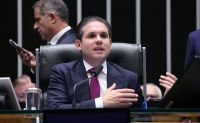
The dispute between the government and opposition over the rapporteurship of the PEC (proposed amendment to the Constitution) that ends with the 6×1 scale keeps the timeline for processing the proposal in the Senate undefined. The president of the House, Davi Alcolumbre (União-AP), has not yet chosen the senator responsible for the text nor forwarded the proposal already sent by the deputies to the Senate to the CCJ (Constitution and Justice Committee) of the House, which has delayed the processing of the matter in the National Congress.
Parliamentarians from the left and right articulate with Alcolumbre the nomination of a name that can meet the main interests of each side.
The government's idea is to keep the text as similar as possible to what was approved in the Chamber of Deputies at the end of May. To achieve this, the desire is for a senator from the PT itself to take on the task. Today, the name of Camilo Santana (PT-CE), one of the coordinators of President Luiz Inácio Lula da Silva's (PT) re-election campaign, is the most popular.
Other PT senators also appeared as possible candidates for the dispute since the text was approved by deputies. Rogério Carvalho (PT-SE) began to be discussed behind the scenes and is seen as a strong name to take on the role of rapporteur. Another one who was mentioned was Fabiano Contarato (PT-SE), but the senator fell out of the spotlight in recent days.
For the opposition, it would be important to make changes to the text, especially in the transition period, considered too short by the business sector. The PEC proposes a 14-month transition to reduce the current 44-hour working day to 40 hours per week in two stages with a reduction of two hours each, without reducing wages. The first will be done 60 days after the text is promulgated. The second will be done 12 months later.
For this type of change, one of the senators best rated by the opposition is Efraim Filho (PL-PB). In addition to political alignment, the senator is seen as capable of making good agreements, mainly because he was already leader of União Brasil in the Senate.
Another who was mentioned by right-wing senators is Laércio Oliveira (PP-SE), but the articulation around the congressman did not advance.
In the dispute between the two poles, Alcolumbre must choose a middle ground. In this context, one of the favorites in the Senate corridors became Rodrigo Pacheco (PSB-MG). The senator from Minas Gerais is described as moderate and in favor of the proposal, which would make him a balanced choice for both sides of the political spectrum.
Others mentioned on this path are Omar Aziz (PSD-AM) and Eduardo Braga (MDB-AM). Aziz, however, is closer to the government and has a certain rejection of his opponents. Braga could be a consensus name, if Pacheco is not chosen.
The definition of the rapporteur must be made by Alcolumbre. He has not yet sent the PEC approved by the deputies to the CCJ (Constitution and Justice Commission) of the Senate to continue processing the agenda in the Legislature.
The senator signaled that he would only discuss the proposal after a meeting of leaders to reach an agreement on the report of the proposal. This meeting was scheduled to take place last week, but it was not held and there is still no date for it.
The rapporteur is a key player in the political dispute surrounding the end of the 6×1 scale. In addition to defining the number of sessions to discuss the initiative, which will determine the processing time of the proposal, the person responsible for the rapporteur will also decide whether to make changes to the text. In the Chamber, the name chosen was Leo Prates (Republicanos-BA).
In agreement with the president of the Chamber, Hugo Motta (Republicanos-PB), he defined that the reduction in working hours would be to 40 hours a week, with two days off and without a salary reduction. He also included in the report the transition period for companies to adapt.
Alcolumbre's delay in defining the schedule and moving forward with the PEC has irritated the government. Senators from the base sought dialogue with the President of the House to try to unlock the debate. The congressman also signaled that he awaits contact from President Lula to move forward with the project. This connection, however, has not yet happened.
Another government strategy was to send a bill with the same text as the PEC to the Chamber, but on an urgent basis. Under these conditions, the House plenary can only vote on PECs, PDLs (Project Legislative Decree) and requests for an emergency regime.
The text has already blocked the agenda in the Lower House and should be voted on by deputies this week to speed up the process and get deputies to vote on other topics of interest. If approved, the project would also go to the Senate as a matter of urgency and could, after 45 days, stop the agenda of the senators' plenary session.
Hugo predicts PL vote at the end of 6x1 on Tuesday | LIVE CNN
Source: CNN