Deputy: Government violated freedom of expression with decree from big techs
Opposition congressmen presented at least 24 PDLs (Legislative Decree Projects) with the aim of overturning two decrees signed by Planalto that regulate big techs in Brazil. In addition to the decrees, four bills sanctioned by President Luiz Inácio Lula da Silva (PT) are also questioned by parliamentarians.
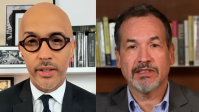
In an interview with CNN, federal deputy Adriana Ventura (Novo-SP) defended the initiatives and stated that the government went beyond its limits when trying to regulate digital platforms through decrees.
For Adriana, the mobilization of the opposition does not represent an ordinary political dispute, but a reaction to an action by the Executive that, in her assessment, directly violates freedom of expression.
"This has nothing to do with being in the opposition. What is happening here is the opposition rising up against the government by going beyond its functions", said the deputy.
Criticism of the decrees and the role of the Executive
The parliamentarian argued that the decrees create obligations for both platforms and citizens, creating legal uncertainty. According to her, the measures were adopted without adequate legal support, since the issue has not yet been regulated by law approved by the National Congress.
"It is a perfect affront to freedom of expression, because there is no law. The government is ignoring something that has no law", he declared.
The deputy also criticized what she described as an undue expansion of powers of the ANPD (National Data Protection Authority) and the AGU (Attorney General of the Union). In his view, the decrees grant the ANPD powers of supervision and notification that go beyond its original attributions, and open loopholes for the AGU to act as a kind of "prosecutor of truth".
"We cannot give the power to the State, whatever the State, to invade and decide what is true or not", he said.
Risk of self-censorship and debate on democracy
Adriana Ventura (Novo-SP) warned of the risk of self-censorship among citizens given the uncertainty about what can or cannot be said on digital platforms. For her, using the defense of democracy as a justification for restricting opinions represents a contradiction.
"What democracy is left standing if it doesn't accept criticism? Democracy doesn't protect itself by reducing freedom", said the parliamentarian.
When asked about the possibility of Congress debating the issue in a structured way after a possible overturn of the decrees, Adriana Ventura acknowledged that the Legislative House was divided and chose not to act previously.
She pointed out, however, that Congress's inaction does not authorize either the Executive or the STF (Supreme Federal Court) to legislate on the matter.
"This has to pass in Congress, become law, so that the Executive can then execute it. This debate has to happen in daylight, in Parliament, and not by decision of the Executive", he concluded.
The texts generated by artificial intelligence on CNN Brasil are made based on video cuts from the newspapers in its programming. All information is investigated and checked by journalists. The final text is also reviewed by the CNN journalism team. Click here to find out more.
Source: CNN