Delcy meets with US officials to coordinate aid in Venezuela
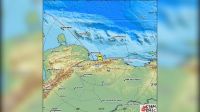
The interim president of Venezuela, Delcy Rodríguez, met with US officials this Friday (26) to coordinate humanitarian aid efforts following the earthquakes that hit the South American country, the Venezuelan Presidency announced in a statement.
The meeting focused on rescue operations for survivors and the distribution of humanitarian aid, the Presidency said.
According to the statement, Rodríguez met with Major General Kevin Joseph Jarrard, a specialist in disaster response and coordination, who will coordinate the teams in the field; John M. Barrett, chargé d'affaires at the U.S. Embassy in Venezuela; and Colonel Ian Murray, defense attaché at the Embassy.
Representing Venezuela at the meeting were the president of the National Assembly, Jorge Rodríguez, brother of the interim president, and the Minister of the Interior, Diosdado Cabello.
The United States is one of the countries that has already sent aid to Venezuela to deal with the damage caused by Wednesday's earthquakes.
Before news emerged about Rodríguez's meeting with American officials, she herself stated on her Telegram account that she received a call from US President Donald Trump and Secretary of State Marco Rubio, who expressed support for her government.
More than 900 dead
More than 900 people died in the strong consecutive earthquakes that hit Venezuela on Wednesday night (26), reported the president of the country's National Assembly.
Teams search for more people trapped under the rubble as countries near and far pledge support, but some residents of coastal areas are frustrated with the pace of operations.
Rescuers try to make the most of the first 48 to 72 hours after the earthquake, the "golden" window of time to reach people buried alive.
See the latest information about earthquakes in Venezuela
- At least 920 people died and another 3,360 were injured as a result of Wednesday's earthquakes, said the president of the National Assembly, Jorge Rodríguez. At least 172 people are still trapped under the rubble, he said.
- In addition to Venezuelans, people from Brazil, China, Spain and Portugal were also included in the death toll.
- Venezuelan forces are carrying out search operations with percussion equipment that allows the controlled breaking of concrete, in the hope of finding and rescuing more people alive, said Juan José Ramírez, sector vice president of public works and services.
- The terrain, however, remains challenging. Constant aftershocks and a lack of heavy machinery in some locations are slowing operations in critical areas, while entire communities continue to remove debris on their own. Some residents of coastal areas are calling on civilian volunteers to help, armed with "pickaxes and shovels."
- Venezuela's acting president, Delcy Rodríguez, announced the militarization of La Guaira, the area most hit by the earthquakes. The government also reported that it has established a food, water and medicine storage center at the Ministry of Foreign Affairs in Caracas.
- The Venezuelan government is carrying out an assessment of buildings that did not collapse, but suffered damage. Authorities have asked the population to notify the government, through specific channels, if they detect structural damage to their homes.
- Several countries and organizations are sending rescue teams and have promised help, including Colombia, El Salvador, Mexico and the United States. Dozens of vehicles are transporting relief teams and supplies to La Guaira, according to Venezuela's Ministry of Transport. Humanitarian aid is also expected to arrive in the region soon.
(With information from CNN)
Understand how the strength of earthquakes is measured
Source: CNN