Confinement costs fall in May and keep livestock margins high
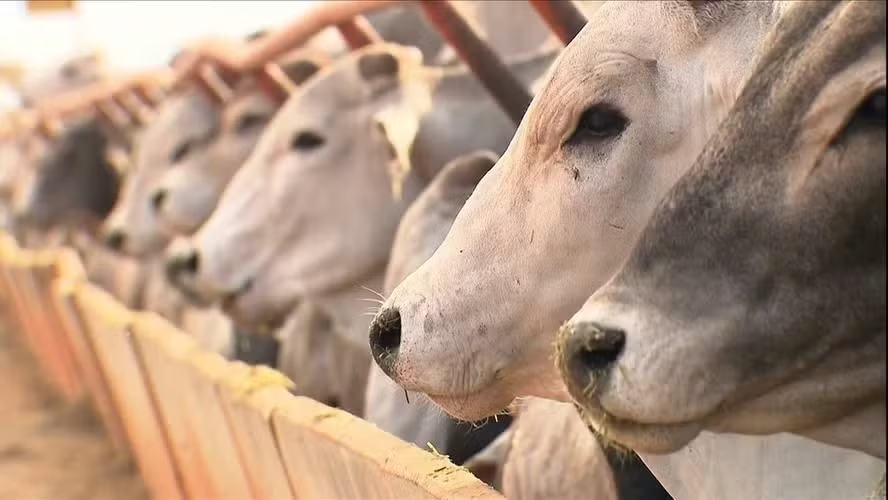
Production costs in cattle confinement fell in May, driven mainly by the reduction in the prices of ingredients used in animal feed. The data comes from ICAP (Food Cost Index Ponta), a survey based on information from confinements that represent around 62% of the heads confined in Brazil.
The main factor of relief for livestock farmers was the reduction in the cost of finishing diets, especially due to the drop in roughage prices. The movement was observed in both the Central-West and Southeast, the two main confinement regions in the country.
In the Central-West, the Ponta Food Cost Index registered a drop of 3.97% in May, ending the period at R$12.83 per head per day. In the Southeast, the indicator remained practically stable, with a slight increase of 0.25%, closing at R$ 12.06 per head per day.
The cost of the finishing diet fell 1.89% in the Central-West and 0.77% in the Southeast during the month. Among the main components of feed, roughage was the one that showed the greatest price reduction, helping to reduce feedlots' expenses.
In the Central-West, corn prices were below the average for the quarter, reflecting the advance of the off-season and expectations of an increase in supply. Soy hulls also helped to reduce costs, while citrus pulp continued to put pressure on food expenses.
In the Southeast, the reduction in costs was favored by the fall in the prices of soybean hulls and corn. Furthermore, the arrival of the sugarcane harvest influenced the composition of diets and helped maintain the downward trend in food costs.
Despite the adjustment observed in beef prices throughout May, the profitability of the activity remained at levels considered high.
According to the survey, the margin for the arroba produced continued to be above R$1,000 per head in both regions, a result sustained by the reduction in food costs and the efficiency of production systems.
The Southeast also remains ahead, with an estimated profit of R$1,192.18 per head, an advantage of R$109.43 over the Central-West, which recorded a return of R$1,082.75 per animal. The difference is explained by the combination of slightly higher arroba prices and lower production costs in the region.
The main highlight of the May survey was the recovery of competitiveness in the Central-West. Although the Southeast maintained the lowest food cost for the third consecutive month, the distance between the two regions decreased significantly, going from R$1.33 to R$0.77 per head per day.
The resumption of the fall in ICAP in the Central-West was mainly driven by the reduction in bulky costs, which fell by 10.54%, and energy costs, with a fall of 3%. The advance of the off-season and the reduction in corn silage prices contributed to the movement. As a result, the cost of the finishing diet fell 1.89% in the month.
In the Southeast, despite the strong reduction in roughage, of 14.81%, the stability of other groups of inputs limited the effects on the regional index, which remained practically stable. Even so, the region maintained national leadership in food costs, cost of arroba produced and profitability.
Global demand drives investments in DDGS in Brazil
Source: CNN