CNPJ may have letters and numbers from July; understand what changes
g1 in 1 minute: CNPJ with letters and numbers comes into force in July
The National Register of Legal Entities (CNPJ) may be alphanumeric from July, starting to allow the combination of letters and numbers. According to RFB Normative Instruction No. 2,229, published by the Federal Revenue Service, the change will not affect companies already open, only new registrations.
⚠ The body clarifies, however, that authorization to use the new format from July does not mean that all CNPJs issued after that date will automatically have letters. Implementation will be gradual and progressive.
With this change, the new CNPJ identification number will have 14 positions.
The first eight will identify the root of the new number, made up of letters and numbers;
The next four will represent the order of establishment, also alphanumeric;
The last two positions, which correspond to the check digits, will continue to be numeric.
In the case of check digits, to maintain the numbers in future CNPJs, the numeric and alphanumeric values will be replaced by the decimal value corresponding to the code in the ASCII table (American Standard Code for Information Interchange), used by most of the computer industry.
From the code in the ASCII table, the value 48 will be subtracted. In this way, the letter A will be equivalent to 17, B to 18, C to 19 and so on.
Also according to the Revenue, the implementation of the alphanumeric CNPJ aims to guarantee the continuity of public policies and ensure the availability of identification numbers, without causing significant technical impacts on Brazilian society.
See eight questions and answers about the change below:
What is the CNPJ alphanumeric?
Who will receive CNPJ with letters?
Will the CNPJ registration procedure change?
What do companies need to do?
Do companies and professionals already registered need to do something?
What changes in the calculation of the Check Digit?
What is the connection with the tax reform?
Will there be any cost for companies with this change?
1. What is the alphanumeric CNPJ?
It is the new model for identifying legal entities in Brazil. Instead of using just numbers, the new CNPJ will combine letters (from A to Z) and numbers (from 0 to 9), maintaining a total of 14 characters.
The visual structure will be similar to the current one, but with the inclusion of alphanumeric characters. (check the example below)
Current system vs. new typology
Federal Revenue
According to the Federal Revenue Service, the number of possible combinations in the current model is close to the limit.
With the increase in the number of companies and branches, the agency decided to expand the system to ensure its long-term viability. The inclusion of letters significantly expands the number of possible combinations.
2. Who will receive the CNPJ with letters?
Only new registrations from the start date - such as newly created companies, branches, rural producers, condominiums and self-employed professionals - will receive the CNPJ with letters.
The current format, composed exclusively of numbers, will remain valid. No additional procedures will be required on the part of taxpayers with the Federal Revenue Service or state and municipal agencies.
3. Will the CNPJ registration procedure change?
No. The process for opening a company and applying for a CNPJ will remain the same. The only difference is that the number generated may contain letters.
According to the Revenue, from July onwards all systems will be prepared and integrated into the National Network for the Simplification of Registration and Legalization of Companies and Businesses (REDESIM).
4. What do companies need to do?
Companies and systems that deal with issuing invoices or tax control will need to adapt their software, databases and internal routines.
There may be failures in issuing tax documents, difficulties with suppliers or delays in fulfilling tax obligations.
The IRS reported that it provides tools to facilitate this technical update.
5. Do companies and professionals already registered need to do anything?
No.
No action will be required with federal, state or municipal agencies.
Public systems will be updated to accept both the current and new formats. The expectation, according to the Revenue, is that this adaptation will occur automatically and transparently for companies.
6. What changes in the calculation of the Check Digit?
The Check Digit (DV), a number that appears at the end of the CNPJ and serves to validate its authenticity, will continue to be calculated using the Module 11 method - a type of mathematical verification -, now adapted to include letters in the calculation.
Each character will be converted into a numerical value based on the ASCII table, which assigns a specific number to each symbol, and the value will be subtracted from it. 48.
For example: the letter A corresponds to the number 65 in the ASCII table and, for the calculation, the value 17 will be used (which is the result of 65 minus 48).
The Federal Revenue will make calculation routines available in popular programming languages to facilitate this technical adaptation.
7. What is the connection with the tax reform?
The new CNPJ is part of the process of modernizing the tax system.
The change paves the way for the implementation of two new taxes: the CBS (Contribution on Goods and Services) and the IBS (Tax on Goods and Services), which aim to unify and simplify several taxes currently in force.
To achieve this, it will be necessary to have more modern and integrated systems. The new alphanumeric CNPJ contributes to this process by expanding the system's capacity, facilitating the separation between personal and professional expenses and automating processes such as the recovery of tax credits.
8. Will there be any cost to companies with this change?
Yes. Companies will need to update their systems to recognize the new CNPJ with letters and correctly calculate the Verification Digit.
These adaptations can generate technical costs, especially in software for issuing invoices and databases.
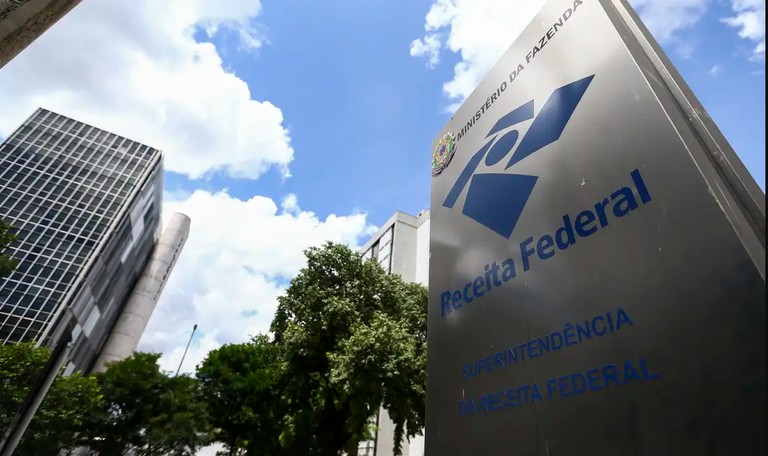
Federal Revenue facade, in Brasília.
Marcelo Camargo/Agência Brasil
Download GloboPop to watch short vertical videos from Globo
Source: G1