Classification of PCC and CV as terrorists by the USA opens space for CIA action in Brazil, says prosecutor who has been fighting São Paulo faction for 20 years
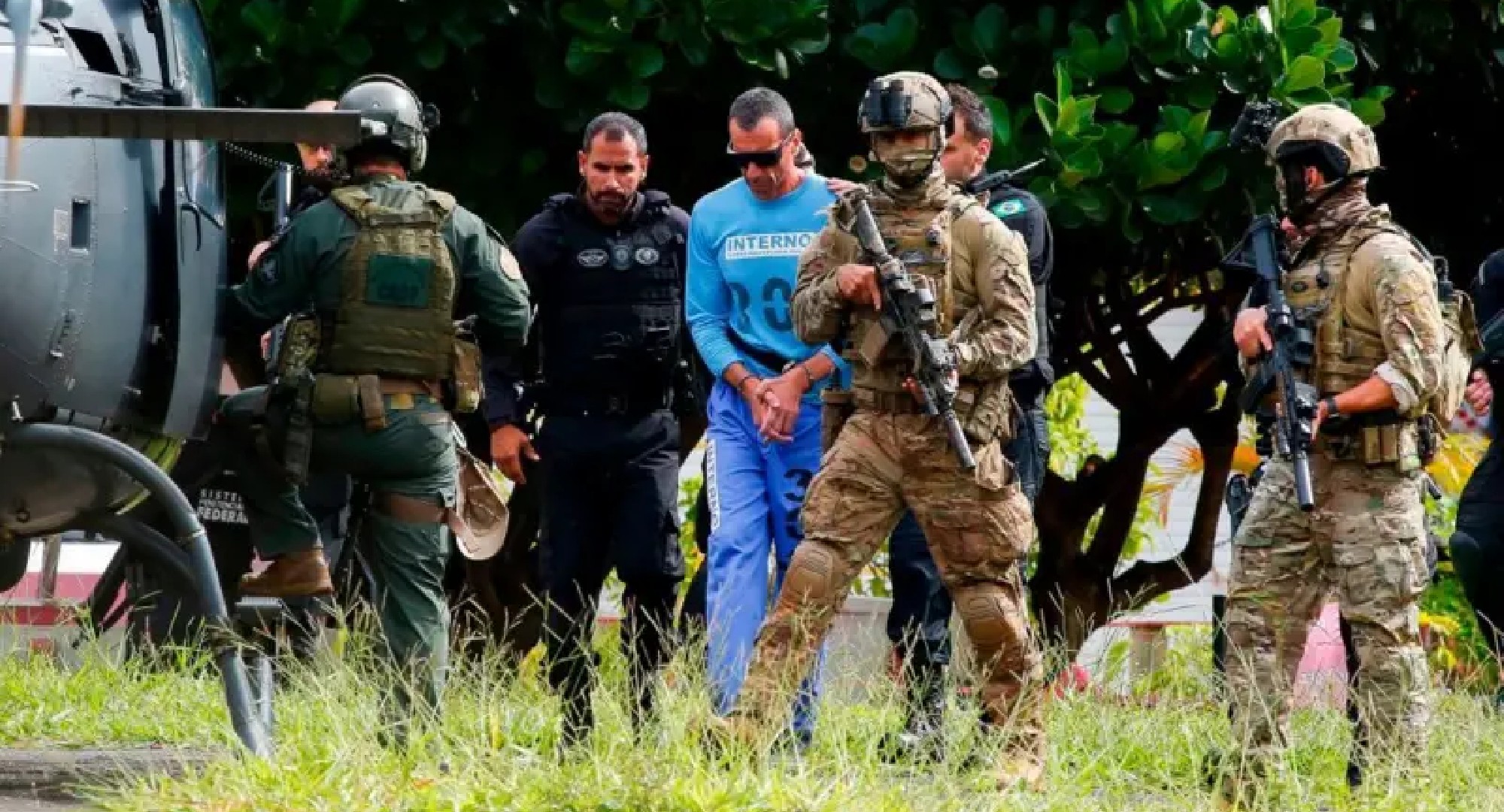
Prosecutor fears that the fight against factions like the PCC could be harmed by an American decision
Getty Images via BBC
One of the main investigators of organized crime in Brazil - and who has worked for 20 years fighting the Primeiro Comando da Capital (PCC) - said that the American government's decision to designate Brazilian criminal factions as terrorists could make it difficult to fight crime within Brazil.
"In my opinion, the classification of Comando Vermelho (CV) and the PCC as terrorist organizations for the North American government will only harm the internal fight here in Brazil", says the prosecutor of the Public Ministry of São Paulo (MPSP) Lincoln Gakiya, member of the Special Action Group to Combat Organized Crime (Gaeco).
Gakiya has worked for 20 years investigating the PCC and has already suffered threats from the faction. He was in charge of the operation to transfer PCC leaders, including Marcola, to federal prisons, at the beginning of 2019.
One of the problems, according to the prosecutor, is that the designation as terrorist groups would remove investigations related to the PCC and CV in the USA from the scope of the American federal police (the FBI) or the Drug Enforcement Agency (DEA), and would attribute them to the intelligence agency (the CIA).
"When the State department classifies these organizations, the PCC and Comando Vermelho, as terrorists, the issue is now treated as a Defense issue and no longer a police matter."
Experts assess the impacts of the US decision on PCC and CV for Brazil
"I don't want to say for sure, but this could bring some difficulties to the cooperation we already have, at the police level, between the Federal Police and the American police."
Gakiya states that he himself, as a member of the São Paulo Public Ministry, has already participated in meetings in the USA with the FBI and DEA to exchange information about members of the PCC who are active in American territory.
"From the moment these organizations are classified as terrorist, the CIA becomes responsible for this information and investigations and they begin to be classified as confidential or secret."
"So there may be - I'm not saying - a difficulty in the more agile and routine exchange of information that we have had for a long time with the North American police", he says.
Lincoln Gakiya also sees two other potential problems in designation of the PCC and CV as terrorist organizations by the American government. One of them would be related to national sovereignty.
"Because these organizations are considered terrorists under North American legislation, the US can determine secret actions outside North American territory and without the consent of the foreign State. For example, the operations that took place in Venezuela and Mexico [against boats supposedly belonging to drug traffickers], which did not have the consent of those States."
"Military operations or even CIA operations could also occur here within Brazilian territory, even without the consent of the Brazilian government.
This would obviously affect national sovereignty."
Lincoln Gakiya is a member of the Special Action Group to Combat Organized Crime (Gaeco)
Dan Agostini/Getty Images via BBC
The other point is possible sanctions of an economic nature.
"People, groups or even financial institutions that in any way have any type of collaboration or even transaction with these criminal organizations, Comando Vermelho or PCC, may have their assets and assets frozen, including outside the USA", says the prosecutor.
"So this is a risk because the majority of banking institutions are connected to the American network."
Diplomats interviewed by BBC News Brasil assess, under condition of anonymity, that the American measure is not technically correct, since there would be no evidence that the two factions practice terrorism under Brazilian law.
For scholars, factions such as the PCC and the Red Command are criminal, because they act for economic interests, without any ideological motivation, unlike terrorist organizations. But American President Donald Trump has challenged this distinction, as he did in Mexico, with drug trafficking cartels, last year.
Behind the scenes, the fear is that the classification will be used to justify actions, including military ones, in the region, such as the bombings of boats off the coast of countries like Colombia and Venezuela under the pretext of combating drug trafficking.
Analysts interviewed by BBC News Brasil consider military intervention along the lines of this unlikely. which was carried out in Venezuela in January to depose Nicolás Maduro. Still, they claim that there would be less explicit ways of putting pressure on the factions and, to some extent, the Brazilian government.
Source: G1