China rejects accusations of forced labor and criticizes new tariffs proposed by the US
The US includes Brazil on the list of 60 countries that fail to combat forced labor
China said on Wednesday (3) that it opposes "unilateral" tariffs and denied accusations of the use of forced labor, after the United States proposed new surcharges on imports from around 60 economies.
This Tuesday (2), a US investigation concluded that 60 countries, including China and Brazil, failed to prohibit and monitor the import of goods produced with forced labor. In response, the American government proposed the application of additional tariffs of 12.5% on all products from these countries.
Download GloboPop to watch short vertical videos from Globo
In response, the Chinese government rejected the allegations and stated that there is no basis for the accusations made by Washington.
"There is no so-called forced labor in China, and we oppose using this as an excuse for political manipulation," said Mao Ning, spokesman for the Chinese Ministry of Foreign Affairs, at a press conference press.
The US measure includes China among the potentially affected economies and is part of a broader strategy of tightening trade based on criteria linked to labor rights and supply chain practices.
In addition to China, other countries also reacted. The UK government stated that it is in constant dialogue with Washington and has adopted measures to combat forced labor in domestic and global production chains, highlighting that it is negotiating with the US on the issue.
Asian markets reacted in a mixed manner to the scenario of greater trade tension. In Hong Kong, the Hang Seng index fell 1.6%, while mainland Chinese stock markets closed slightly higher, with the CSI300 rising 0.5% and the Shanghai index rising 0.2%.
The semiconductor sector led gains, supported by positive expectations related to demand for artificial intelligence.
Amid trade concerns, economic data showed that activity in the Chinese services sector grew at the strongest pace in three months in May, driven by new businesses and improving external demand.
Goldman Sachs analysts maintained a positive view on Chinese A-share shares, citing improved growth prospects and exposure to the technology sector.
Understand the new proposal for surcharge
A US investigation concluded this Tuesday that 60 countries, including Brazil, failed to ban and monitor the import of goods produced with forced labor.
In response, the American government proposed the application of additional tariffs of 12.5% on all products from these countries.
The measure was announced by the Office of the US Trade Representative (USTR) based on Section 301 of the Trade Act of 1974, the same one used to justify the proposed 25% tariff against Brazilian products. It is not yet clear whether the tariffs will be cumulative.
Brazil was included in the group that could face the 12.5% surcharge, alongside China, India, Japan, the United Kingdom and South Korea.
According to the report, the country does not have effective mechanisms to prevent the import of goods produced with forced labor in other countries.
The US argues that this failure creates unfair competition for American companies and workers and contributes to the maintenance of modern slave labor in global supply chains. production.
The proposal has not yet come into force. The American government will receive public contributions until July 6, and will hold hearings on the issue on July 7 before deciding on the implementation of the tariffs.
*With information from Reuters
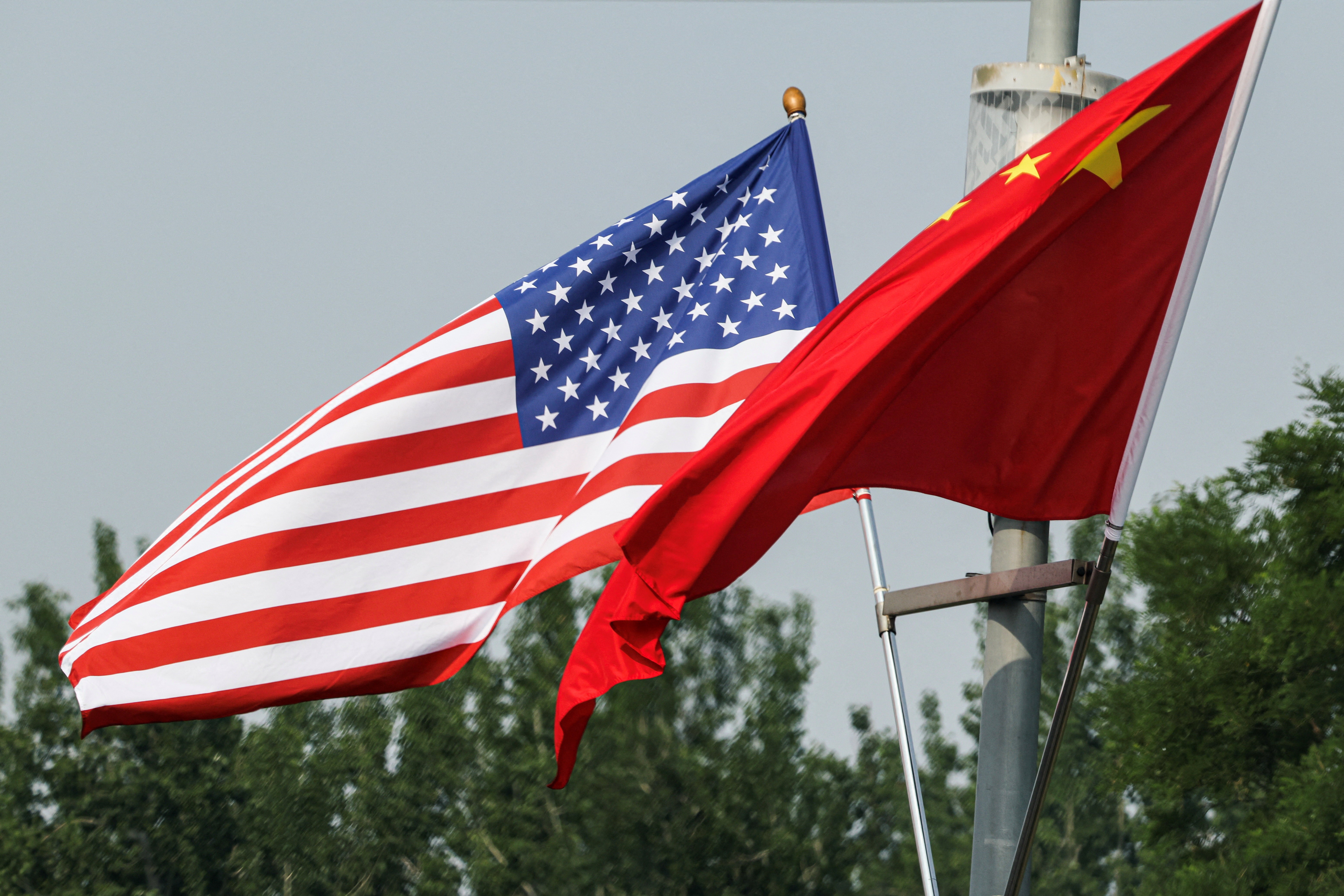
Flags of China and the United States on a Chinese street before Donald Trump's visit to the country, on May 13, 2026
REUTERS/Tingshu Wang
Source: G1