Chernobyl: forbidden zone becomes wildlife refuge
40 years since the Chernobyl disaster
Chernobyl is almost synonymous with a dead territory. A landscape marked by ruins, radiation and an unsettling silence. And it's not an exaggerated image: for decades, many scientists took it for granted that the land around the plant would remain biologically devastated for generations. But, almost forty years after the explosion, the reality proved to be more complex - and surprising - than imagined.
Download GloboPop to watch short vertical videos from Globo
When the reactor exploded on April 26, 1986, Soviet authorities evacuated more than 100,000 people and established a 30-kilometer exclusion zone around the plant.
Over time, this area would be expanded to cover around 2,600 square kilometers in Ukrainian territory - larger than the city of São Paulo -, where residence, economic activity and public access were prohibited.
Since then, the region has remained one of the areas with the greatest radioactive contamination on the planet. However, what almost no one imagined was that this human exclusion would end up producing an unexpected effect: transforming Chernobyl into a refuge for wildlife.
An involuntary sanctuary for wildlife
Animals from the Chernobyl biological and radiation reserve
Stanislav Gumenyuk/Wikimedia Commons/CC BY-SA 4.0
Today, the Chernobyl Exclusion Zone (CEZ) is home to populations important species of gray wolves, brown bears, Eurasian lynx, elk, wild boar, red deer and European bison. Even Przewalski's horses - a species that was considered extinct in the wild until its reintroduction there in the late 1990s - roam freely throughout the region.
According to Nick Dunn, professor of Urban Design at Lancaster University, to the website The Conversation, in just one specific area of the Ukrainian sector there are already more than 150 specimens of the species.
Chernobyl, 40 years old: in the midst of wars, which the chances of a new nuclear disaster?
Now, a new study published in the journal Proceedings of the Royal Society B, led by Ukrainian ecologist Svitlana Kudrenko of the Albert Ludwig University of Freiburg, Germany, offers the most detailed portrait to date of this unexpected wild rebirth.
More life than in protected nature reserves
Aerial view of the reserve
Stanislav Gumenyuk/Wikimedia Commons/CC BY-SA 4.0
Between 2020 and 2021, the team of researchers installed camera traps in a 60,000 square kilometer area in northern Ukraine, which included the CEZ, four nearby nature reserves and several zones without official protection.
The study recorded 31,200 detections of 13 different wild species. Of these, 19,832 - more than half - were recorded within the Chernobyl Exclusion Zone itself.
'Most dangerous job in the world': the scientist who travels through Chernobyl's radioactive labyrinth
The numbers do not represent individual animals, as the same animal can trigger the camera several times. Still, the statistical models drawn from this data surprised scientists, as the diversity, density and frequency of detection of fauna were significantly higher within the exclusion zone than in nature reserves actively managed for conservation. all of this occurs despite the radiation or simply in parallel with it. And the short answer seems to be that, at least for some species of large mammals, radiation may have less influence than previously imagined.
A study published in 2016 had already shown that the distribution of mammals within the CEZ did not have a clear relationship with the levels of radioactive contamination.
Kudrenko's new work didn't even focus on that aspect: his goal was to understand what happens when humans almost completely disappear from the landscape.
"If you focus on the species that do badly, you can blame radiation," evolutionary biologist Germán Orizaola, who was not involved in the study but has been researching the region for years, recently explained to BBC Science Focus. "Often it is the environment itself that has changed. Ecology and the absence of humans are huge factors," he added.
After the accident, much of the human activity disappeared from the region. Hunting has ceased. The roads have deteriorated. Agricultural fields were abandoned. The human presence, one of the biggest threats to the great fauna, has practically disappeared. What remained was an almost forgotten territory.
Chernobyl's black mold that appears to 'feed on radiation'
According to the specialized website IFLScience, Przewalski's horses are a revealing example of this scenario. Camera traps recorded them more than a thousand times inside the exclusion zone and not once outside it. Something similar happened with brown bears and red deer, photographed thousands of times inside the CEZ, but almost absent in the surrounding areas.
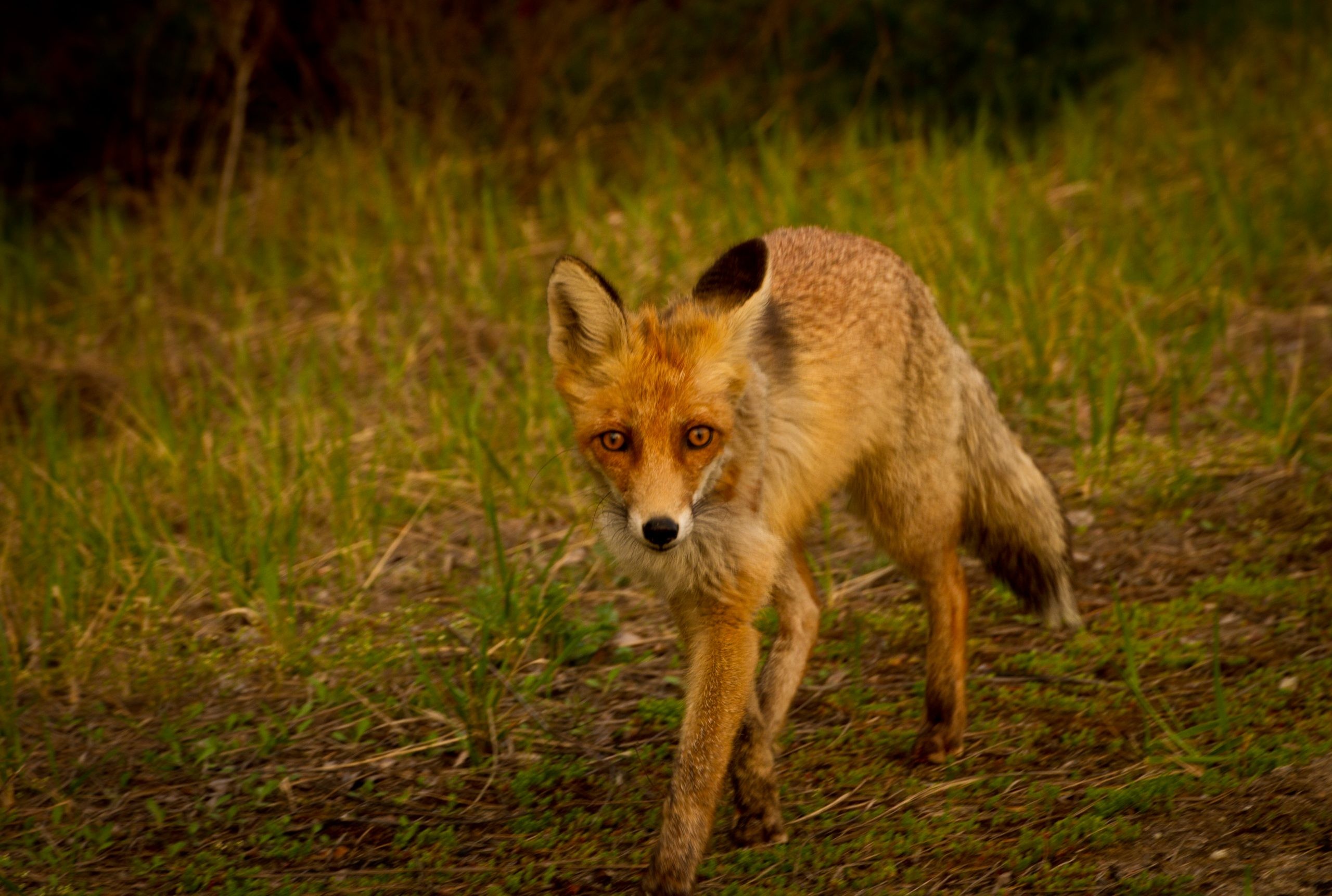
In contrast, the red fox - a highly adaptable species used to living with humans - did not show a comparable increase. For researchers, this suggests that the great benefit of this "ecological paradox" favors above all the species most sensitive to human presence.
Red fox
Denys Vyshnevskyi/Wikimedia Commons/CC BY 2.0
Perhaps the most striking case is that of the elk. According to Science Alert, scientists observed that its presence decreased precisely when the researchers themselves entered the area to study it.
Moose
Denys Vyshnevskyi/Wikimedia Commons/CC BY 2.0
Adaptations in Chernobyl's fauna
Radiation, however, is not a neutral element in this story. While many species appear to thrive in the absence of humans, some may also be showing signs of adapting to Chernobyl's extreme environment.
Oriental treefrogs in the CEZ, for example, are on average 43% darker than those in the rest of Ukraine, according to data previously collected by DW.
The most likely explanation lies in melanin, the pigment responsible for dark coloring and which also helps protect cells from damage caused by radiation.
Scientists believe that natural selection quickly favored darker individuals, not because a new mutation appeared, but because this characteristic already existed in the population and proved advantageous in the new radioactive environment.
Something even stranger occurs inside the destroyed reactor itself. Fungi rich in melanin grow on its walls, capable of colonizing areas saturated with ionizing radiation. In the laboratory, some experiments even suggest that these organisms appear to grow more vigorously when exposed to radiation.
The idea that they can "use" part of this energy as a metabolic source remains an open hypothesis.
The gray wolves of Chernobyl have also become an object of study. Research published in 2024 detected changes in their immune system similar to those observed in human patients undergoing radiotherapy, with possible mutations associated with protective mechanisms against cellular damage.
More than the nuclear paradox, Kudrenko's study sends a direct message to managers of protected areas around the world: the reserves that work best are not the most tightly regulated on paper, but the largest, the interconnected and the ones that actually keep humans out.
On this scale, the mosaic of habitats becomes large enough to support viable populations of large animals in the long term.
"Extensive protected areas are vital for the long-term survival of rare species," Kudrenko told IFLScience.
"It is very tempting to relax search standards in complicated zones, but this should be avoided."
Access to the region has become more difficult since the 2022 Russian invasion, complicating further field research. Still, nearly four decades after the disaster, Chernobyl has transformed into an ecosystem hard to compare with any other, shaped as much by radiation as by decades of human neglect and unexpected ecological changes.
Locked in Chernobyl: Employees spent 25 days at the plant after Russian invasion
Source: G1