'Chavista architecture' may have worsened earthquake damage in Venezuela
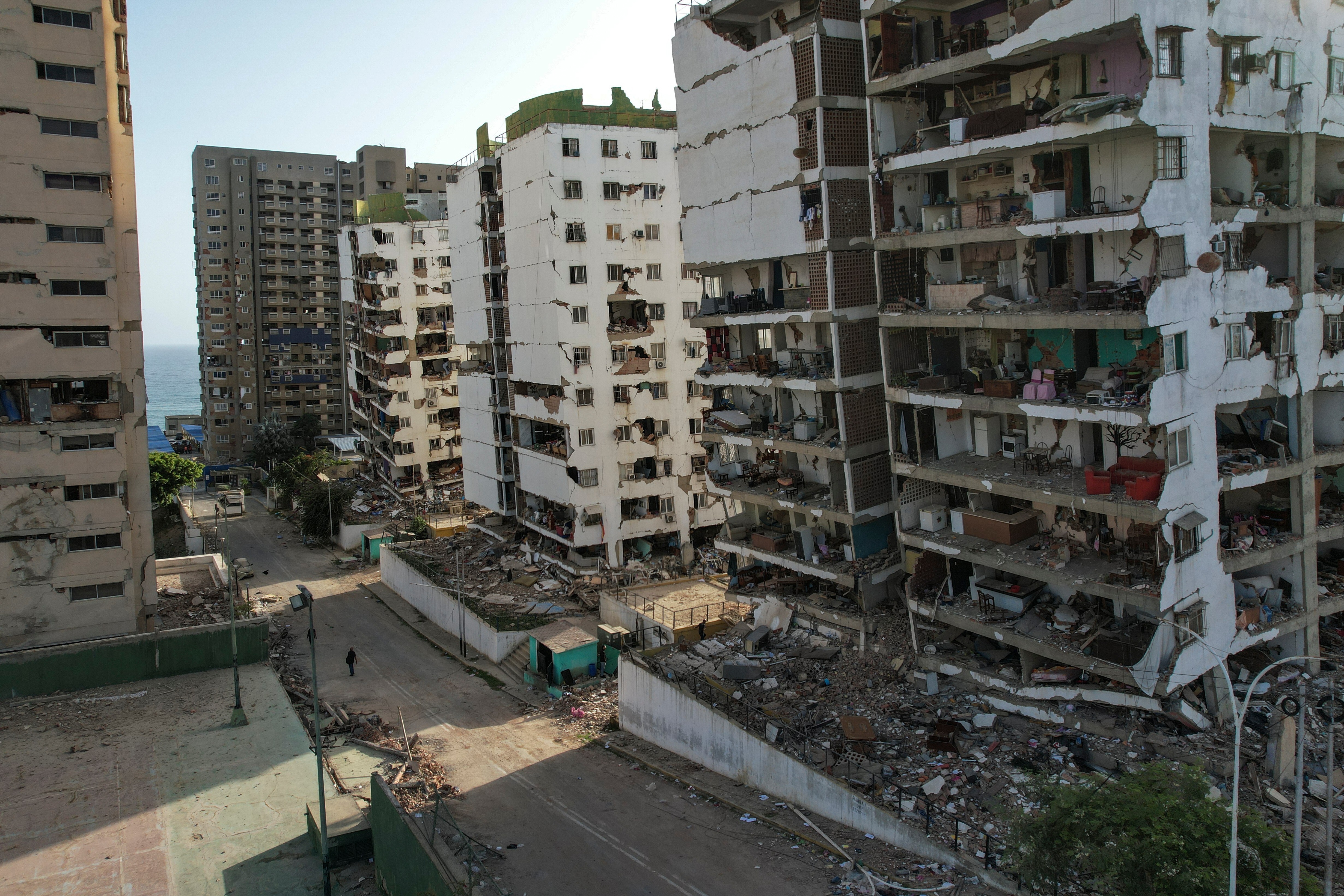
VIDEO: Drone images show the extent of the devastation in La Guaira
When Venezuelan leader Hugo Chávez (1999-2013) built a housing complex named after him, the new residents found a fresh start. They had suffered from a historic flood that, a decade earlier, had devastated Catia La Mar, in the state of La Guaira, Venezuela.
✅ Follow the g1 international news channel on WhatsApp
Now, a new disaster has befallen the residents of the Urbanismo Hugo Chávez complex. Last week's two consecutive earthquakes collapsed most of the more than 190 buildings, placing them at the center of the Venezuelan tragedy.
The region was most impacted by the tremors. An analysis of satellite images of Catia La Mar, carried out by Microsoft's AI for Good laboratory, determined that about a third of the city's nearly 30,000 structures were damaged.
It is still too early to define what caused individual buildings to collapse. But engineers are calling on the government to quickly audit the public housing complexes that remain standing.
The suspicion is that years of negligence, non-enforcement of building codes and poor licensing practices may have compounded the human cost of the earthquakes. Experts also point to the instability of the soil in La Guaira, which increases the risks for the construction of properties.
"I lost my entire apartment," said Yelsa Rojas, who since 2015 has lived on the second floor of the building known colloquially as "Los Cocos", due to its proximity to a beach of the same name. At the time of the earthquakes, she was at a doctor's appointment. "We believe everyone on the second floor is dead."
Buildings damaged by earthquakes three days after they hit Catia La Mar, Venezuela.
Matías Delacroix/AP Photo
Engineers volunteer
As rescuers rush to find people buried in the rubble, engineers fear that other buildings may still be vulnerable. Large cracks spread throughout the housing estate's buildings, revealing the building materials inside. Some of them fell and others seemed on the verge of collapse.
For now, the government has met with the country's main professional association of engineers, but has not started assessments. Interim President Delcy Rodriguez announced she was creating a commission to examine damaged housing structures. She did not say when assessments would begin.
"It is criminal that the government is not accepting offers from engineers and universities more quickly," said Enrique Larrañaga, an architect and urban planner at Simón Bolívar University who has provided guidance to the government. The Ministry of Communication did not take a position.
According to the expert, many projects, accelerated by the government in its political program focused on social programs, have proven to pose security risks over the years, while the country lost some of its engineering expertise during the economic collapse that began in 2013. "They need to give people who have knowledge access to information and resources."
Volunteer engineers are offering services to citizens, said Glennys Gonzalez, an architect and civil engineer who coordinates dozens of professionals. Your group's initial assessment suggests that, in many cases, protocols were ignored. But it remains to be studied why some structures resisted the impact and others collapsed completely.
Child is rescued alive from rubble six days after earthquakes in Venezuela
Precariousness and corruption
The Chávez government began building complexes like Los Cocos shortly before the 2012 elections, as part of an effort to build millions of cheap units across the country. His successor, Nicolás Maduro, continued the project, expanding access to housing for low-income Venezuelans.
As Chávez and Maduro centralized power, institutions weakened, as did quality controls on new construction and the maintenance of existing structures, architects and engineers say.
The projects were built quickly, by a combination of state agencies and construction companies from China, Turkey and Belarus under military supervision but with little public transparency. The lack of enforcement of stricter codes in public buildings also signaled to private builders that they could cut costs, says Casanova.
Poor construction and corruption schemes linked to public housing in Venezuela have been reported by several organizations and news outlets in recent years. Reports and independent studies have already identified several buildings built in geologically risky areas, some with cracks and infiltrations, among other deficiencies.
"The history of Chávez's public housing is one of corruption and low-quality construction, carried out without supervision, inspection or adherence to specific codes in many cases", says Casanova.
NASA images estimate 59,000 damaged buildings in Venezuela
Fragile soil and lack of control
Many private projects have also collapsed, between projects new and old. Reasons likely include a lack of quality control and the fragility of the soft soil in La Guaira.
The mixture of loose sand, gravel and debris can cause seismic waves to propagate more slowly but increase in intensity, amplifying the vibration. Trapped between the mountains and the sea, the ground has the potential to become even more fluid during an earthquake, increasing construction risks.
In particular, older buildings may not have been adapted to withstand strong impacts. After a deadly earthquake in 1967, Venezuelan authorities updated building codes. But it's unclear how many buildings have complied with the new rules.
Since the 1970s, engineers have known that concrete buildings are particularly susceptible to earthquakes and have sought to reinforce new construction with steel. While several wealthy countries have forced property owners to retrofit or demolish dangerous buildings, many low- and middle-income countries have been slow to make these improvements while they grapple with more immediate problems.
"Some countries, like Japan, New Zealand and the United States, have made these changes, but other countries have not," points out David Cocke, a structural engineer in California and former president of the Earthquake Engineering Research Institute. He points, in particular, to the buildings that collapsed, floor by floor, in Venezuela. "It's a very common type of construction around the world."
Rodriguez said on Sunday that temporary camps were being set up for people who had lost their homes. "At the same time, work begins on planning projects that will allow the construction of new homes in a very short period of time," stated the interim president.
Source: G1