'Charisma cloning': AI profiles copy influencers' mannerisms and scenarios to profit on the internet
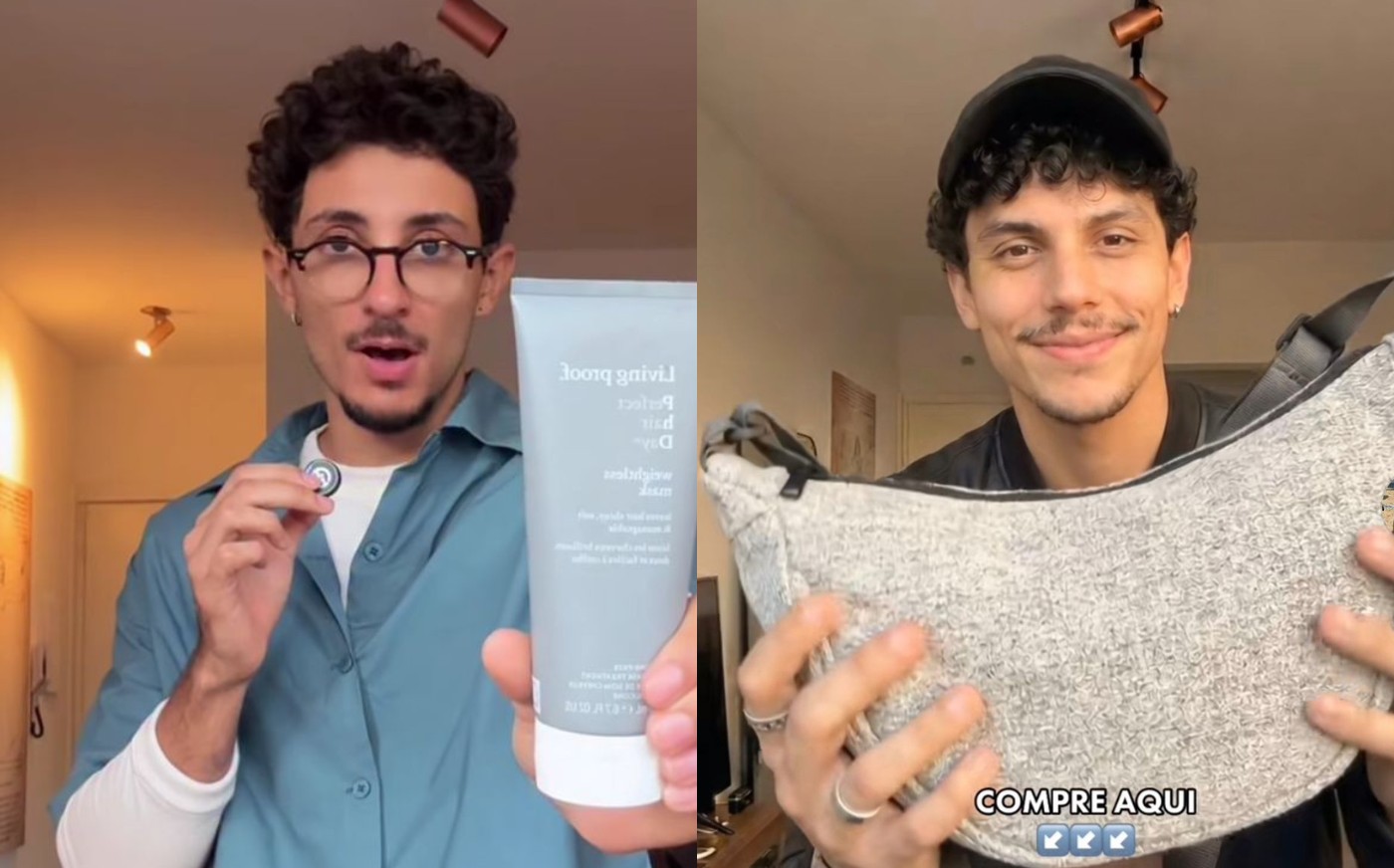
Influencers denounce AI profiles that 'clone' videos to profit on the internet
Content creators have denounced a new type of misuse of their identities on the internet.
Profiles created by Artificial Intelligence (AI) are using their videos as commands (the famous prompts) to replicate movements, mannerisms and even the furniture in their homes.
All of this without authorization and for commercial purposes.
It works like this: these "AI avatars" profit from selling products on online commerce tools integrated into the networks, such as TikTok Shop, selling clothes, shoes, watches... even "energy gum".
In the vast majority of cases reported so far, the creators of the AI profiles do not clone the exact face of the digital influencers.
Instead, they use videos of them that already exist and are public on the networks to capture the movements, body mannerisms and, mainly, the intimacy of the creators with the camera.
'They used my house'
Digital influencer Lucas Simões Lima, known on the networks as Lusca (he has 2.5 million followers on Tik Tok creating content about lifestyle and humor), was one of those who identified the fraud.
He began to notice similarities between the videos he originally posted and the publications of a profile called "Lucas Barroso".
"I started to find the similarities between my movements and my features strange. Then I saw that it was the setting of my apartment that was being used there", says Lucas, in an interview with g1.
On the left side, the influencer Luscas. On the right side, Lucas Barroso, an avatar made by Artificial Intelligence.
Social networks
The "digital clone", at that point, was already successful. He accumulated around 330,000 likes on TikTok and published, to a large extent, videos proving and selling various items.
He interacted with his followers like a real person: he answered questions from the public detailing supposed body measurements, such as his weight and height.
The realism of the technology was so sophisticated that, in the comments on the posts, many users didn't even realize that it was a robot and even showed romantic interest in the digital figure. "Are you coming along?" joked one of the followers.
Another detail that exposes the digital fraud behind the page is that the avatar's "face" was changed quite frequently. In older publications, it was possible to notice that the character used a "physiognomy" completely different from the current one to advertise the same products.
Clothes, shoes, bags, watches... some of the products sold by "Lucas Barroso", an influencer created by AI, on Tik Tok.
Social networks
The practice of creating an AI avatar that pretends to be a real person to sell products, however, is explicitly prohibited by TikTok's guidelines (more below, see what is allowed or not within of the application).
Until last Tuesday (9), the artificial intelligence influencer had 46 products listed on the TikTok Shop tab. The platform did not say, however, how many of these items were sold.
The profile remained active until Wednesday (10).
'Black Mirror' Experience
Lima says that he discovered the profile of his "AI clone" by chance while browsing TikTok and, initially, didn't even realize that it was Artificial Intelligence.
"After I made a video exposing what was happening, I received comments from followers who had already seen his ads and thought it was me selling. I went to research laws and there aren't that many yet, it's something very new even for my lawyers", says the content creator, who classified the experience as "very Black Mirror".
The influencer tried to report the account through the platform's own mechanisms, signaling that the profile was impersonating him, but no action was taken until the account "disappeared".
The case is not isolated
Lima's exposure encouraged other content creators to report identical situations.
Influencer Júlia Barni (3 million followers on Instagram and 10 million on TikTok with videos focused on dance) revealed that her content was also used in this parallel market.
According to her, AI applications used videos in which she appears dancing to the choreography of the song "Rasputin" to apply a layer of technology over her body and, from this, generate undue "self-promotion" on networks.
Júlia Alcoforado, another content creator (she works in the fitness niche and accumulates 238 thousand followers on Instagram) revealed that she was also the target of "cloning" by AI and drew attention to the existence of a market that teaches the practice:
"I'm experiencing the same thing here and I don't know what to do! And the worst thing of all is that there's a course teaching people how to do this: take videos from content creators and put AI on top of them to sell the product", she said in a comment on Instagram. feels comfortable speaking out about the case at the moment, citing fears about possible negative repercussions on social media.
Courses teach how to create avatars with third-party photos
The 'clones' market: courses teach how to create avatars with third-party photos for R$97
Social networks
The ease with which these profiles are created is driven by an expanding digital market: online courses that teach how to generate "digital clones" for quick monetization.
On one of these platforms, sold for R$97, the promotional material promises to transform intelligence artificial into a source of extra income.
On the course's Instagram profile, the person responsible for the classes demonstrates the technique step by step using photos of ordinary people taken from Pinterest - a network that officially defines itself as a visual discovery platform and online search engine.
In practice, the database of everyday and real images from this social network ends up serving another purpose: to be raw material for the generation of artificial intelligence avatars.
Courses teach how to create AI influencers using photos and videos from third parties.
Social networks
The illusion of easy profit
TikTok Shop: social network launches virtual store in Brazil to compete with Amazon and Magalu
Disclosure/TikTok
The explosion of these AI tools, linked to new forms of e-commerce integrated with social networks, has really created a real race for money on the internet.
The search for monetization has found in Artificial Intelligence the perfect shortcut. This is what lawyer specializing in digital law Aracy Viana explains, in an interview with g1:
"People want to make money on social media at all costs now. AI has accelerated this even further since you can create a 'doll' based on the characteristics of influencers who already sell, who already advertise, who already have this ease with the public", he analyzed.
What does the law say?
How do the creators of these tools usually name the profiles with other names and the faces of the avatars suffer "distortions", many believe they are protected because they do not use the identical image of the victim... but they are not.
Viana explains that, although Brazil does not yet have specific and robust legislation for regulating content generated by Artificial Intelligence, the legal system protects the individual's personality.
This means that: the voice, the way of walking, the body mannerisms and even the physical elements that make up someone's private scene (such as the furniture in an apartment) are protected by the so-called Personality Rights, provided for in the Civil Code.
I bought it from an 'AI influencer'...
what now?
Girl in a soft dress had her photo manipulated by AI by an influencer. An image of her appears dancing in a video between two women in short clothes
Reproduction/Social media
The escalation of these cases also sparks a debate about the rules of the platforms and the rights of consumers who purchase through these e-commerce tabs.
Currently, TikTok does not prohibit the creation of artificial intelligence avatars aimed at commerce, nor does it prohibit the sale of products with images generated by AI.
The platform informed g1, however, that there are strict rules for these profiles to operate:
the use of technology must be clearly signaled,
the images cannot alter the real appearance of the product and the creator cannot impersonate another person.
The legal rule that applies to these "selling robots", therefore, is the same as that of real influencers.
If the consumer purchases an object advertised by these profiles and the item presents questionable quality or is not delivered, the legal responsibility falls on the platform itself.
Tik Tok also stated that its legal team is already investigating the specific case of influencer Lucas Simões Lima.
I was cloned: what to do?
For content creators or ordinary people who identify their scenarios, bodies or images being replicated by AI tools without authorization, the legal guidance is divided into three immediate steps:
Activate the platform: Use the application's own reporting channels to report the misuse of images and infringement of intellectual property.
Record digital evidence: Use network audit tools that generate security codes (such as blockchains), capable of preserving data from the fake page for up to 5 years for legal purposes.
Occurrence Report: Register the case with the Civil Police. The document creates an official time frame that protects the victim if the fake profile applies financial defaults using their name or the setting of their home.
Source: G1