Butter or margarine: what science recommends
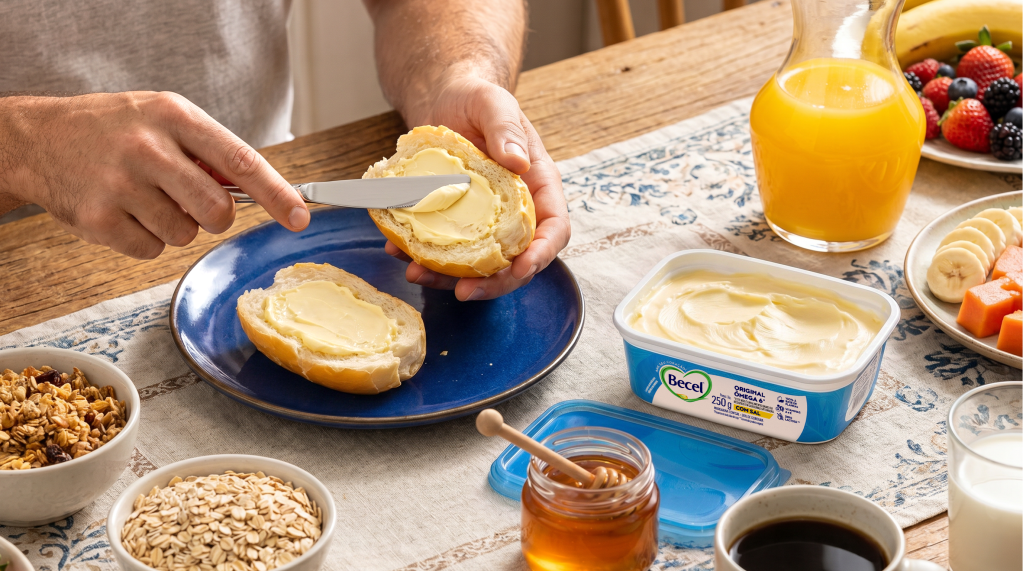
Not all fat produces the same effect on the body. In recent decades, advances in nutrition research have led experts to broaden the focus of recommendations for cardiovascular health. More than reducing the amount of fat consumed, the guidelines began to highlight the importance of prioritizing unsaturated fats instead of saturated fats as part of cardiovascular disease prevention strategies.
This understanding also guides the development of Becel's margarine line, formulated with vegetable oils and aimed at daily consumption. The line's formulation follows recommendations that prioritize the quality of fats in the diet as one of the factors related to heart health.
According to nutritionist Adriana Stavro, the main difference between butter and margarine is the profile of fats present in each product.
"The main difference between butter and margarine is the quality of the fats. While butter contains more saturated fats, related to the increase in LDL, the so-called bad cholesterol, current versions of margarines use vegetable oils rich in unsaturated fats, components associated with a more favorable lipid profile and cardiovascular health", he states.
What the research shows
The change in recommendations is supported by a consistent set of scientific evidence. Research conducted by researchers at Harvard University and published in the Journal of the American College of Cardiology followed around 120,000 people for up to 30 years and found that replacing 5% of calories from saturated fats with polyunsaturated fats was associated with a reduction of up to 25% in the risk of coronary heart disease.
In Brazil, a statement from the Brazilian Society of Cardiology also recommends prioritizing mono- and polyunsaturated fats to replace saturated fats whenever possible.
In routine practice, this guidance can be applied to simple choices, such as replacing butter with margarine formulated with vegetable oils. According to Becel, in addition to reducing the intake of saturated fats, this replacement also increases the consumption of vitamins and other nutrients present in the product formulation.
Phytosterols and cholesterol control
The type of fat consumed is not the only factor studied when it comes to cardiovascular health. For people with high cholesterol, or who wish to reinforce prevention, another component has accumulated scientific evidence: phytosterols.
Naturally present in foods of plant origin, these compounds compete with cholesterol during intestinal absorption, reducing the amount absorbed by the body.
"In practice, phytosterols act as a natural barrier against excess cholesterol. By hindering its absorption in the intestine, they contribute to the reduction of LDL in the blood, one of the main risk factors for cardiovascular diseases", explains Adriana Stavro.
Research published in the European Journal of Clinical Nutrition, with 95 participants, showed that daily consumption of vegetable cream enriched with phytosterols reduced total cholesterol by 8% and LDL by 13%, without altering HDL levels, known as good cholesterol.
Similar results were observed in a study published in the Brazilian Archives of Cardiology, which evaluated patients with moderate hypercholesterolemia and identified a 10% reduction in total cholesterol and a 12% reduction in LDL.
Based on this evidence, Becel developed ProActiv, enriched with phytosterols and the first in the segment to receive endorsement from the Brazilian Society of Cardiology. According to the manufacturer, daily consumption of two tablespoons helps control cholesterol when associated with a balanced diet and healthy lifestyle habits. The formulation is also a source of omega 6 and vitamins A and E.
Small changes also make a difference
Scientific evidence shows that the prevention of cardiovascular diseases depends on the combination of different factors.
A balanced diet, regular physical activity, weight control, smoking cessation and medical monitoring are among the measures associated with reducing cardiovascular risk. In this context, choices made daily also contribute to improving the quality of our diet.
"When food adapts to the routine, and not the other way around, changes become more sustainable. It is consistency, not radicalism, that promotes real results over time", says Adriana Stavro.
This relationship also appears in scientific studies. Research from the Harvard T.H. Chan School of Public Health, published in the journal Circulation, followed almost 80,000 people for up to 20 years and observed that gradual improvements in dietary quality were associated with reduced cardiovascular risk, with drops of 7% to 8% in four-year cycles and up to 9% in the long term.
Another study, published in 2026 in the European Journal of Preventive Cardiology, analyzed data from more than 50,000 adults and found an association between gradual lifestyle adjustments, such as greater consumption of vegetables and regular physical activity, and a reduction of up to 10% in the risk of serious cardiovascular events.
The results reinforce the importance of changes that can be maintained over time, including choices made daily during meals.
Products for different moments of consumption
The search for a more balanced diet has also expanded the range of products aimed at different habits and forms of consumption. According to Becel, the diversification of the portfolio follows the evolution of nutritional recommendations and consumer needs.
Aimed at preparing sweet and savory recipes, Becel Toque Gourmet was developed for culinary use. The version is lactose-free, has 30% fewer calories and 56% less saturated fat than butter, in addition to being a source of omega 6 and vitamins A and E.
The line also includes Becel Original, suitable for daily consumption in bread, toast and cold preparations. Produced with vegetable oils, it contains 34% total fat, less saturated fat than butter and is a source of omega 6 and vitamins A and E.
Becel ProActiv is enriched with phytosterols, compounds of plant origin that help reduce cholesterol when consumed daily as part of a balanced diet and associated with healthy lifestyle habits. The formulation is also a source of omega 6 and vitamins A and E.
For those looking for a flavor closer to butter, the line also includes Becel Amanteigada, formulated with vegetable oils and a source of omega 6 and vitamins A and E.
Do you want to know more about the Becel line and discover the different versions of the products? Visit the website and find out more.
Source: CNN