British Ebola vaccine could be ready for testing in months
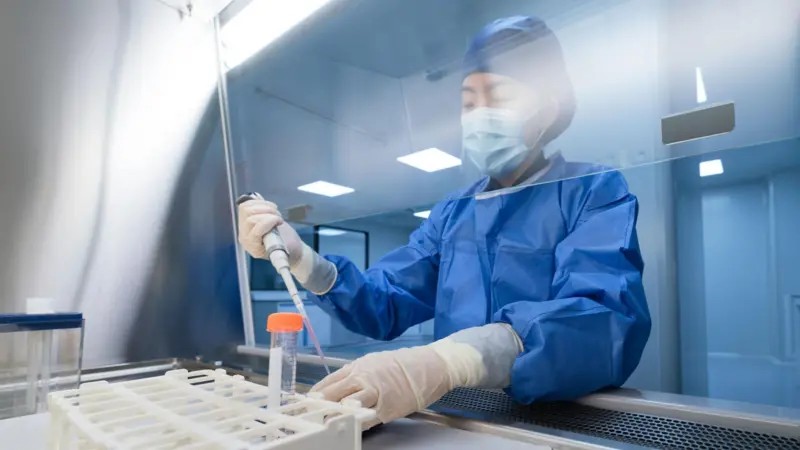
Oxford scientists develop vaccine against the new Ebola outbreak
Scientists at the University of Oxford, in the United Kingdom, are developing a new vaccine against the Ebola virus that should be ready for clinical trials in two to three months and could help face the current health emergency.
The ongoing outbreak, concentrated in the Democratic Republic of Congo, has already recorded 750 suspected cases and 177 deaths.
Responsible for the current increase in cases, the variant Ebola Bundibugyo is rare and does not yet have vaccines validated in trials. It kills around a third of infected people.
Even so, Oxford scientists say they are working at an accelerated pace in case the outbreak gets out of control and the experimental vaccine needs to be used.
There is no confirmation that the vaccine works. Animal tests and clinical trials on humans will still be needed to confirm its effectiveness.
The World Health Organization (WHO) has raised the risk of the current Ebola outbreak from "high" to "very high" in the Democratic Republic of Congo.
The ongoing outbreak, concentrated in the Democratic Republic of Congo, has already recorded 750 suspected cases and 177 deaths
Getty Images/BBC
According to the WHO, the risk is also now considered high in region affected by the outbreak, although it remains low at an international level.
The update on the status of the outbreak occurred after the WHO declared, last Sunday (17/05), a public health emergency of international concern, highlighting that the outbreak does not constitute a pandemic (a situation in which an infectious disease threatens many people around the world simultaneously, as occurred with Covid-19).
Another experimental vaccine against Bundibugyo is also under development, but it is expected to take between six and nine months to be ready for tests.
BBC
The vaccine being developed in Oxford uses the same technology worked on by the team during the Covid-19 pandemic.
It is a highly adaptable technology, known as ChAdOx1, which can be quickly adjusted to combat different infections.
During the pandemic, it was loaded with the coronavirus' genetic code. This time, scientists used genetic material from the Bundibugyo variant of Ebola.
The technology employs a common cold virus that normally infects chimpanzees, but which has been genetically modified to be safe for humans.
Researchers involved in developing the vaccine use this modified flu virus to transport and deliver important genetic information about the Ebola Bundibugyo virus to cells. With this, the body learns to recognize and fight the real disease.
The vaccine does not cause infection or symptoms of Ebola, but prepares the immune system to offer protection.
The BBC has learned that animal testing is already underway in Oxford.
As soon as the University of Oxford makes the pharmaceutical-standard material available, the Serum Institute of India should begin large-scale production of the Ebola vaccine.
"Once we deliver the initial material, they will be able to produce it quickly and in on a large scale," Professor Teresa Lambe, director of vaccine immunology at the Oxford Vaccine Group, told BBC News.
According to the WHO, the vaccine could be available for use in clinical trials within two to three months.
According to Lambe, from the Oxford Vaccine Group, acting quickly is a priority.
"People are worried about this outbreak. In general, you need to prepare for the worst-case scenario.
We hope that contact tracing and quarantine will be sufficient, but we cannot slow down," he said.
BBC
The current Ebola outbreak poses a challenge because it is caused by a rare variant of the virus.
There are six species of Ebola virus, but only three cause major outbreaks in humans.
The Bundibugyo virus has caused only two previous outbreaks - in Uganda in 2007 and the Democratic Republic of Congo in 2012 - and has not been detected for more than a decade.
A vaccine against the variant already exists Zaire, more common, but there is still no proven effective vaccine for Bundibugyo.
Ebola vaccines would not be administered en masse in the same way as was the case during the Covid-19 pandemic.
Instead, they are used in a strategy known as ring vaccination, in which only those most at risk of infection are immunized. This includes close contacts of Ebola patients and healthcare workers treating infected people, who can easily transmit the virus.
The team of Oxford researchers had already been working on similar vaccines for the Sudan variant of the Ebola virus and the Marburg virus.
Health workers in protective equipment outside the Reference General Hospital during actions to combat the Ebola outbreak, on May 21, 2026, in Mongbwalu, Republic Democratic Congo
Getty Images/BBC
What is Ebola and what are the symptoms?
Ebola is a rare but deadly disease caused by a virus.
The Ebola virus normally infects animals, usually fruit bats, but outbreaks among humans can sometimes start when people eat or handle infected animals.
Symptoms take two to 21 days to appear. They appear suddenly and begin as if it were the flu, with fever, headache and tiredness.
As the disease progresses, vomiting and diarrhea appear, which can lead to organ failure. Some, but not all, patients develop internal and external bleeding.
The virus spreads from person to person through contact with infected bodily fluids, such as blood or vomit.
What is being done to contain the outbreak?
The government of the Democratic Republic of the Congo has sent health teams to Bunia with protective equipment.
The WHO and the medical organization Doctors Without Borders (MSF) are also present. They are setting up treatment centers and working on a response plan.
A toll-free number has been made available to report symptoms.
Residents have been encouraged to take measures such as:
call immediately if symptoms appear
avoid contact with the bodies of people who have died with symptoms or dead animals
not consume raw meat, as undercooked food can transmit the virus
practice social distancing
*Additional reporting by Emery Makumeno and Hafsa Khalil
Source: G1