Brazilian livestock on the 'dirty list': what the US says about forced labor in Brazil when proposing more tariffs
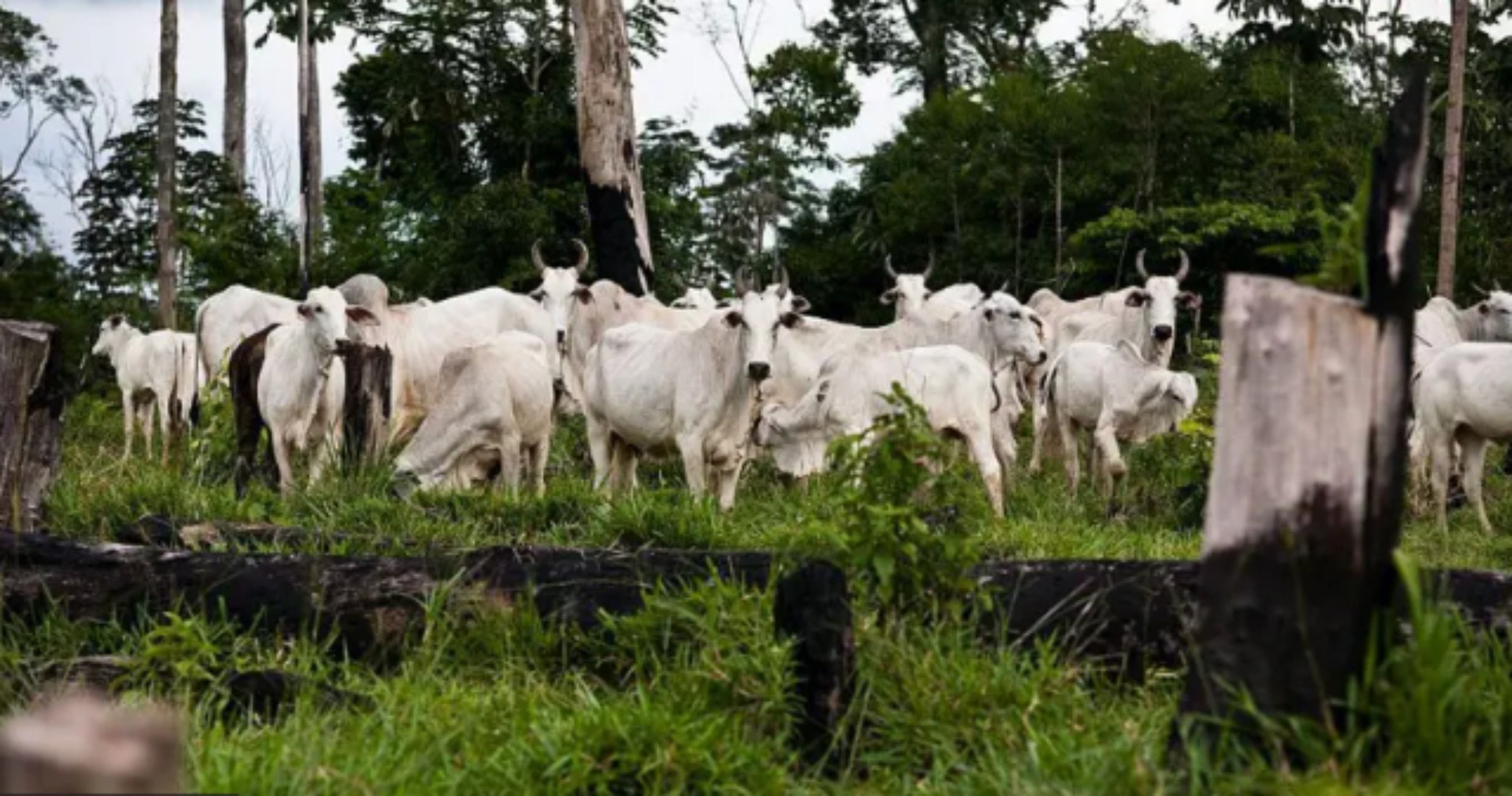
American report on forced labor has a case study criticizing Brazilian livestock farming.
Getty Images via BBC
The United States government included Brazil on a list of 59 countries, in addition to the European Union, that "failed" to ban the import of goods produced with forced labor - and which, according to American authorities, should be subject to more retaliatory tariffs because of this.
The Office of the US Trade Representative (USTR) proposes that Brazil and another 53 countries mentioned in the report receive additional tariffs of 12.5%. Another six economies must receive 10% taxation. It is unclear whether these tariffs are in addition to others already in force - and how they would apply in relation to lists of exceptions.
In the case of Brazil, the report highlights the fact that "independent research" suggests that "Brazilian cattle ranchers are on the so-called 'Dirty List'" (read below in the report). BBC News Brasil contacted the Brazilian government and associations that represent Brazilian livestock, but there has not yet been a statement about the new report.
The USA is still in the consultation phase on these measures. The USTR will hold a public hearing on its proposal on July 7.
Now on g1
"The failure of our most important trading partners to address the import of goods produced with forced labor is unacceptable. This creates a dynamic in which American workers are forced to compete globally on unequal terms," said U.S. Trade Representative General Jamieson Greer.
"We will no longer tolerate this disparity. Some trading partners have already taken initial steps to prevent the import of goods produced with forced labor [...] However, each of our trading partners must do more to ensure that trade does not encourage and perpetuate forced labor on a global basis."
The investigation was conducted on virtually all of the US's trading partners. The 60 economies under investigation represent more than 99% of the US import basket.
All of them were condemned by the investigation - and were recommended to impose retaliatory tariffs. Among the countries are advanced economies and traditional allies of the Americans, such as the European Union, the United Kingdom, Japan and Israel.
For six economies - Canada, the European Union, Ecuador, Mexico, Pakistan and Indonesia - the proposed tax is 10%, because in the American understanding they have mechanisms, but do not carry out inspections against forced labor.
The American government's announcement comes just weeks before the expiration of a 10% tariff that the White House had imposed on dozens of countries after a defeat in the Supreme Court in February, which overturned the initial tariff proposed by American President Donald Trump. This fixed tariff was based on Section 122 of the 1974 Trade Act, but was valid for only 150 days.
Some officials and experts accuse the US of looking for new ways to maintain Trump's tariff, using other pretexts.
"Because the court found [Trump's] tariff regime illegal, I think it's clear that the US is looking for other ways to reinstate this tariff barrier, this regime," said New Zealand's trade minister, Todd McClay, to the Financial Times newspaper. "We are not involved in any form of forced labor."
The announcement was made one day after the same USTR concluded a major trade investigation launched against Brazil in July last year - and said that certain practices by the Brazilian government are "unreasonable" and "encumber or restrict US trade".
On Monday (01/06), the American government proposed retaliatory tariffs of 25% on Brazilian products - but these measures have not yet been defined and will be discussed over the next few weeks until July 15th.
What does the report say about Brazil?
Brazil is one of 59 countries (in addition to the European Union) with a specific section in the report.
The country is mentioned 19 times in the 98-page report.
"The USTR found that Brazil did not effectively impose and enforce an import ban on forced labor products," says the text, whose conclusions about Brazil are summarized in three paragraphs.
The report says that the failure to effectively impose and enforce an import ban on forced labor products is "unreasonable" and "encumbers or restricts U.S. trade" - the same terms used in the conclusion of the previous day's investigation that condemned trade practices used by Brazil and proposed 25% tariffs on Brazilian products.
"Although Brazil claims to prohibit imports produced with forced labor through implementation of its commitments in investment agreements and free trade agreements, these provisions do not legally prohibit the import of goods produced in whole or in part by forced labor from another economy into the domestic market for sale," the text says.
These conclusions about Brazil are similar to those for other countries - with some variations in the wording for each.
Brazil appears in another section of the report on a specific case study, on its beef production - alongside two other examples, on imports of rice from Myanmar and tobacco from Malawi.
"It is well documented that forced labor is used in livestock production in Brazil," says the report.
"The TVPRA list [a US government list of products manufactured through child labor or forced labor] states that there is reason to believe that forced labor exists in livestock production in Brazil.
Independent research suggests that Brazilian cattle ranchers are on the so-called 'Dirty List'."
The "Dirty List" is a public document released by the Ministry of Labor to give visibility to government inspections to combat slave labor.
According to the American report, American agricultural exports are affected by this, as both Brazil and the USA export frozen beef to China - with Brazil distancing itself from the Americans in favor of the Chinese.
"During the period of 2015 By 2025, the volume of frozen beef exports from Brazil to the economies investigated has almost doubled, compared to a 21% increase in the volume exported by the US", says the text. necessarily produced with forced labor, the prevalence of this practice in Brazilian livestock production strongly suggests that at least part of these imports were produced in whole or in part with forced labor."
Which countries are on the list along with Brazil?
According to the conclusions of the American investigation, "all the economies investigated failed both to impose a legal ban on the import of goods produced in whole or in part with forced labor and to effectively enforce this ban."
The economies listed by the USA are:
South Africa South
Angola
Saudi Arabia
Algeria
Argentina
Australia
Bahamas
Bahrain
Bangladesh
Brazil
Cambodia
Canada
Qatar
Kazakhstan
Chile
China
Colombia
South Korea
Coast Rica
Egypt
El Salvador
United Arab Emirates
Ecuador
Philippines
Guatemala
Guyana
Honduras
Hong Kong
India
Indonesia
Iraq
Israel
Japan
Jordan
Kuwait
Libya
Malaysia
Morocco
Mexico
New Zealand
Nicaragua
Nigeria
Norway
Oman
Pakistan
Peru
Kingdom United
Dominican Republic
Russia
Singapore
Sri Lanka
Switzerland
Taiwan
Thailand
Trinidad and Tobago
Turkey
European Union
Uruguay
Venezuela
Vietnam
Tensions between Brazil and the USA
The announcement of the American conclusion on forced labor came one day after another major investigation into Brazil, in which the USTR proposed retaliatory tariffs of 25% against Brazilian products.
The alleged Brazilian practices condemned by the American government are related to digital commerce and electronic payment services, unfair preferential tariffs, combating corruption, protection of intellectual property, access to the ethanol market and illegal deforestation.
The American government is still receiving public consultations until July 1st on the measures. On July 6th, there will be a hearing. public.
Brazil and the USA are experiencing tensions with the classification of criminal factions as terrorist organizations and commercial accusations
AFP via Getty Images/BBC
The US Trade Representative, Jamieson Greer, said that he had "constructive meetings" that "intensified in recent weeks" with presidents Luiz Inácio Lula da Silva and Donald Trump - and that he hopes to continue this dialogue with the Brazilian government until July 15, before adopting any measures of response.
"However, we continue to face significant divergences in resolving the issues identified in this investigation," Greer said in a statement.
On the same day he announced the measure, Trump made a publication with senator and presidential candidate Flávio Bolsonaro (PL-RJ).
In one of the photos, his brother, former congressman Eduardo Bolsonaro, also appears.
"It was great to have Flávio Bolsonaro in the Oval Office of the White House - an intelligent young man who really loves his country, Brazil!", wrote Trump on his social network Truth Social. Brazil.
"I have always defended Brazilian companies and, at any opportunity I have, I will continue to defend our productive sector. I expressly asked President Trump not to tax our companies. Tariffs are not a solution", said Flávio on Tuesday.
"We need to sit seriously at the negotiation table, not with bravado, as Lula does."
Lula, in turn, attributed the conclusion of the American investigations to the actions of Flávio and Eduardo Bolsonaro in the USA.
The PT member called the children of former president Jair Bolsonaro "sellouts and traitors to the country" when reacting to the new threat from the American government.
"These children of Bolsonaro can be worse than him. And they are, in fact, sellouts of the country. They asked a foreign country to meddle in Brazilian decisions. That's what you have to say loud and clear: they are traitors", he said Lula.
The Brazilian president commented that the meeting he had with Trump at the beginning of the month had been a "success", but that the negotiations were hampered.
The president also argued that he showed Trump that the US does not have a trade deficit with Brazil and mentioned the Bolsonaro family's celebration of the first tariff against Brazil.
Followingly, Flávio Bolsonaro released a letter addressed to the United States Secretary of State, Marco Rubio, in which he asked Washington not to impose new sanctions trade to Brazil.
In the letter, written in English, the senator says that the country is experiencing "a serious process of fiscal and economic deterioration" and that the imposition of new tariffs would cause "serious damage to the Brazilian people." Brazilian criminal factions PCC and CV as terrorist organizations. The measure was announced by Trump two days after a meeting in the Oval Office with Flávio Bolsonaro.
"We don't accept being treated like kids. We don't accept being treated like a republic," said Lula, about the American decision.
Source: G1