Brazilian laws do not change, says judge about US decision
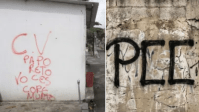
The PCC (First Capital Command) and the CV (Red Command) were classified as terrorist organizations by the United States. The decision, announced by the American government, generated extensive legal debate in Brazil, but, according to TJSP (São Paulo Court of Justice) judge Ivana David, Brazilian legislation does not undergo any direct changes as a result of this measure.
In an interview with CNN, Ivana assessed the practical effects of the classification: "Within the security system and within the Justice system, for now, everything remains as it is." The expert acknowledged, however, that the decision generated surprise among legal and public security professionals.
Brazilian legal system remains unchanged
Ivana David explained that, for there to be concrete changes in Brazil, it would be necessary for the country itself to define the PCC and Comando Vermelho as terrorist organizations in its internal system.
"In order for us, within our territory, within the Justice system, to adopt the jurisdiction and competence of the PF (Federal Police) and the Federal Court in the fight against terrorism, I have to first, here in Brazil, also define the PCC and the Red Command as a terrorist organization. This did not happen", he stated.
According to her, investigations will continue to be conducted based on Law No. 12,850, which deals with criminal organizations, the money laundering law and a more recent law - approved about a month before the interview - which defines the concept of criminal faction and ultra-violent criminal organization.
The judge highlighted that this legislation clearly distinguishes terrorist acts from terrorist organizations, and that PCC and CV fall into the category of criminal organizations, not terrorist groups along the lines of the Islamic State or Hezbollah.
Difference between terrorist act and terrorist organization
The expert highlighted the conceptual distinction between carrying out acts of terror and being classified as a terrorist organization. "A different situation is the concept of a terrorist cell. And then we will talk about the Islamic State, Hezbollah and everything we know in the world. Another situation is criminal organizations that violently assert their regional power, dominating that situation", he explained.
In this sense, she pointed out that the CV operates with territorial dominance, especially in Rio de Janeiro, while the PCC stands out for its economic activity and transnational trafficking, moving billions of dollars.
Ivana David also mentioned that there is a bill underway in the National Congress that could expand the concept of terrorism and include criminal organizations in this definition.
If this occurs, all investigation and judgment powers could be transferred to the Federal Police and the Federal Court. "But today we don't have that design and everything remains as it is", he reiterated.
Impacts of the American decision and risks in international cooperation
Despite not changing Brazilian legislation, Ivana David warned that the classification made by the United States could generate consequences, especially financial and economic. She also pointed out a concrete risk for international cooperation: with the new designation, the American interlocutor in information exchanges with Brazil ceases to be the FBI and becomes a national security body.
"It becomes a national security situation. And then who carries out this dialogue changes. And this can especially compromise the exchange of information", he warned.
When asked whether the American decision could bring any concrete benefit to public security in Brazil, the TJSP judge was direct: "I still haven't been able to see any advantage, I confess to you."
CNN's Public Security analyst, Elijonas Maia, also mentioned that other countries in the region, such as Paraguay and Argentina, had previously classified the PCC as a terrorist group, without this significantly altering the dynamics of combating organized crime in Brazil.
The texts generated by artificial intelligence on CNN Brasil are made based on video cuts from the newspapers in its programming. All information is investigated and checked by journalists. The final text is also reviewed by the CNN journalism team. Click here to find out more.
Source: CNN