Brazil responds to US document, denies that PIX favors companies and defends STF decisions
New tariffs that the US may apply raise alarm among the Brazilian government
The Ministry of Foreign Affairs sent a document formalizing the Brazilian government's official response to the United States investigation that accuses Brazil of adopting practices that "encumber or restrict" trade with North Americans, and proposes an additional tariff of 25% on Brazilian products.
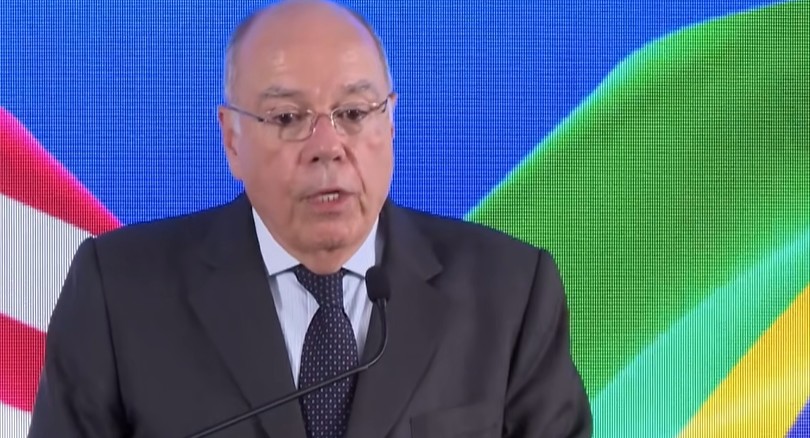
The letter is signed by Chancellor Mauro Vieira and was filed on Wednesday afternoon (1st).
In the text, the minister states that the American government's criticisms of PIX and Brazilian court decisions are not related to trade, but to disagreements over internal public policies.
The document was sent to the Office of the United States Trade Representative (USTR), responsible for the investigation opened based on Section 301 of the 1974 Trade Act.
This legislation allows the adoption of trade measures when a country considers that another government's practices are unfair and harm American companies.
But, in fact, manifestation, Brazil claims that this requirement was not demonstrated. According to the government, the USTR has not proven that Brazilian acts, policies or practices are discriminatory or impose barriers to United States trade.
Throughout the document, the government maintains that the United States is using the investigation to question Brazil's sovereign choices, and not to address measures that effectively harm American trade. sovereign country", says the document, in English (free translation).
Throughout the text, it states: "In the six topics covered, the USTR identifies areas of divergence in public policies or, in some cases, ongoing internal challenges in Brazil. However, the USTR does not establish the required legal link between a concrete act, policy or practice in Brazil and an identifiable burden or restriction on United States trade."
READ ALSO: BC favors PIX? Understand why the payment system is in Trump's sights
Minister Mauro Vieira
Reproduction
Defense of STF decisions on social networks
The document is divided into thematic areas. In the chapter on digital commerce, the Brazilian government responds to criticisms of decisions by the Federal Supreme Court (STF) that determined the removal of content and the suspension of profiles on social networks.
The government states that these decisions were taken within the scope of regular judicial processes, related to electoral integrity, criminal investigations and the protection of fundamental rights.
Furthermore, it contests the assessment that the secrecy of these decisions would be a problem. According to the text, confidentiality is provided for in Brazilian legislation to protect investigations, privacy and other public interests, and the parties continue to have the right to due legal process.
The statement also says that the USTR did not present evidence that American companies receive different treatment from Brazilian companies or other foreign companies.
For the government, the rules apply equally to all platforms operating in the country.
Defense of PIX
Regarding PIX, Brazil rejects the accusation that the system favors national companies to the detriment of American competitors, used as an argument by the Donald Trump government to say that there is undue favoritism internally and against foreign trade.
According to the document, PIX is an open access public infrastructure, available under non-discriminatory conditions for companies that meet the participation requirements, regardless of the origin of the capital.
The government also highlights that American companies already operate normally in the Pix ecosystem, citing Google Pay Brasil and Visa as examples, and argues that the system has increased competition, reduced costs and created new opportunities for banks, fintechs and technology companies.
Brazil also compares Pix to FedNow, an instant payments system operated by the Federal Reserve, the central bank of the United States. According to the defense, the fact that a central bank operates a public payments infrastructure does not, in itself, constitute an unfair commercial practice.
Source: G1