Brazil creates center to produce pharmaceutical inputs and reduce dependence on abroad; project has no defined deadline or goal
AdobeStock
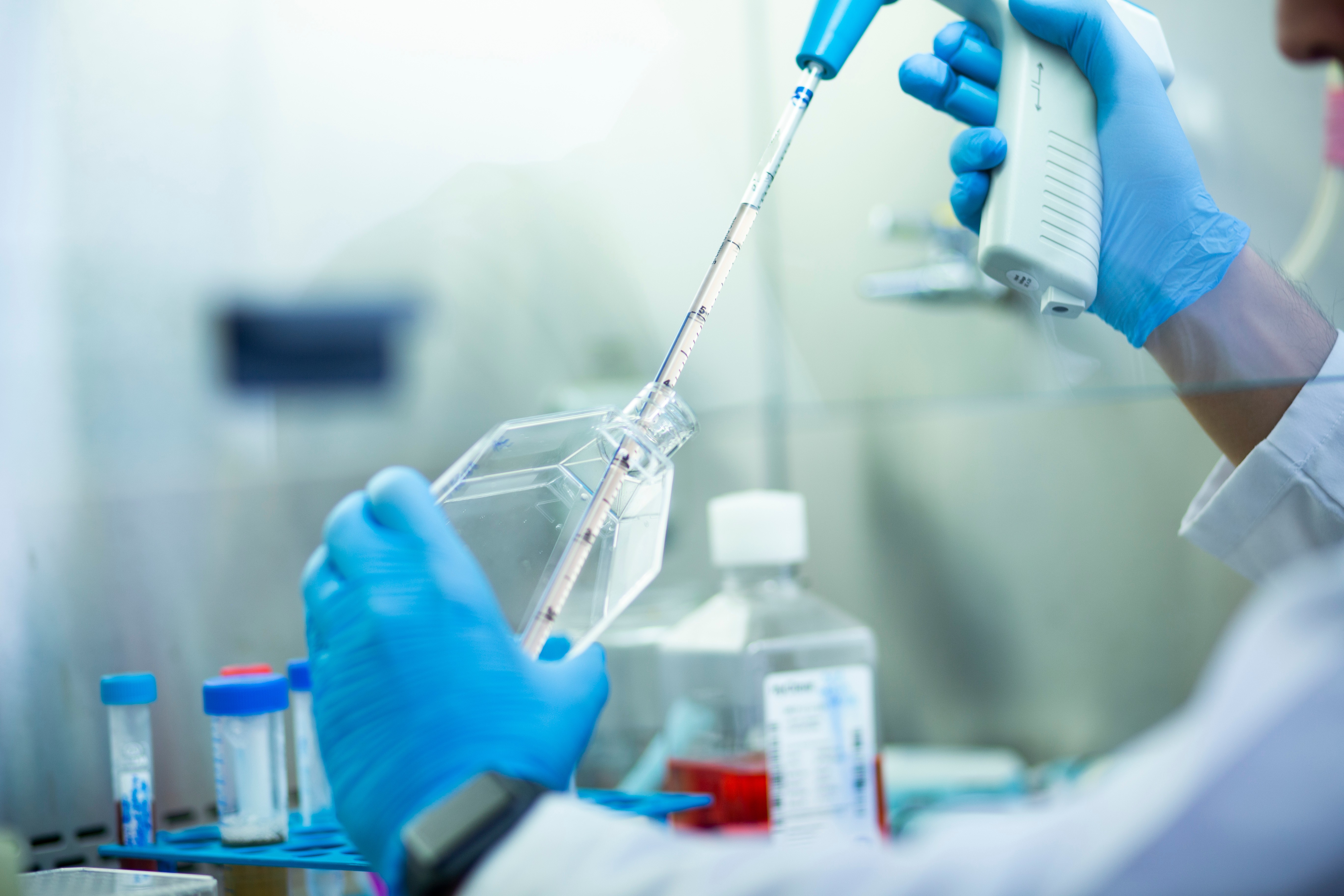
Brazil launched this Friday (3) a research center dedicated to developing Active Pharmaceutical Ingredients (IFAs) from Brazilian biodiversity, in an attempt to reduce, in the long term, the country's dependence on imported raw materials to manufacture medicines.
Despite the announcement, the project has no concrete target for reducing imports, nor a deadline for any product to even reach the market. According to those responsible for the initiative, the first four years will be dedicated only to the initial stages of research, before testing on human beings.
The Competence Center for IFA from Brazilian Biodiversity (CC-IFABR) will be installed at the National Center for Research in Energy and Materials (CNPEM), in Campinas (SP), with R$60 million from the Brazilian Industrial Research and Innovation Company (Embrapii) and the Ministry of Health.
The proposal is to identify, in plants, animals and Brazilian microorganisms, molecules with the potential to become medicines.
The problem that the center tries to solve is known in the sector: today, more than 90% of APIs used by the Brazilian pharmaceutical industry are imported - and, in some segments, this dependence reaches 95%, according to the Brazilian Association of the Pharmaceutical Input Industry (Abiquifi).
Although a large part of the medicines sold in the country are manufactured here, it is the API - the substance responsible for the therapeutic effect - that it usually comes from outside.
Now on g1
What the center will do
In the next four years, CC-IFABR will not develop complete medicines nor produce medicines for the Unified Health System (SUS).
The work will focus on the initial stages of research: identifying molecules from Brazilian biodiversity with therapeutic potential, improving them and carrying out the pre-clinical studies necessary to prove safety and efficacy - the phase that precedes testing on human beings.
The first two areas of research will be treatments against cancer, focusing on immunotherapy, and therapies for emerging infections.
According to Daniela Trivella, coordinator of CC-IFABR at CNPEM, two projects are already underway:
one investigates a molecule obtained from a Caatinga plant with the potential to stimulate the immune system against tumors;
the other seeks to develop, from a microorganism, a molecule for the treatment of sepsis - a widespread infection that can lead to organ failure.
Project without defined goals
Neither of the two projects should result in medicine available to patients within the center's initial deadline. After the pre-clinical phase, it will still be necessary to carry out studies on humans, obtain approval from the National Health Surveillance Agency (Anvisa) and develop processes capable of manufacturing these medicines on an industrial scale.
According to Alvaro Prata, president of Embrapii, it is precisely because it depends on these steps that it is not yet possible to estimate when the project will, in fact, reduce Brazil's dependence on imported APIs - nor to what extent this could happen.
The 'valley of death'
Discovering a promising molecule is usually just the first step. One of the main bottlenecks in the pharmaceutical industry is transforming a scientific discovery into a production process capable of manufacturing large quantities of the substance with quality, safety and competitive cost - the transition between academic research and industrial production that researchers call the "valley of death", where many projects are abandoned.
Prata states that the center intends to reduce this risk by developing, in addition to molecules, more efficient and sustainable production routes.
One of the main bets is a biofoundry, an automated platform that uses robotics and artificial intelligence to develop and optimize microorganisms capable of producing molecules of pharmaceutical interest - the objective is to accelerate these processes and validate them on a pilot scale, bringing research closer to the requirements of industry and regulatory agencies.
Still, there is no public estimate of how many projects will be able to overcome this stage and reach the market.
Who will get the patents
Another concern surrounding research on Brazilian biodiversity is to prevent discoveries made in the country from being economically exploited only by foreign companies.
According to Prata, the center's strategy is to transform natural compounds into new patentable molecules, preferably licensed to companies based in Brazil.
He also states that the entire process will follow the legislation on access to genetic heritage and sharing of benefits, ensuring that traditional communities and researchers involved receive the participation provided for by law.
R$60 million finances only the first phase
The announced investment covers the first four years of the center's operation and will be used to implement the infrastructure and develop initial research.
The expectation, says Prata, is to raise new resources throughout the execution of the program, with the participation of the pharmaceutical industry and other sources of financing - but, to date, there are no partners or confirmed amounts for this second stage.
What is an IFA?
The Active Pharmaceutical Ingredient (IFA) is the substance responsible for the therapeutic effect of a medicine: it is what fights an infection, reduces fever or acts against tumor cells. The other components of the tablet or capsule only serve to give shape, stability and facilitate administration of the medicine.
Today, although most medicines sold in Brazil are manufactured in the country, their APIs come from abroad - mainly from China and India. It is this dependence that the new center says it wants to reduce in the long term.
But, after four years and the R$ 60 million invested, what Brazil will have guaranteed is not a measurable reduction in imports - it is, at best, a handful of molecules ready to begin, only then, the long phase of testing in humans. Embrapii."
"The Center was not designed to promote the immediate replacement of imported IFAs, but to structure research, development, capacity building and knowledge generation in a technological frontier area. Semiannual monitoring will be carried out by the Monitoring and Evaluation Committee, in which the Ministry of Health participates. associated, resources contributed by companies and number of startups and technology-based companies mobilized.
The Unified Health System does not incorporate IFAs in isolation, but medicines and other health technologies. The solutions will reach the SUS through production scaling and regulatory evaluation. Embrapii. The design of the CC-IFABR seeks to face the productive challenge by combining applied research, interaction with companies, focus on RD&I projects and monitoring of performance indicators.
Source: G1