Brazil calls US investigation 'arbitrary' and says 12.5% tariff violates WTO rules
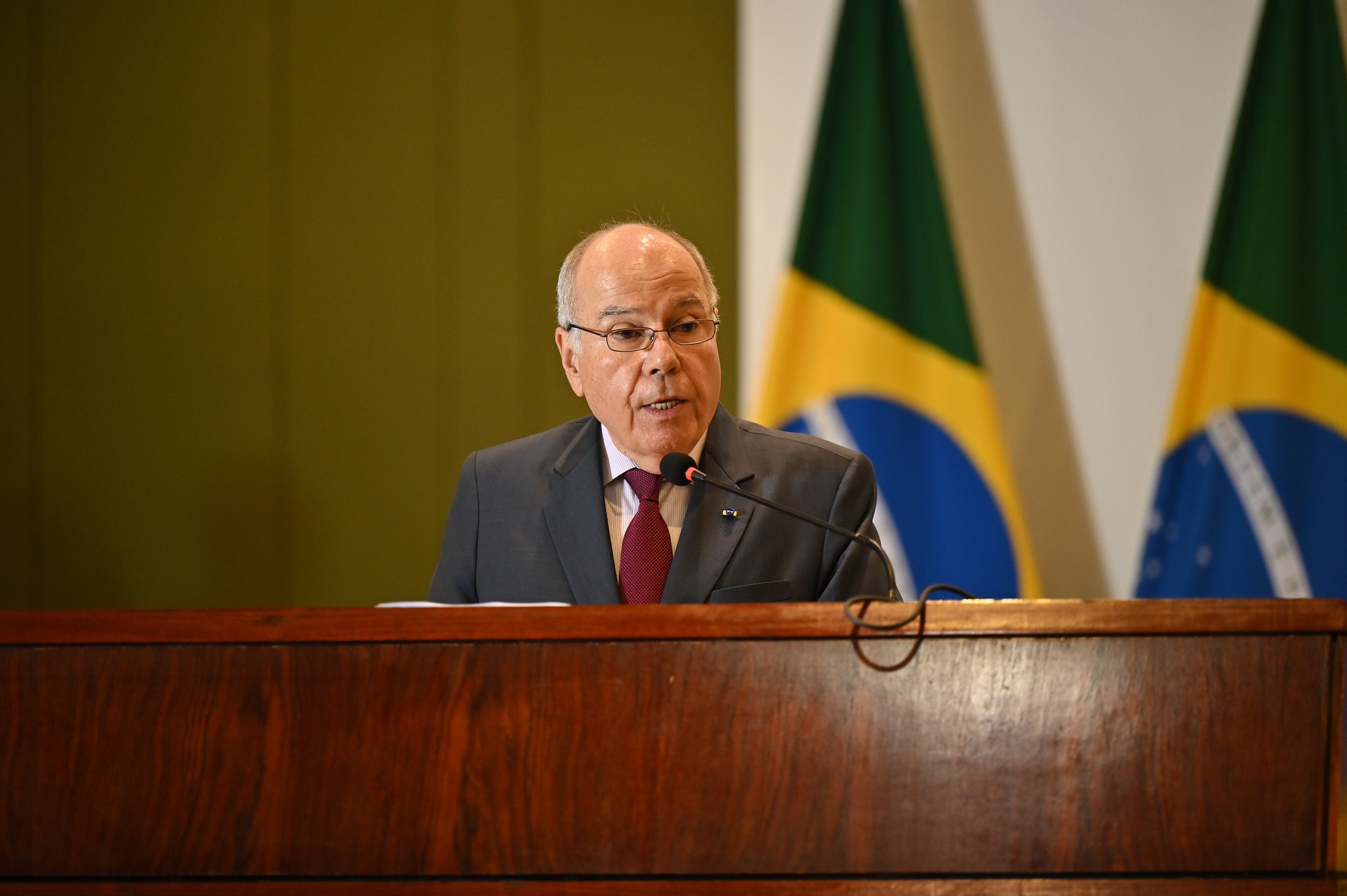
Chancellor Mauro Vieira
Mateus Oliveira/MRE
The Minister of Foreign Affairs, Mauro Vieira, sent a letter to the Office of the United States Trade Representative (USTR) to contest the proposal to apply an additional tariff of 12.5% on Brazilian products.
Do you have any suggestions for a report? Send it to g1
In the document, Itamaraty states that the conclusions of the American investigation are "erroneous", "arbitrary" and are not supported by the evidence presented by Brazil throughout the process.
The ministry also states that the report failed to consider information about the laws and inspection actions adopted by Brazil to combat work similar to slavery (see below).
The USTR is the body responsible for formulating US trade policy. It also conducts investigations into practices considered harmful to American trade and may recommend measures such as the imposition of tariffs.
The demonstration also reinforces the country's historical position that unilateral measures adopted under Section 301 - a provision of American trade law - are incompatible with the multilateral trading system.
"The issues raised in this investigation - covering domestic legal regimes and enforcement practices - would be better addressed through international cooperation and engagement, rather than punitive trade measures", says the signed document by Vieira.
Next, g1 explains the main arguments presented by Itamaraty to the USTR and understand how the Brazilian government contests the tariff proposal.
Tariff contravenes WTO rules
Brazil refutes accusation of slave labor
Inspection is used as an argument
USTR ignored evidence, says government
What Brazil asks of the USA
Brazil claims that tariff disrespects WTO rules
In the letter sent to the government American, Itamaraty states that the proposal to apply a 12.5% tariff on Brazilian products violates international trade rules.
According to the government, disagreements of this type should be resolved through the dispute settlement mechanisms of the World Trade Organization (WTO), rather than the unilateral imposition of tariffs.
"When trade disputes arise under international agreements, Section 303 of the Trade Act provides for the use of formal dispute resolution mechanisms (such as World Trade Organization procedures) before resorting to unilateral measures."
The document also highlights that, since In 2007, the USA accumulated a trade surplus of more than US$400 billion in exchanges with Brazil. In Itamaraty's assessment, this result weakens the justification for applying the proposed tariff.
READ ALSO:
Brazil goes to the US to try to stop Trump's tariffs; see the arguments from industry and agriculture
USA concludes that Brazil has 'unreasonable' practices and proposes tariff on national products
Return to the beginning.
Vieira says that it already combats slave labor and contests the USA's accusation
The document sent by the Brazilian government to the USTR maintains that Brazil is already actively fighting slave labor, precisely the reason given by the USA to justify the proposal to apply an additional tariff on Brazilian products.
In the text, Mauro Vieira states that the country maintains a comprehensive set of legal and institutional mechanisms to prevent, identify and punish cases of work similar to slavery. Among them are:
criminal liability;
labor inspection;
transparency mechanisms;
cooperation between different public bodies; and
measures to prevent products linked to slave labor from entering production chains.
The so-called "Notice of Findings", released by the USTR on Sunday (5), concludes that Brazil had failed to prohibit and effectively monitor the import of goods produced with forced labor.
According to the American body, this supposed failure would be "unreasonable" and would harm United States trade.
Mauro Vieira refutes this assessment.
"Brazil respectfully maintains that such conclusions are not supported by the records and are factually incorrect", writes the minister.
According to him, the USTR's analysis disregards evidence about the solid Brazilian legal system and the country's inspection efforts, in addition to not demonstrating any relationship between the policies adopted by Brazil and possible damage to the commercial interests of the United States.
Return to the top.
Inspection, not omission
The document also argues that the existence of identified cases of slave labor does not demonstrate a lack of supervision. On the contrary, according to the Brazilian government, it reveals that the inspection mechanisms are working.
According to Vieira, the frequent identification of labor violations shows the authorities' commitment to finding abuses and holding those involved accountable. Therefore, the numbers should not be interpreted as a sign of permissiveness, but as a result of active and efficient supervision.
An example of criminalization would be the so-called "Dirty List", a register of employers held responsible for this type of crime.
The federal government rescued 2,772 people from work situations similar to slavery in 2025, according to data released in January by the Labor Inspection Secretariat (SIT), of the Ministry of Labor and Employment (MTE). The number represents an increase of 26.8% compared to 2024.
Back to top.
USTR ignored evidence when proposing sanctions
Another of the main arguments presented by Mauro Vieira is that USTR did not analyze the evidence sent by the Brazilian government during the investigation. According to him, the American body simply concluded that Brazil does not adequately prohibit or combat products linked to forced labor, without considering the documentation presented.
"The USTR determinations [...] do not identify any shipment, transaction or concrete link in the supply chain that demonstrates that Brazil allowed the entry into its market of goods produced with forced labor in a way that burdens or restricts US trade. Instead, the conclusions are based on generic statements and references to concerns related to third countries, which are not linked to the imports, the legal regime or Brazil's inspection history", says Vieira.
The Brazilian government also argues that the USTR used examples from other countries to justify its decision, without demonstrating any relationship with the Brazilian reality.
"The USTR chose to invoke a conclusive statement", states the document.
To reinforce this argument, Mauro Vieira resorts to American legislation itself. According to him, Section 301 does not allow the USTR to ignore evidence that contradicts its conclusions - but that is exactly what happened in this case.
"Section 301 does not allow the USTR to ignore undisputed evidence (...) Unfortunately, this is precisely what the USTR proposed", writes Vieira.
Back to top.
What Brazil asks for
In the statement sent to the USTR, the Brazilian government requests that the body review its conclusions and withdraw the accusations made against it. Brazil and give up on the proposal to impose additional tariffs on the country's products.
Return to top
Source: G1