Bolivia approves state of emergency law after weeks of protests
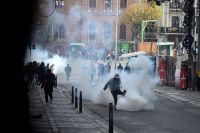
Bolivia's Congress approved this Sunday morning (7) a law that regulates states of exception, giving President Rodrigo Paz a clearer legal framework to implement extraordinary measures as the country faces weeks of protests and roadblocks.
During the 13-hour session, Congress observed a minute of silence for at least 9 people who died due to the lockdowns.
The legislation, supported by a majority in both chambers, came after 37 days of protests, which began with a workers' strike in May and turned into roadblocks, cutting off access to the neighboring cities of La Paz and El Alto, where about 2 million people live.
The new law does not immediately impose a state of exception, but allows the government to do so through a supreme decree, which must be sent to Congress for approval within 72 hours, in accordance with Bolivia's constitutional framework.
The text establishes that such measures can last up to 90 days, with the possibility of extension if legislators support it.
A key provision regulates the role of the armed forces during internal unrest, allowing the military to support the police if security forces are overwhelmed, protect strategic infrastructure and secure humanitarian corridors.
On Saturday (6), six police officers were shot in an attempt to open a humanitarian corridor in San Julian. The move reflects growing concern within the government about its ability to restore order as protests intensify and supply chains remain disrupted.
Rodrigo Paz, who took office around seven months ago after obtaining 55% of the vote, has faced increasing pressure as demonstrations led by unions and supporters of former president Evo Morales demand his resignation. At the same time as the protest, Morales received an arrest warrant for human trafficking of an underage girl while in office.
Understand what is behind the protests in Bolivia
Source: CNN