'Blouse tax': government will tax low-value international purchases again in 2027, but at a different tax and rate
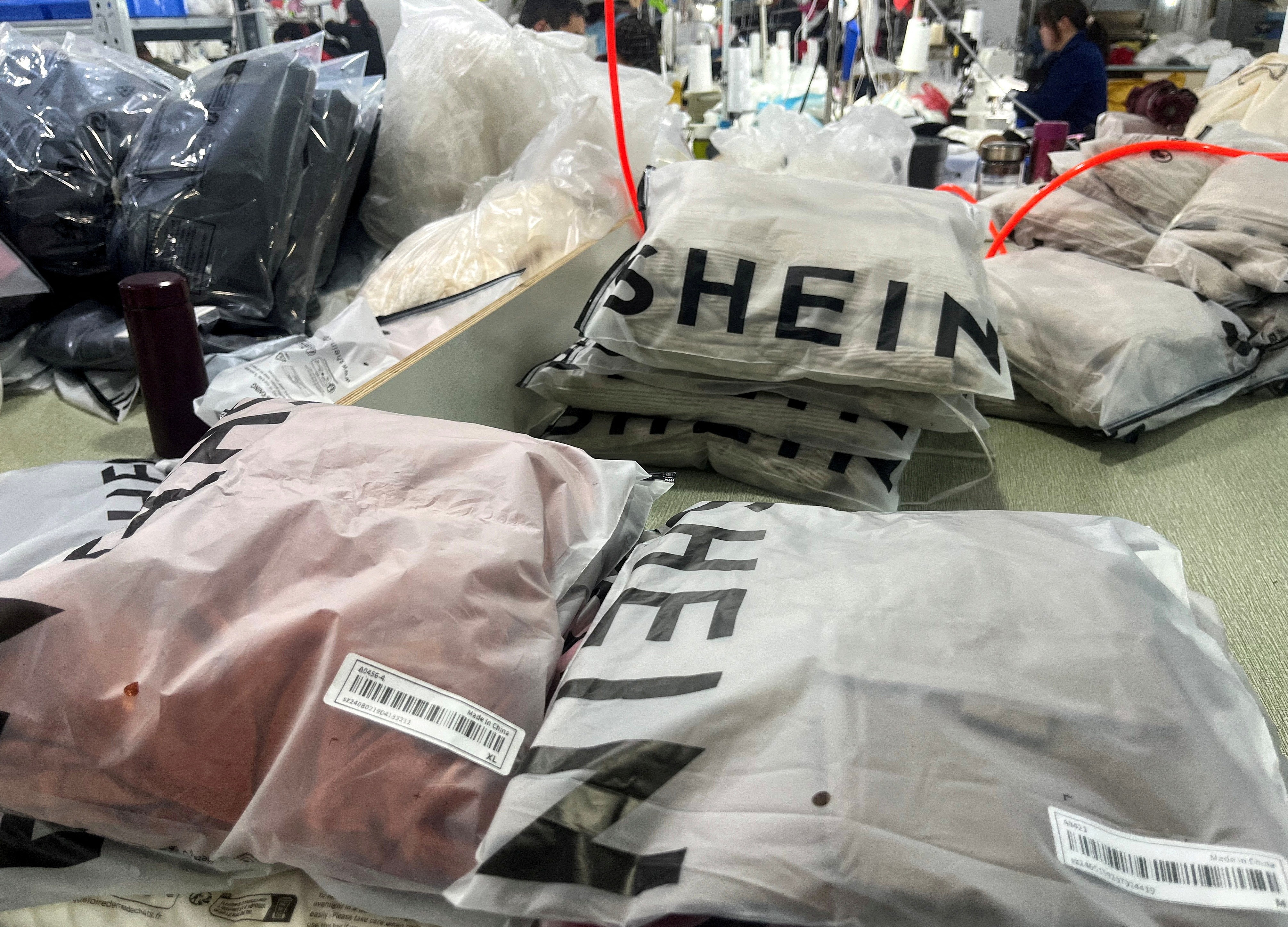
Packages of clothing at a Shein factory in Guangzhou, Guangdong province, China, on April 1, 2025.
Reuters
Taxation on orders worth less than US$50, which was eliminated this year with the end of the "blouse tax", will return in 2027 through the Contribution on Goods and Services (CBS) - a federal tax created as part of the consumption tax reform.
CBS will replace the old import tax, which had a 20% rate for low-value international orders. The rate to be charged, however, has not yet been defined.
The CBS value, which is being calculated by the Federal Revenue Service in partnership with the Federal Audit Court (TCU), will be fixed by Senate resolution in December this year.
The CBS will have the same logic for national and imported products, with the same rates applied. The tax does not depend on the US$50 limit, import tax rule. The charge began in 2026 (testing phase, with a highlighted tax) and will come into effect at the full rate in 2027.
Now on g1
Estimated at 9.43%
In 2024, the government estimated that the CBS rate would be 8.8%. However, in the following months, new exceptions were made to the collection of the full tax, such as meat and medicines - which increased the rate.
The economic area did not make a new projection, but a calculation by consultancy Roit points to a rate of 9.43% in 2027.
The value of the CBS is being calculated with the aim of maintaining the current level of the tax burden on consumption, so that the federal government does not lose revenue.
In addition to the CBS, the government will also rely on revenue from the selective tax, known as the sin tax, to maintain the current tax burden.
The selective tax rates for each product (alcohol, soft drinks, cigarettes and polluting vehicles, among others) will still be defined by the National Congress.
If the government sets lower rates for the sin tax, it will have to charge a higher rate in the CBS to maintain the current level of the global tax burden on the consumption.
Rate will depend on sin tax, to be defined by the National Congress
Saulo Cruz/Agência Senado
➡In addition to CBS, states will also continue to tax international orders, as is currently the case. State ICMS rates on imports below US$50 range from 17% to 20%.
➡From 2029 to 2032, there will be a transition from state ICMS and municipal ISS to IBS - the future consumption tax for states and municipalities.
➡At the end of this period, current state and municipal taxes will be replaced by IBS, whose rate, together with the federal government's CBS, is estimated at 26.5% - one of the highest in the world. The tax will be charged on imports.
Federal Government announces end of tax on blouses
For the Institute for Retail Development (IDV), which brings together Brazilian retailers, such as Americanas, Dafiti, Centauro, Casas Bahia, Lojas Renner and Magazine Luiza, among others, the collection of CBS from 2027 by the government, corrects a "non-equal situation" - given the exemption for low-value imports.
"All commercial operations with goods and services will, as a rule, be taxed, which is why commercial operations involving low-value and cross-border imports must also be taxed, respecting the law and especially local commerce, which is already so harmed by the tax distortions that are applied to it, whether in the taxation of Import Tax or in taxation on added value, as in the case of CBS", adds the IDV, in a note.
Fazenda does not comment
The g1 questioned the Ministry of Finance about the CBS charge on low-value international purchases from 2027 and whether the government understands that, by taxing national and imported products at the same rate, there will be tax equality.
The ministry did not respond to questions.
The economic area only confirmed that the work is being carried out "in a dialogue" with the TCU and based on the premises defined by EC 132/23 and LC 214/25, that is, in the definition of the future tax rate (to be fixed by the end of 2026).
Tax on blouses
In May of this year, in the midst of the electoral race, the government decided revoke the tax on blouses. The change was formalized in a Provisional Measure (MP) signed by President Luiz Inácio Lula da Silva (PT) and regulated by an ordinance from the Ministry of Finance.
'Tax on blouses': internal research that showed 70% rejection was decisive for Lula's improvised revocation
The tax on blouses had been instituted in August 2024, after approval by the National Congress. As a result, the government began charging a 20% import tax on international purchases of up to US$50, which until then had been exempt for companies within the Remessa Compliance program.
The taxation was a response from the government and Congress to a request from segments of the national industry, following the increase in digital purchases during the pandemic, and given the difference in tax burden between national products and those imported on online platforms.
At the time, President Luiz Inácio Lula da Silva sanctioned the approved text by the Legislature, despite having classified the decision as "irrational". The measure was defended by the Brazilian industry.
➡Controversial, the "blouse tax" was rejected by Brazilian consumers mainly because it made popular low-value products more expensive and reduced the attractiveness of international platforms. Critics argue that international tourists have an advantage by not paying the tax.
Productive sector defends the tax
➡ The maintenance of the "blouse tax" was defended by the vice-president of the Republic, and then Minister of Development, Geraldo Alckmin, to defend the national industry of low-value products.
In a manifesto, representatives of the productive, commerce and retail sectors also defended its permanence. They said that the measure not only generated jobs, but also benefits for the consumer.
"The consumer also benefited from the reduction in the tax disparity between international e-commerce platforms and the national productive sector. In the textile, clothing and footwear sector, for example, inflation is the lowest among the IPCA items since July 1994, the beginning of the Real Plan", says the manifesto.
Help for public accounts
The "blouse tax" also provided resources to the coffers public accounts, helping the economic team to pursue targets for public accounts.
In 2025, for example, the Federal Revenue collected R$5 billion from this tax, a new record.
In the first four months of this year, it increased to R$1.78 billion, surpassing the amount recorded in the same period last year.
Source: G1