Benedito Ruy Barbosa recalls fight with censorship during the dictatorship: 'It made me indignant'
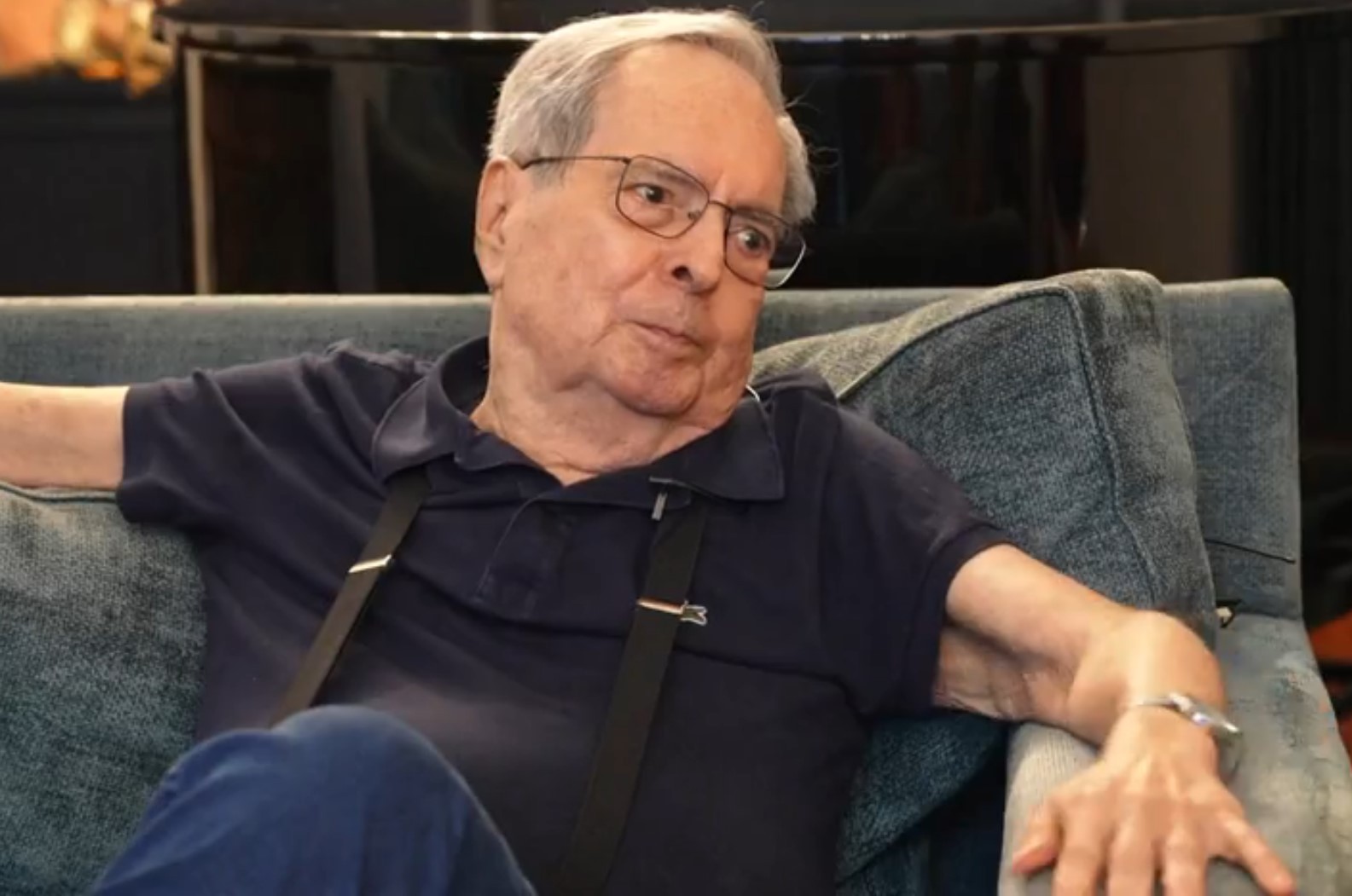
Benedito Ruy Barbosa dies at age 95
The playwright and writer Benedito Ruy Barbosa, author of soap operas such as Pantanal and Terra Nostra, died this Tuesday (7) in the capital of São Paulo. The information was confirmed by Hospital do Coração (HCor).
His legacy includes iconic plots such as "Meu Pedacinho de Chão" (1971), "Pantanal" (1990), "O Rei do Gado" (1996) and "Terra Nostra" (1999), marked by protagonists with "good character, determination to fight, belief in positive values" - as he himself determines.
In "Meu Pedacinho de Chão", the author had to argue with the regime's censorship in one of the scenes designed by him.
In an interview with Memória Globo, Benedito explained the situation involving one of the characters in the plot.
"He was a maestro who played the guitar and sang some country songs in a setting that was a roadside sale. Afterwards, the caboclo sang the anthem at school, with the Brazilian flag placed on the table", he said.
"What happened? The censorship cut the scene because they said the national anthem couldn't be sung in an environment like that. This made me indignant. I fought with the censorship and managed to release the scenes."
READ ALSO: 'Sinhá Moça', 'Rei do Gado', 'Terra Nostra': remember novels by Benedito Ruy Barbosa
Trajectory
The oldest among five brothers, Ruy Barbosa was born in Gália, in the interior of São Paulo, in 1931, and spent his childhood in neighboring Vera Cruz, a region of coffee plantations inhabited by Japanese and Italian immigrants.
With his father's early death, he had to work from an early age to help his family. Throughout his youth, he worked as an assistant at a commercial firm, a vegetable seller and a cleaner, until he got a job as a proofreader at the newspaper "Estado de S. Paulo".
Author Benedito Ruy Barbosa
João Miguel Júnior/TV Globo
The taste for writing led Benedito to create his first novel, "Fogo Frio", which was adapted for the theater and awarded by the São Paulo Association of Art Critics, the beginning of his career as a screenwriter.
His television debut took place in 1966, with "Somos Todos Irmãos", on TV Tupi. In the following years, he worked for stations such as Excelsior, Record and TV Cultura. In 1971, he wrote "Meu pedacinho solo", a soap opera produced by a partnership between Cultura and Globo and shown by both.
Five years later, he signed with Globo, where he began a successful streak in the 6pm slot. At that time, he adapted Ribeiro Couto's novel into "Cabocla" (1979).
In 1990, when moving to TV Manchete, Benedito wrote "Pantanal", which innovated by using external locations and exploring the culture and mysteries of the Brazilian biome.
With success, he returned to Globo to write "Renascer" (1993), a plot set in the interior of Bahia and marked by the duel of generations of Colonel José Inocêncio. Both would be remade decades later, written by his grandson, Bruno Luperi.
With "O Rei do Gado" (1996), Benedito addressed the rivalry between two families of Italian immigrants, while discussing topics such as land ownership and agrarian reform.
In "Terra Nostra" (1999), he portrayed the drama of Italians Matteo and Giuliana, separated when they arrived in Brazil at the beginning of the 20th century.
Benedito Ruy Barbosa
Reproduction/TV Globo
Ruy Barbosa also revisited his own works. In 2006 and 2014, he signed the remakes of "Sinhá Moça" and "Meu Pedacinho de Chão".
In the full-color version of the second work, he declared that he finally managed to put on air ideas that Censorship had blocked in the first version, during the military dictatorship.
In 2016, he wrote "Velho Chico", set in the fictional city of Grotas do São Francisco, in the northeastern hinterland. The soap opera brought about a clash of generations and the dispute for land and power in the interior of Brazil.
"First of all, a soap opera needs to have a great love story", defined Benedito Ruy Barbosa in a statement to Memória Globo.
Benedito Ruy Barbosa
TV Globo
Source: G1