Benedito Ruy Barbosa died of chronic kidney failure
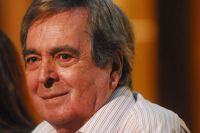
The writer and author of soap operas Benedito Ruy Barbosa died at the age of 95, in São Paulo, this Tuesday morning (7). The death occurred due to complications from CRF (chronic renal failure), according to a bulletin published by HCor (Hospital do Coração), where the playwright was hospitalized.
CRF is the progressive and irreversible loss of kidney function over time. Benedito had been fighting the condition for three years and had a history of hospitalizations due to recurrent urinary tract infections.
Due to the disease, the kidneys lose the ability to filter waste, which leads to the accumulation of toxins. As CKD progresses, symptoms may include fatigue, swelling in the legs, nausea, changes in urine, anemia and hypertension.
According to the Ministry of Health, most of the time, the evolution of chronic kidney disease is asymptomatic, meaning that the diagnosis is made late.
"The kidneys are fundamental in the functioning of the body. They filter the blood and help eliminate toxins from the body. Chronic kidney disease is silent, presents no symptoms and has seen increasing prevalence, high mortality and high costs for healthcare systems around the world", points out the organization.
In January of this year, the writer, aged 94 at the time, was discharged after being hospitalized "as a result of a urinary infection associated with chronic kidney failure".
Who was Benedito Ruy Barbosa
Benedito was known for a CV full of successful soap operas, such as "Rei do Gado", "Terra Nostra", "Pantanal" and "Renascer", all on TV Globo.
In the last years of his life, Ruy Barbosa retired from writing, but left his legacy to his daughters Edmara and Edilene Barbosa, as well as his grandson Bruno Luperi, who work as screenwriters.
The playwright was born on April 17, 1931, in the city of Gália, in the interior of São Paulo, and was the oldest of five brothers. He grew up in a coffee plantation area in the neighboring city of Vera Cruz, where he came into contact with Japanese and Italian immigrants. The childhood scenario would appear in detail in the 1996 soap opera "O Rei do Gado", set on coffee farms.
Otávio Barbosa, Benedito Ruy Barbosa's father, founded and directed the newspaper "A Voz de Vera Cruz", until his death at the age of 29, in 1942. The tragedy changed the author's life, who had to get a job as a boy to help his mother, Aurora Medeiros Barbosa. He got a job as a bookkeeper's assistant at the Antônio Perez trading firm.
Benedito Ruy Barbosa decided to move alone to São Paulo in search of better opportunities and started studying at night and working during the day in an Antônio Perez office.
Later, he managed to bring his family to the capital and live with them in the Bom Retiro neighborhood. At the time, he supplemented his income by working as a vegetable seller at the market and a cleaner at a bank.
First jobs
As he had knowledge in accounting, he got a job at the Bank of Boston. But he preferred to leave his job to work in an Antônio Perez commercial office in Maringá, Paraná, where he was inspired by his first novel, "Fogo Frio".
The story became a play in the theater after an invitation from Oduvaldo Viana Filho, in 1959. "Cold fire is because the frost burns the plantation. In 1952, a big frost happened that decimated the coffee plantations of Maringá, Marialva and Mandaguari. It was a disaster. I, first, was ecstatic to see the beauty of all that green covered with a white sheet. When the sun got hot, it burned everything coffee. They had to eradicate those coffee plantations", said Ruy Barbosa", he told the Memória Globo project.
Soap operas marked an era
Benedito Ruy Barbosa's first soap operas were in the 1960s, with "Somos Todos Irmãos" and "O Anjo e o Vagabundo", from 1966 - both shown on the now extinct TV Tupi.
He arrived at TV Globo in 1971, when the playwright wrote "Meu Pedacinho de Chão". The inspiration came from his childhood in rural cities. During the military dictatorship in Brazil, Barbosa ended up being a victim of government censorship: the story suffered some cuts, but he managed to negotiate the maintenance of some scenes.
However, the first successful contract with Globo only happened in 1976. That year, he began his television career with "O Feijão e o Sonho", at 6pm. Soon after, he had success with "À Sombra dos Laranjais" (1977) and "Cabocla" (1979).
Other titles by Benedito Ruy Barbosa were "Paraíso" (1982), "Voltei pra Você" (1983), "De Quina pra Lua" (1985), "Sinhá Moça" (1986), "Vida Nova" (1988), "O Rei do Gado" (1996) and "Terra Nostra" (1999).
He also worked on TV Bandeirantes, where he wrote the soap opera "Os Imigrantes" (1981). On TV Globo, his last original work was "Velho Chico", which took place in the São Francisco River region, and which aired in 2016.
In addition to rural themes, Benedito Ruy Barbosa used to have a special appreciation for immigrant stories, as in "O Rei do Gado" and "Vida Nova". The author also valued novels. "First of all, a soap opera needs to have a great love story", he said about Matteo and Giuliana, from "Terra Nostra".
In addition to being an author of soap operas, Benedito Ruy Barbosa worked as a reporter and reviewer in newspapers such as "O Estado de S. Paulo" and "Última Hora". He also worked at Gazeta Esportiva and worked as an advertising writer for Radial Propaganda.
Remakes
Benedito Ruy Barbosa's soap operas were so successful that many were remade on TV Globo. The first to be adapted was "Cabocla", in 2004, followed by "Paraíso", adapted again in 2009.
The soap opera "Pantanal", shown on Rede Manchete in 1990, received a remake in 2022, including actors from the original version, such as Marcos Palmeira. The adaptation was signed by grandson Bruno Luperi.
"Renascer", a classic by the author, received another version in 2024, also by Luperi, and again with Palmeira in one of the main roles.
*With information from Marina Toledo, from CNN Brasil
Source: CNN