BC favors PIX? Understand why the payment system is in Trump's sights
Why did PIX become Trump's target in a commercial investigation against Brazil?
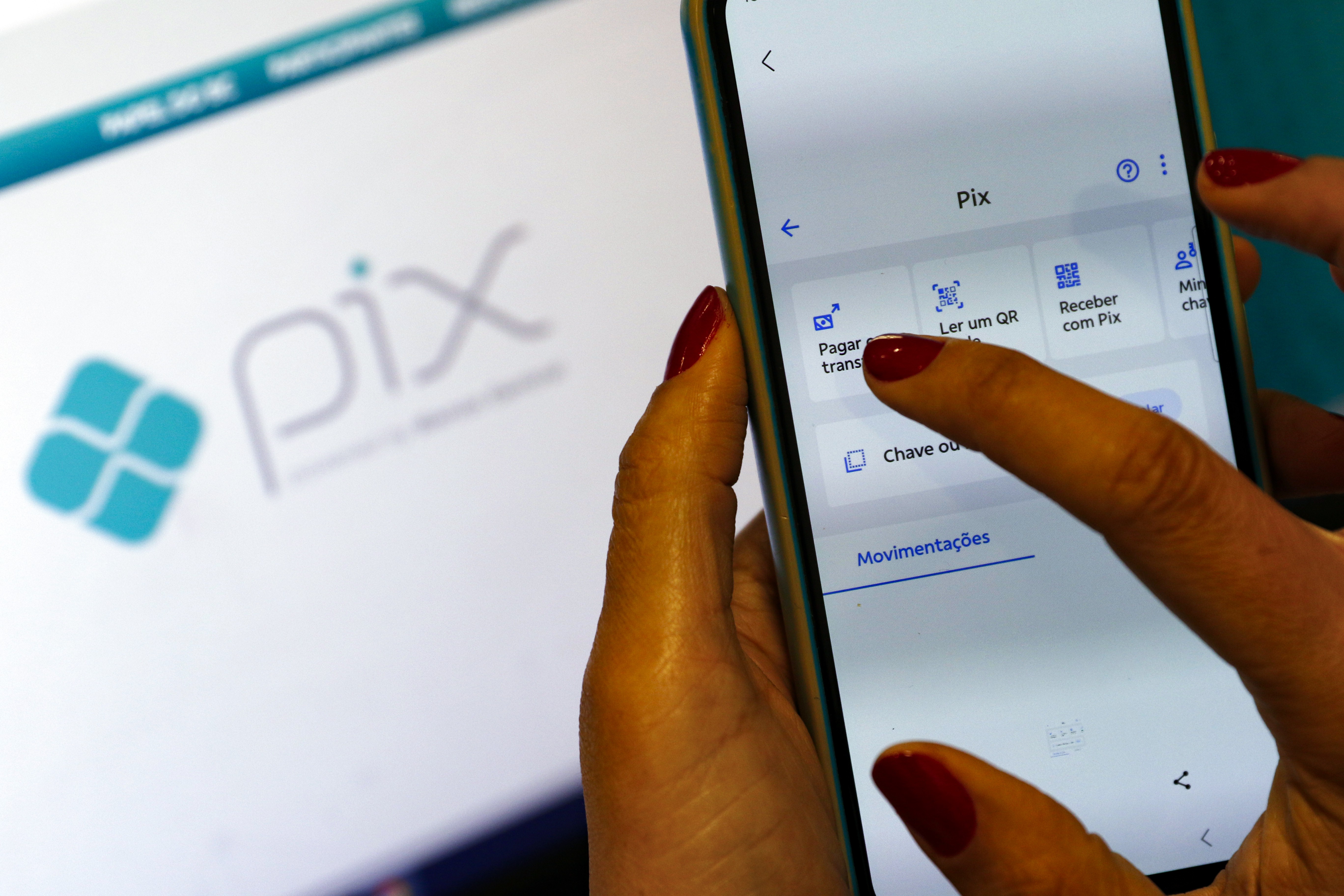
The United States once again criticized PIX and accused the Central Bank of Brazil (BC) of favoring the payments system to the detriment of American companies operating in the sector. According to the American government, the BC acts, at the same time, as a regulator and responsible for the system, which would be limiting competition.
The statements came as part of the justification for the new 25% tariff imposed by the USA on Brazilian products. According to the announcement, made on Monday night, the American government concluded an investigation at the request of President Donald Trump and determined that Brazil committed a series of practices that "encumber or restrict" US trade. (PT) to have a new conversation with Trump to avoid financial retaliation.
The investigation, opened in July 2025, had not mentioned PIX directly, but made reference to "digital commerce and electronic payment services", including those offered by the Brazilian State. PIX is the only government system for this purpose.
"Brazil appears to engage in a series of unfair practices regarding electronic payment services, including, but not limited to, favoring its government-developed electronic payment services," said the Office of the US Trade Representative (USTR).
Already this year, in April, a report released by the White House again highlighted PIX as a system harmful to credit card giants such as Visa and Mastercard.
For experts interviewed by g1 in May this year, aspects such as the clash with big techs and competition with American credit card brands would help explain the US offensive against PIX. They say that there are, however, no consistent reasons to question the payment service.
In fact, the success of PIX and its role as a showcase for Brazil would be seen as a "threat" to the sector in the USA. Trump's fears, they say, would also be linked to the advancement of PIX Internacional and the Brics discussions on alternatives to the use of the dollar in trade.
🔎 See, in the topics below, the possible reasons pointed out by experts for Trump to question the PIX.
Competition with US companies
PIX Internacional, 'Brics effect' and threat to the dollar
Success of PIX becomes a showcase for Brazil
US offensive against payments
Legal requirements in Brazil - and support for big techs
Competition with US companies
PIX is free for individuals and has a low cost for companies, representing strong competition for large American credit card operators, such as Visa and Mastercard, says Jorge Ferreira dos Santos Filho, economist and professor at ESPM.
"The system also competes with American fintechs. While in the US regulation allows charging for instant transfers, in Brazil these companies are obliged to integrate PIX to operate", he says.
According to the professor, the rules force companies to adjust their business models in the face of possible loss of revenue, as high-tech companies profit from fees on transactions. The scenario also affects big techs that offer payment services, such as Google.
For Ralf Germer, CEO of PagBrasil, PIX is a technologically advanced system that promotes healthy competition in the market. He does not believe, however, that the system directly conflicts with US interests, nor that this justifies investigation by the American government.
"PIX was not created to compete with or replace other means of payment, such as credit cards.
Since the launch of the system, other forms of payment, especially cards, have continued to grow", he states.
"Furthermore, there was enough time for them to adapt and develop solutions capable of competing with the advantages of PIX, whether in cost, user experience or commerce", he adds.
Return to the index.
PIX is investigated in the USA at the request of Trump for configuring a possible 'unfair practice'
PIX International, 'BRICs effect' and threat to dollar
Among the new features of PIX, the Central Bank of Brazil continues working to adopt, in the future, PIX Internacional, which is already accepted on a limited basis in some countries, such as Argentina, the USA (Miami and Orlando), Portugal (Lisbon), among others.
The BC assesses that the current use of PIX in other countries is "partial", restricted to specific establishments. The expectation is that, in the future, cross-border payments will be carried out definitively, interconnecting payment systems. instantaneous.
In this sense, experts believe that the possibility of using PIX Internacional as a means of payment between Brics countries, for example, may have bothered the USA by threatening the dollar's parity in negotiations, compromising the hegemony of the currency in the global financial system.
🔎 The Brics is a group of emerging countries that includes Brazil, Russia, China, India, South Africa, United Arab Emirates, Egypt, Saudi Arabia, Ethiopia, Indonesia and Iran. the point that most bothers the American government: the creation of a single Brics currency and the possible use of the PIX system to reduce the influence of the dollar in negotiations between these countries", says Fabrizio Velloni, chief economist at Frente Corretora. within the group.
According to professor Jorge Ferreira, from ESPM, PIX Internacional may face resistance from the USA, as it would compete directly with the SWIFT system - a global network of financial transfers adapted, including, to comply with international sanctions, especially from the USA and the European Union.
Return to the index.
Success of PIX becomes a showcase for Brazil
Pedro Henrique Ramos, executive director and founder of RegLab, states that the USA's main complaint seems to be the perception that the Brazilian government would have favored its own electronic payment system - thus harming private North American companies.
He assesses that, when the regulator also acts as a successful operator - like the Central Bank of Brazil with the PIX -, it is natural for "international pressure" to emerge in this competitive scenario.
"In one way or another, the PIX has become a model of efficient state innovation, which can be replicated by other countries - which represents a possible threat to the dominance of American companies in the market global range of payment methods", he explains.
For the specialist, the massive success of PIX has also become a showcase and gives Brazil geopolitical weight to influence standards and negotiate openings in the international market. "It is a great model to be followed in terms of public digital payments infrastructure."
Several countries seek to understand the system's operating mechanisms.
Return to the index.
US offensive against payment systems
Pedro Henrique Ramos, from RegLab, remembers that the US have a history of challenging policies that favor domestic infrastructure, citing the cases of Indonesia, India and China (with UnionPay).
When announcing 32% tariffs on products imported from Indonesia last year, the US also alleged an "unfair trade practice", citing the impact on American companies such as Visa, Mastercard and Amex.
According to Ramos, this type of low-cost public infrastructure, created by emerging countries, is adopted as instruments of social and financial inclusion, and of reducing dependence on networks linked to the dollar.
"So, you have a clear geopolitical friction between commercial interests and also with the political discourses that are used to support and promote these countries' sovereign digital infrastructures", he says.
Ralf Germer, from PagBrasil, highlights that the US has similar systems, such as Zelle - created by large banks, with possible fees depending on the institution - and FedNow, from the Federal Reserve, which allows fees to be charged by banks, but generally not passed on to the end consumer.
The systems North Americans, however, did not come close to the success of PIX, says Pedro Henrique Ramos, from RegLab.
"Joining FedNow, for example, was optional. None of the big American banks joined. So, in one way or another, PIX became a model, a showcase", he says.
Return to the index.
Brazil's legal requirements - and support for big techs
The US's questions about electronic payments are part of a broader discussion that involves American big techs, such as Google and Meta (WhatsApp), which operate their own payment systems and may see PIX as a competitor.
"American companies in the sector often resist certain decisions from the Federal Supreme Court (STF), especially regarding legal requirements such as the prohibition of broadcasting certain content", says Lia Valls, associate researcher at FGV Ibre and professor at UERJ.
According to the expert, despite not having a direct relationship, the conflict with big techs also contributes to the allegations of Donald Trump, who on several occasions tried to pressure the Brazilian Supreme Court.
Also last year, for example, the majority of STF ministers voted in favor of holding social networks responsible for content published by their users - such as hate speech, fake news or harmful to third parties.
On the same day, Google, owner of YouTube, stated that "abolishing rules that separate the civil liability of platforms and users will not contribute to the end of the circulation of unwanted content on the internet [like fake news]".
Meta, owner of Instagram, Facebook and WhatsApp, expressed concern about "the implications of the STF's decision on freedom of expression and the millions of companies that use our applications to grow their businesses and create jobs in Brazil".
In addition, there is the specific case of WhatsApp. In June 2020, even before the launch of PIX, the Central Bank and the Administrative Council for Economic Defense (Cade) suspended the payments and transfers function through the application in Brazil.
At the time, the BC determined that the Visa and Mastercard brands, which enabled transactions, suspended the payments function so that the body could assess risks and guarantee the smooth functioning of the Brazilian Payment System (SPB). Cade pointed out possible risks to competition.
In 2023, with PIX already in operation, the BC authorized WhatsApp to offer payments with credit, debit and prepaid cards. In December, however, the company discontinued the payment function between people with debit cards in the application in Brazil.
In a note sent to g1 in November 2024, the company informed that the decision to suspend the function with debit cards in the country aimed to prioritize transactions via PIX.
Return to the index.
Banking application for financial payments in PIX.
Bruno Peres/Agência Brasil
Source: G1