Barred referee and Iran in Mexico: understand the geopolitical crisis affecting the World Cup
The 2026 World Cup will begin this Thursday (11) amid geopolitical impasses linked to the United States, one of the competition's host countries, as well as Canada and Mexico.
Issues linked to the release of visas, player searches and the restrictions imposed on the Iran National Team have had repercussions in recent days, exposing diplomatic tensions that directly affect the logistics of one of the biggest sporting events in the world.
The World Cup marks, for example, the first time, since the tournament's creation in 1930, that a host country hosts a team from a nation with which it is at war.
At the same time, Donald Trump's government would have invested R$1.2 billion (US$250 million) to reinforce security for the World Cup and help American cities prepare to face threats involving drones, according to a report by Front Office Sports.
Restrictions on Iran
Since the end of February, when the United States and Israel launched air strikes against the Islamic Republic, Iran's participation in the World Cup has been marked by uncertainty.
At the end of April, FIFA president Gianni Infantino confirmed the participation of the Iranian team in the World Cup, in addition to stating that the team would play the games in the USA.
Initially, Iran planned to settle in the state of Arizona, in the United States. However, the Iranian federation decided to move the training center to Mexico.
Before the start of the World Cup, however, the Iranian team faces bureaucratic complications regarding the release of visas and the refusal of fans' tickets. Just 10 days before the start of the World Cup, Iranian players received visas to enter the USA.
In addition to the delay in release, the Iranian Football Federation (FFIRI) accused the US of adopting "vindictive behavior" by denying visas to 14 members of the administrative and management team who would accompany the Iranian team.
The US State Department stated that all visas necessary for the team's sporting participation have been granted, including those for athletes and support personnel considered essential.
Another restriction involves the stay of the Iran National Team between World Cup game days. "According to their visa, apparently they can go in the morning and come back in the afternoon," said Iran's ambassador to Mexico, Abolfazl Pasandideh.
Two days before the start of the World Cup, FIFA also revoked the distribution of tickets intended for Iranian fans for the national team's three matches in the group stage of the tournament in the United States.
The information was confirmed by FFIRI on Tuesday (9), which regretted what happened and declared that it is officially unable to provide tickets to its fans.
Iran will play their first two Group G games in Los Angeles: against New Zealand, on June 15th, and against Belgium, on June 21st. Then, they face Egypt in Seattle, on the 26th.
Barred referee
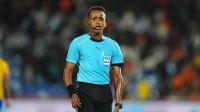
Omar Artan, a Somali referee scheduled to officiate matches at the 2026 World Cup, was deported from the United States after being denied a visa by the country. On Monday (8), he was excluded by FIFA from the arbitration panel for this edition.
According to a statement issued by FIFA, as this is a diplomatic issue, the entity stated that it does not have the power to intervene in the process.
FIFA also highlighted that, in situations like this, it is exclusively up to the government of the host country - in this case, the United States - to authorize or deny the entry of foreigners into its territory.
On Tuesday (9), he opened up about what happened to the New York Times. Artan gave details of the immigration interview and said he was "disappointed", as he had the correct documentation to enter the country.
The referee revealed in a telephone interview from Istanbul, the city where he was taken after being denied entry into the USA, that he flew to Miami International Airport on Saturday (6), and that his immigration interview lasted around 11 hours.
Nominated by the world football body, Omar Artan was elected the best African referee by the Confederation of African Football (CAF) in 2025.
Players magazine
The arrival of the Senegal team in the USA also had repercussions as it was marked by strict supervision.
The delegation was subjected to a detailed inspection before they even left the arrivals area. This is another episode amid reports of restrictions on the entry of foreigners into the United States on the eve of the World Cup.
In addition to Senegal, other delegations also underwent similar procedures. The Uzbekistan team, for example, would have gone through a similar search upon arriving in the United States to play a friendly against the Netherlands.
A humiliation and a disgrace that the Senegalese Football Federation has failed to speak out against. pic.twitter.com/ebFrut7XIi
- AlmarssadPro (@ProsMarocains) June 8, 2026
Reporter Karine Alves, from TV Globo, also reported on her experience during the inspection. She stated in the newspaper "Bom dia Brasil" that she had to lift her hair when passing through immigration.
The reports intensify criticism regarding the reception climate for delegations, journalists and other professionals involved in the World Cup. With the start of the tournament approaching, records of searches and approaches at airports have been gaining repercussions on social media and raising questions about the treatment given to visitors in the country.
How the 2026 World Cup format works: groups, phases and changes
Source: CNN