Automated mining dust control equipment arrives in Brazil
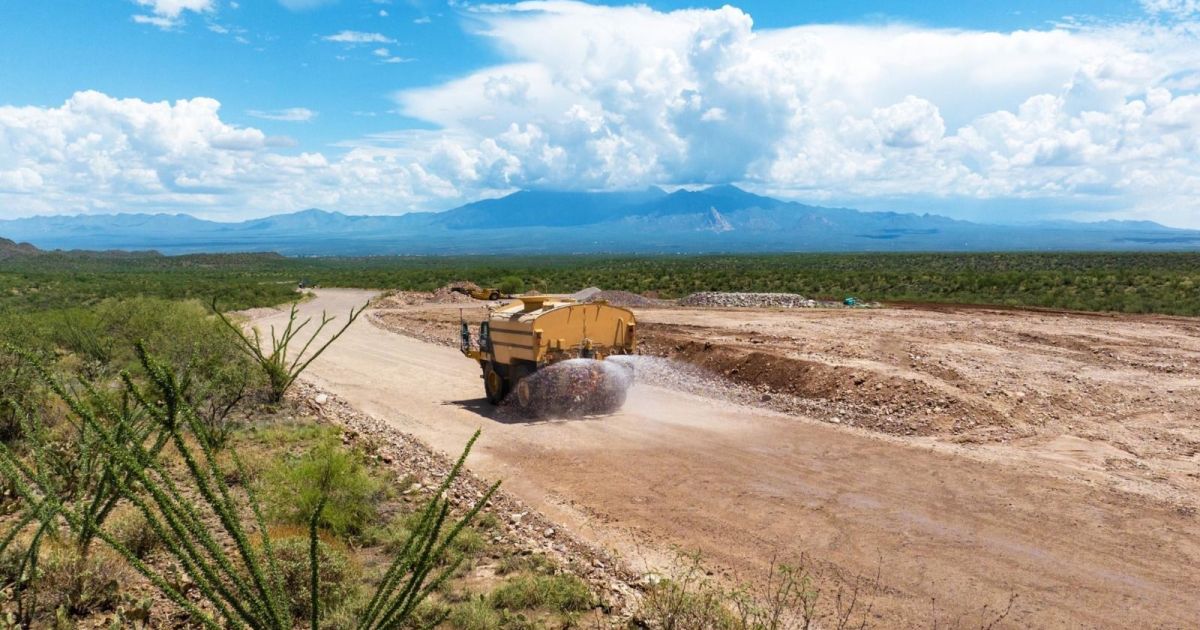
A new automated system to control dust generated on internal mine roads began to be sold in Brazil by Sotreq, an official Caterpillar dealer.
Named Water Delivery System 2.0, or WDS 2.0, the technology controls the spraying of water carried out by off-road water trucks. The system automatically adjusts the flow according to the vehicle's speed, seeking to reduce dust without causing waste of water or flooding the roads.
Dust is generated in different stages of mining, such as drilling, blasting, crushing and transport of materials. On internal mine roads, the constant circulation of heavy trucks can also suspend large volumes of particles.
In addition to reducing visibility and increasing the risk of accidents, recurring exposure to certain mineral dust can cause respiratory illnesses. Particles containing crystalline silica, for example, can cause silicosis, a permanent and incurable lung disease.
The arrival of the technology comes after the Ministry of Labor approved, in January, new rules to evaluate and control the exposure of workers to mineral dust. The regulations determine, among other measures, the use of water or equivalent techniques to prevent the dispersion of dust in different mining activities.
Automated control
WDS 2.0 integrates the truck, tank, electronic controls and software responsible for water distribution. One of the compatible models, the Cat 777, can transport approximately 75 thousand liters.
Unlike conventional systems that maintain a constant flow, the technology automatically increases or reduces the amount of water spread depending on the vehicle's speed.
According to Sotreq, the new version presents a 25% increase in maximum water distribution capacity and can maintain precise application with the truck traveling at up to 45 kilometers per hour.
By better controlling the sprinkler, the system seeks to avoid both insufficient application, which cannot contain dust, and excess water, which can reduce vehicle grip, damage roads and increase resource consumption.
"If the truck consumes less water during operation, it needs to return less often to refill. This increases productivity and reduces unnecessary movements within the mine", said Cleiton Arruda, commercial manager at Sotreq.
Digital monitoring
The system can also be integrated with MineStar, a Caterpillar platform used to manage mining fleets.
The tool allows you to monitor where and when each truck sprayed, the volume of water distributed and the history of road coverage. With this information, the control center can reorganize routes and prevent different vehicles from repeatedly wetting the same sections while other areas remain unserved.
The technology uses sensors, software and automated commands, but the material released by Sotreq does not inform the use of artificial intelligence.
WDS 2.0 is also designed to be integrated into autonomous operations. This, however, does not mean that all trucks equipped with the system can work without a driver. Fully autonomous operation depends on the vehicle model and the technological infrastructure installed in the mine.
Marketing will be accompanied by technical support and maintenance of component stocks in the country.
Source: CNN