At 82 years old, Chico Buarque's work has been remodeled in the sophisticated style of the Escafandristas in the quartet's album
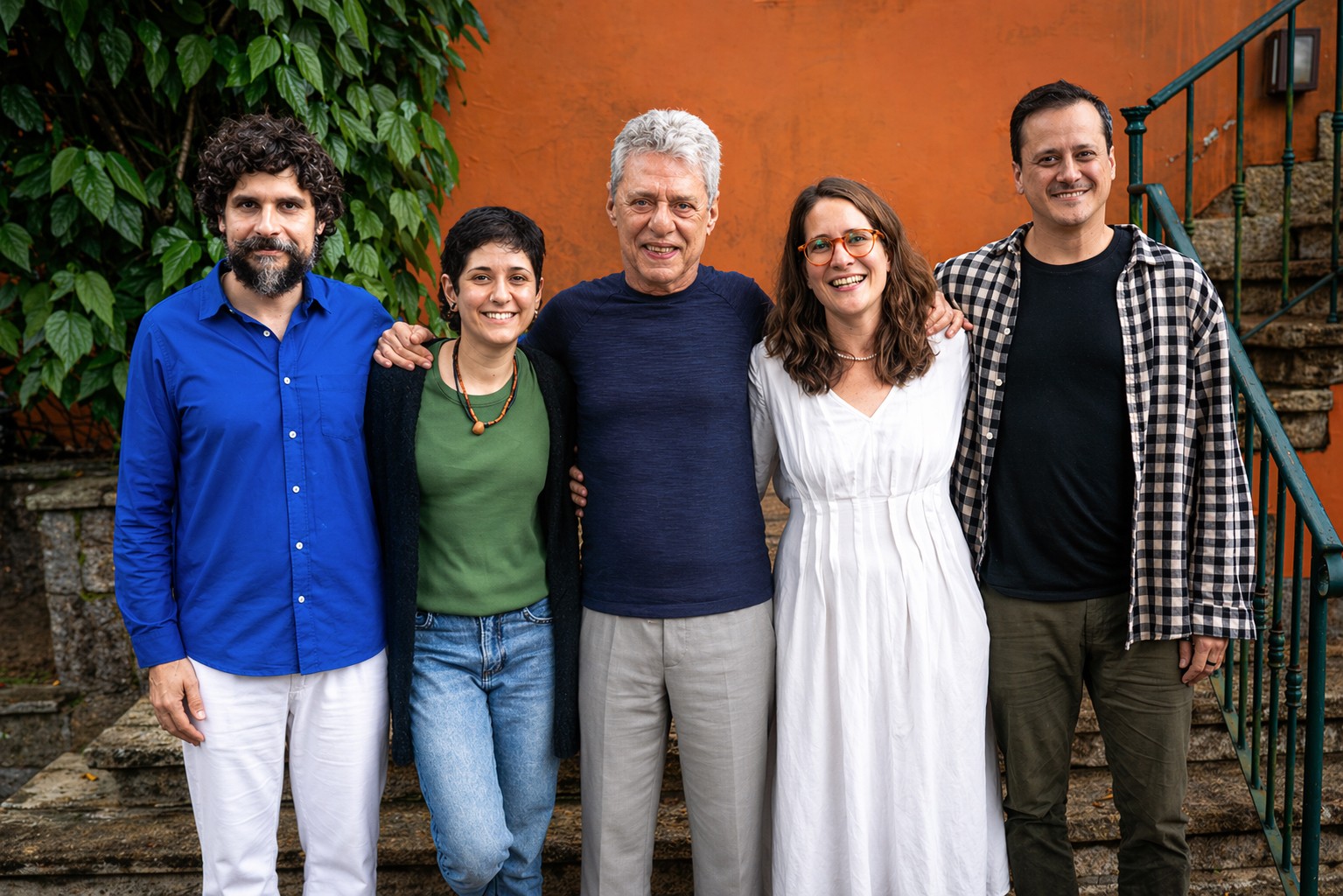
Chico Buarque (center) participates in the samba 'A volta do malandro', one of the 15 songs from the album released yesterday, June 18, by the Rio de Janeiro group Escafandristas
Isabela Espíndola / Disclosure
♫ ALBUM REVIEW
Title: Escafandristas sing Buarque
Artist: Escafandristas
Quote: ★ ★ ★ ★ 1/2
♬ Two years after being formed in 2024 with the intention of proposing other visions of Chico Buarque's songbook, the Rio quartet Escafandristas releases their first album.
Strategically presented on the eve of the countryman composer's 82nd birthday (celebrated today, Friday, June 19), the album "Escafandristas cantam Buarque" brings together an approach to 15 of Chico's songs re-recorded under the musical direction of Thiago Amud (voice and guitar).
There is total respect for the melodies and lyrics. However, Amud, Alice Passos (voice, flute, guitar and percussion), Luisa Lacerda (voice and guitar) and Renato Frazão (voice and bass) are outside the cover universe because they changed the harmonies and rhythm.
In plain Portuguese, "Escafandristas cantam Buarque" is a useless album for karaoke, especially due to the refined harmonization of voices that guide songs such as "Brejo da cruz" (1984) - recorded with the support of Giuliano Eriston, a good singer who struggles to make himself heard in a market that is cruel to those who are not in tune with the pop aesthetics of the 21st century - and "Sonhos soms são" (1998), a lesser-known composition from the repertoire defined by the quartet a from around 80 pre-selected songs for the show premiered in October 2024.
Doing justice to the choice to open the album, the approach to "Construção" (1971) achieves the feat of detaching itself from the arrangement created by maestro Rogério Duprat (1932 - 2006) for the author's referential original recording.
Thiago Amud's duet with Luísa Lacerda in "Morro Dois Irmãos" (1989) shows that Amud's singing is in tune with Chico's. This affinity is amplified in the singing of the group's other male performer, Renato Frazão, and catches the ear in Frazão's solo in the samba "Cotidiano" (1971) in a polished recording that stands out on the album due to the fact that the arrangement evokes the repetition of everyday marital life between pauses synchronized with the verses of the lyrics.
Formed in 2024, the Escafandristas quartet releases their first album
Jorge Bispo / Disclosure
The seven quotes inserted in six of the 15 tracks are clever. A song that embeds the group's name in verse lyrics, "Futuros lovers" (1993) is mentioned by "Eu te amo" (Chico Buarque and Antonio Carlos Jobim, 1980) in the middle of the recording. Likewise, "Corrente" (1976) is linked with a quote from "Mambembe" (1972).
The samba "Morena dos olhos d'água" (1966) emerges with mention of another moraine of the waters, "Morena do mar" (1972) by Dorival Caymmi (1914 - 2008), and with the memory of the ciranda "Na Ilha de Lia, no boat de Rosa" (Chico Buarque and Edu Lobo, 1988).
"Assentamento" (1997) is based on unison singing that outlines some emotion, strictly speaking diluted throughout the album based on the stupendous musicality of Escafandristas.
If all the feeling sometimes flows through the 15 tracks recorded in the Biscoito Fino record studio, a strictly subjective perception, the emotion rises in the recitation of Ruy Guerra's verses by Guerra himself - Chico's partner in "Fado tropical" (1973) - amidst the mostly a cappella singing of "O que ser (À flor da terra)" (1976).
Chico Buarque's five granddaughters - Cecília Buarque, Clara Buarque, Irene Buarque, Lia Buarque and Teresa Buarque - came together in the studio for the first time to sing "As minhainas" (1987) with the Escafandristas in an emotional participation in the recording made with a quote from "Acalanto para Helena" (1971), a lullaby composed by Chico for his daughter Helena Buarque, mother of Clara and Cecilia.
At the end of the album, the tender record of "Tempo e artist" (1993) highlights the fact that, in the album "Escafandristas cantam Buarque", the quartet (re)models the composer's work in the group's sophisticated style at a time when Chico Buarque's music has already achieved glory and glimpses the infinity reserved for the greatest artists of each era.
Album cover 'Escafandristas cantam Buarque', from the group Escafandristas
Disclosure
Source: G1