Around 25 ships crossed the Strait of Hormuz on Thursday (18)
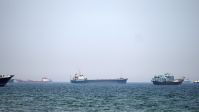
A total of 25 commercial ships crossed the Strait of Hormuz on Thursday (18), the highest number since April, according to maritime intelligence company AXSMarine.
The sharp increase in maritime traffic comes after the United States and Iran signed an agreement on Wednesday (17) that promised to "immediately" reopen the important waterway.
"Yesterday, we observed 25 confirmed crossings of commercial vessels through the Strait of Hormuz," AXSMarine said in a social media post this Friday (19).
"This is the highest single-day number since April 18, when there was a brief reopening following Iran's announcement that the strait was open to commercial traffic. This reopening, however, was short-lived, making the June 18 figure the highest daily figure since that temporary increase."
The 25 crossings confirmed on Thursday represent almost five times the average daily traffic during the first 10 days of June.
However, they are still far below pre-war levels, when around 110 vessels crossed the strait daily on average. Before the conflict, around 20% of the world's oil passed through the strait.
The effective closure led to a spike in oil prices.
The real number may be even higher - AXSMarine data is obtained from ships' AIS (Automatic Identification System) transponders.
However, many vessels have turned off the mandatory maritime tracking and collision avoidance system to try to cross the strait without being tracked.
"The resumption [in maritime traffic] comes amid the largest AIS signal disruption event we have observed in the Persian Gulf since the start of the conflict, with more than 200 commercial vessels affected simultaneously by signal spoofing or abnormal AIS behavior," AXSMarine added.
Waterway administration
PGSA (Iran's Persian Gulf Maritime Management Authority) will manage traffic through the Strait of Hormuz following the agreement between Washington and Tehran, the country's Supreme National Security Council announced on Thursday (18).
According to a statement released by Iranian state media, vessels will not pay application fees for 60 days, as the government will bear these costs.
The council said the PGSA was instructed to quickly review and respond to requests for passage through the strait.
Iran is also working on removing mines from the sea lane as envisaged in the agreement, the Council said.
"Given the special conditions and the presence of certain security risks along the transit route, and to ensure safe passage and avoid maritime incidents, vessels must transit in accordance with the routes and schedules communicated to them, so that traffic capacity can gradually increase," the statement said.
The PGSA will provide further information on how the operation works, the Council added.
Why is the Strait of Hormuz so important to the world economy?
Source: CNN