Argentina, Panama and Ecuador among the '10 worst countries in the world' in labor rights
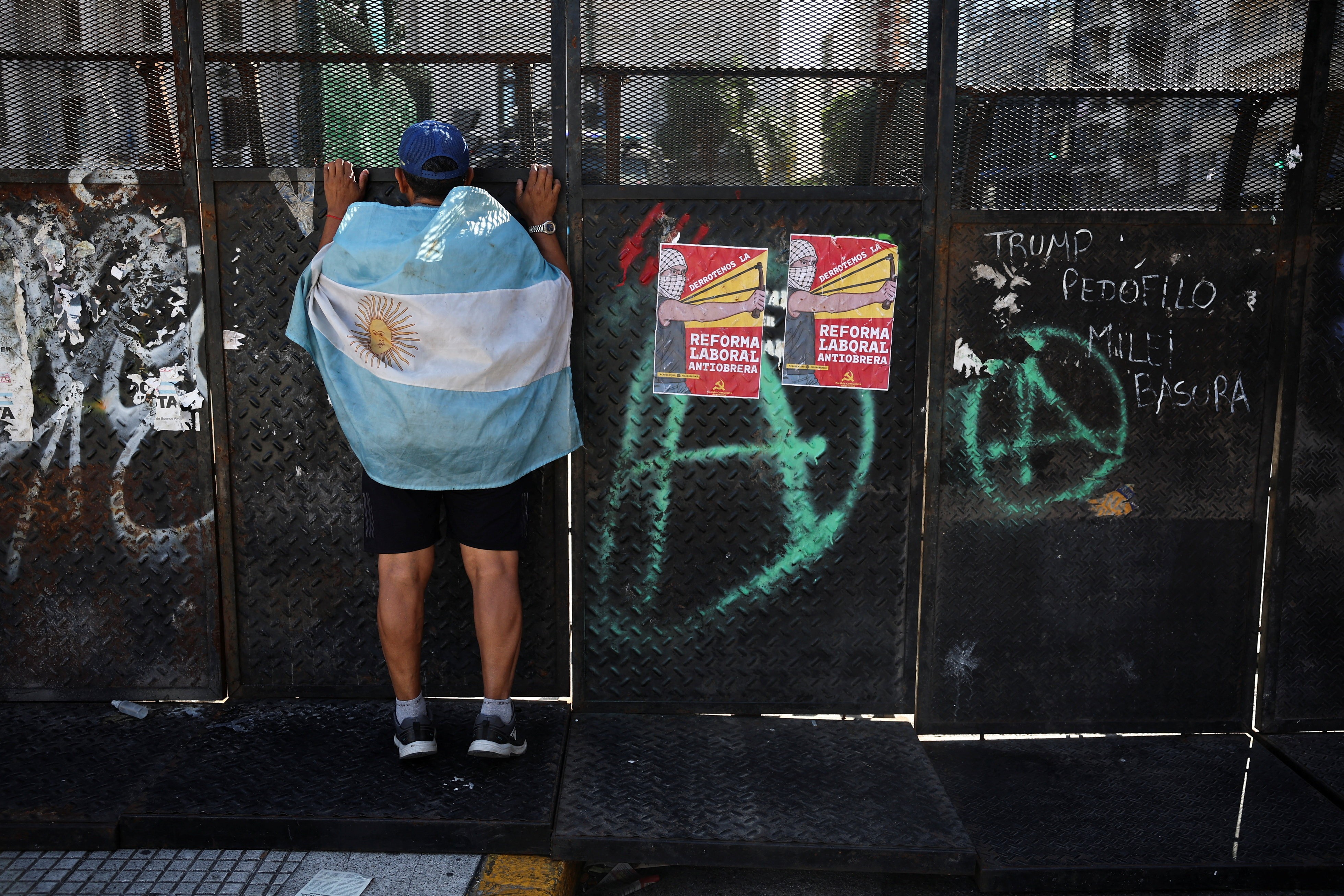
Milei's labor reform is voted on in the Senate under strike and protests in the streets
REUTERS/Agustin
Argentina and Panama joined Ecuador among the "10 worst countries in the world" for workers' rights, according to a study by the International Trade Union Confederation (CSI) released this Monday (1st, local date).
🗒️ Do you have any suggestions for a report? Send to g1
These three Latin American countries are part of the group alongside Belarus, Egypt, Eswatini, Myanmar, Nigeria, Tunisia and Turkey, according to the most recent Global Rights Index report.
"Argentina this year enters the list of the 10 worst countries for workers after falling to category 5, recording the second consecutive year of deterioration in its classification", pointed out the CSI.
"Conditions for workers and unions have become increasingly repressive and hostile under the far-right government of President Javier Milei", the study maintains.
Now on g1
The report recalled that "Argentina has instituted an anti-blockade protocol to maintain 'public order in the event of roadblocks', which authorizes the indiscriminate use of police force."
"Argentina's classification worsened for the second consecutive year, placing it in category 5, the worst level ever reached by this South American country in the Index. This represents a sudden and unprecedented drop from category 3 to 5 in just two years," the study states. Group 5 corresponds to countries with "unguaranteed rights".
This setback is due to "the existence of regular violations of rights to a situation in which workers do not have their rights guaranteed".
In the case of Panama, the CSI stated that "workers and unions in this Central American country lack guarantees regarding their basic rights and face constant oppression from employers and the State".
Regarding Ecuador, the report pointed out that "legislators Ecuadorians enacted in 2025 a law that allows surveillance without a court order, as well as intercepting communications and collecting private data."
Countries in group 5 "are the worst countries in the world to work in. Although legislation may enumerate certain rights, workers effectively do not have access to them", indicates the study.
Uruguay, an "exception"
Brazil, Costa Rica, El Salvador, Peru and Trinidad and Tobago are in group 4, referring to countries with "violations". systematic violations of rights."
Bahamas, Bolivia, Chile, Jamaica, Mexico and Paraguay appear in group 3, with "regular violations" of rights.
In group 2 ("repeated violations") are Spain, Portugal and the Dominican Republic.
The only Latin American country in group 1 ("sporadic violations") is Uruguay, alongside Germany, Austria, Denmark, Iceland, Ireland, Norway and Sweden.
The study highlights that Uruguay constitutes "an exception in a region largely characterized by union repression and exploitation."
In general, Latin America "remains the most lethal region for workers and their representatives, with extrajudicial executions recorded in Colombia and Mexico." CSI.
Luc Triangle, secretary general of the CSI, stated that "the 2026 Index reveals that the workers' rights crisis is no longer limited to a few countries: it is now at the center of democracies."
"Governments no longer protect workers and, in some cases, contribute to weakening their rights", he added.
This report, prepared by the CSI since 2014, classifies 151 countries based on 97 indicators based on conventions of the International Labor Organization. Labor (ILO) and its jurisprudence.
Source: G1