Argentina eliminates vehicle export tax; understand if car prices in Brazil change
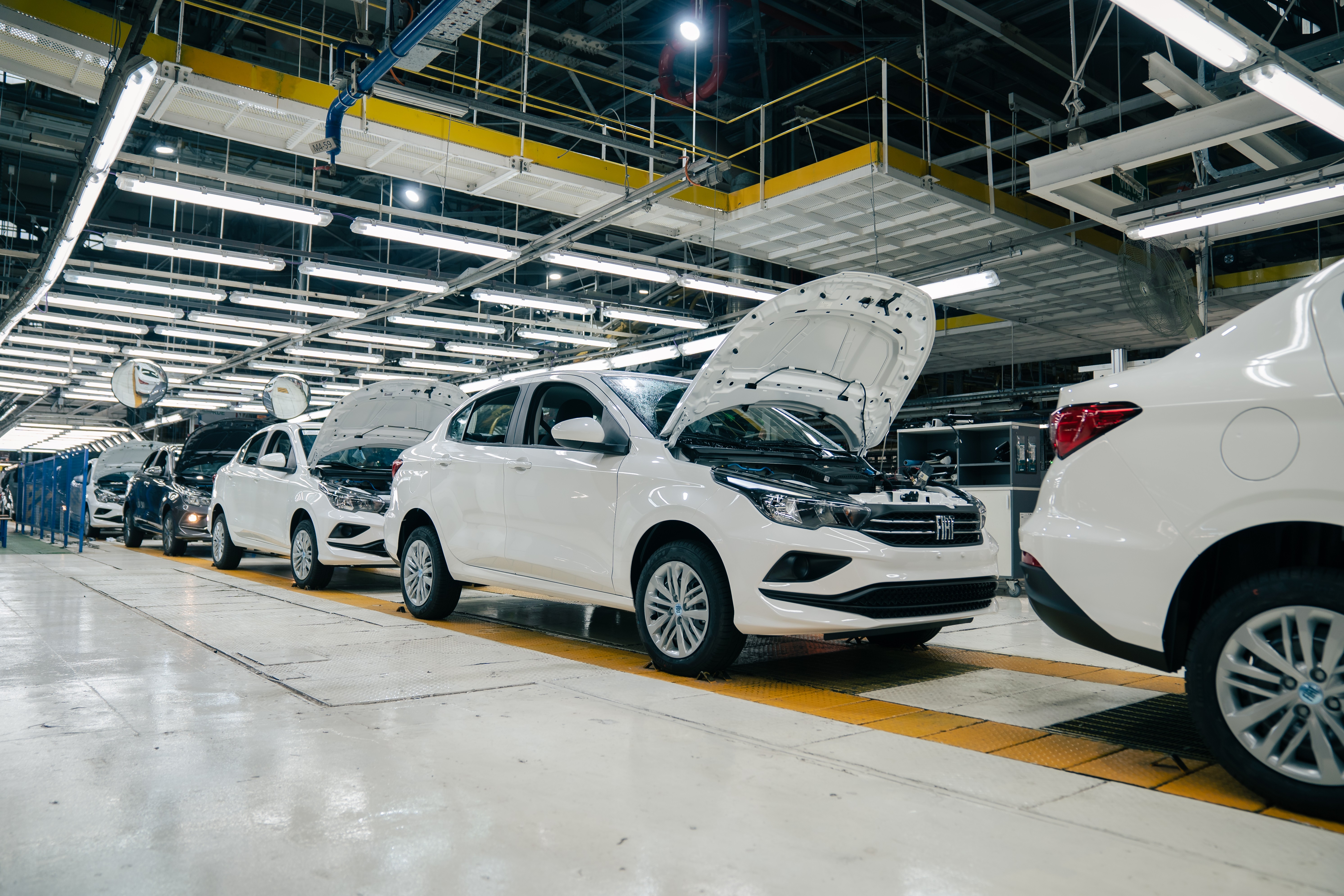
Fiat Cronos production line at the Ferreyra complex, in Argentina
Disclosure / Stellantis
The vehicle export tax in Argentina was zeroed as of this Wednesday (1). This measure is valid until July 2027. The rate until then was 4.5% and was charged on cars that left Argentina for other markets, such as Brazil.
Currently, Ford, Volkswagen, Toyota and Stellantis produce cars in Argentina and export them to Brazilian consumers.
✅ Click here to follow the g1 Cars channel on WhatsApp
In the pickup truck segment, Ford produces the Ranger and Volkswagen manufactures the Amarok. Renault has already confirmed the production of the Niagara in Argentina; the new product arrives in Brazil in September this year and the price has not been revealed.
Toyota also produces a pickup truck, the Hilux, and the "sister" SW4 sports utility vehicle. In addition to the Hiace commercial van. Stellantis manufactures two Fiat models, Titano and Cronos, and two Peugeot cars, 208 and 2008. The RAM Dakota is also made in Argentina.
According to Cássio Pagliarin, a specialist at Bright Consulting, there is the possibility of a price reduction in the Brazilian market. consultant.
Pagliarin also explains that it is still difficult to know how much of this discount will be passed on to the customer. According to the consultant, there is also the possibility of some brands adding this discount to their margin, but it is still impossible to predict this fact.
G1 contacted all car manufacturers to check whether the price for the Brazilian consumer will be reduced. None had responded until the publication of the report. The article will be updated as soon as possible.
Now on g1
Argentine sector celebrates
The Association of Automobile Manufacturers of Argentina (ADEFA) stated that the gradual reduction in taxes on exports announced by President Javier Milei is an important step towards increasing the competitiveness of the automotive industry.
According to the entity, the definition of a schedule until mid-2027 gives predictability for automakers to plan production, exports and investments.
"The reduction in the tax burden on exports represents a direct stimulus to recover competitiveness in regional and global markets, in an extremely challenging global scenario", added Rodrigo Pérez Graziano, president of ADEFA.
The entity also defended that provinces and municipalities eliminate local taxes and fees which, according to it, reduce the competitiveness of exports and can represent an impact of up to 10% on the value of exported vehicles.
Source: G1